
Last updated November 15, 2026
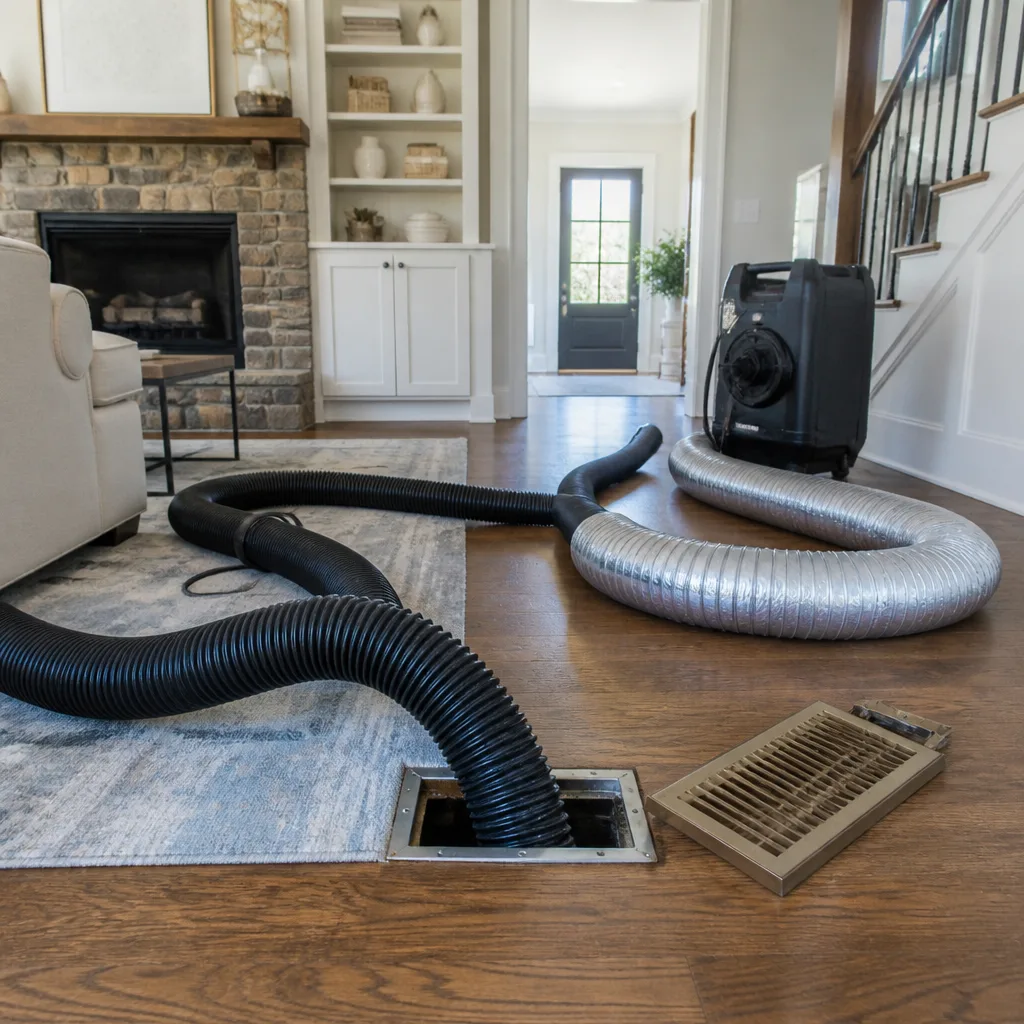 Whole-home duct cleaning
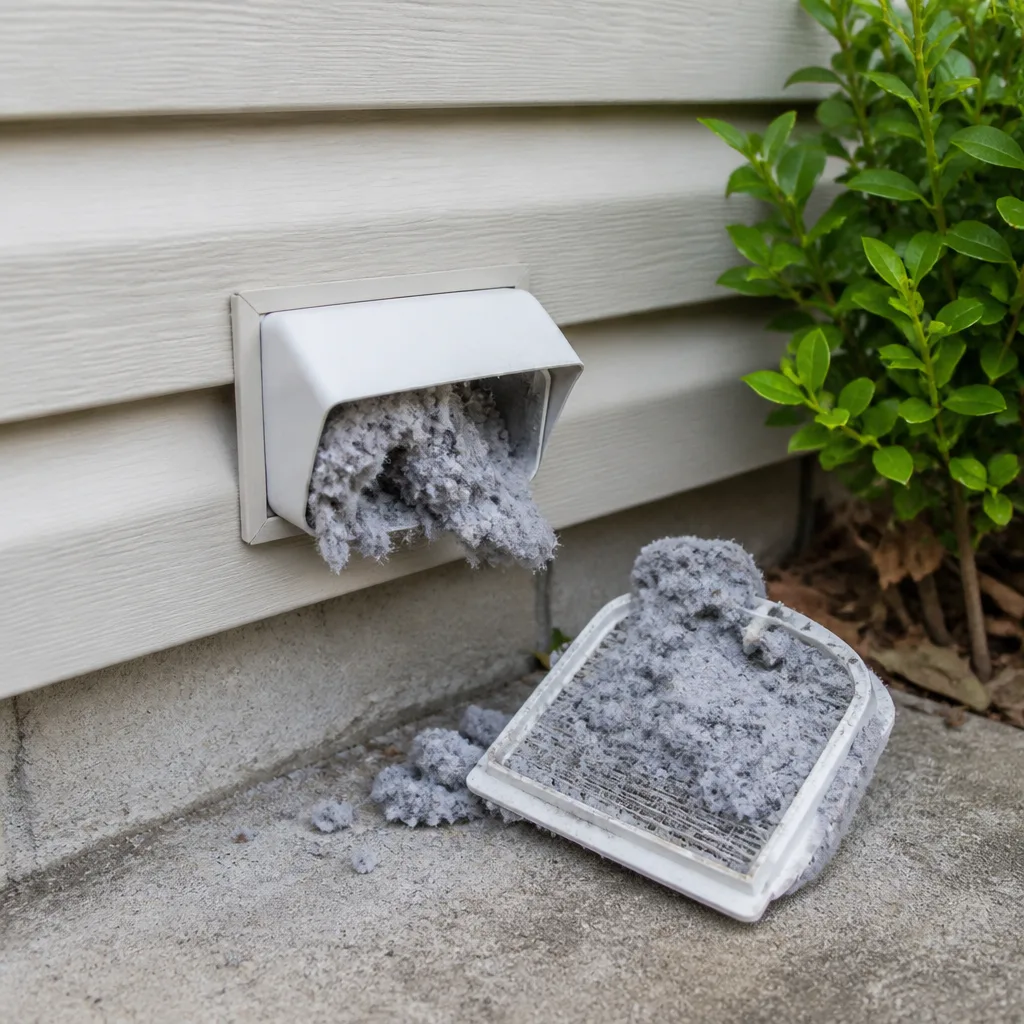 Dryer vent cleaning
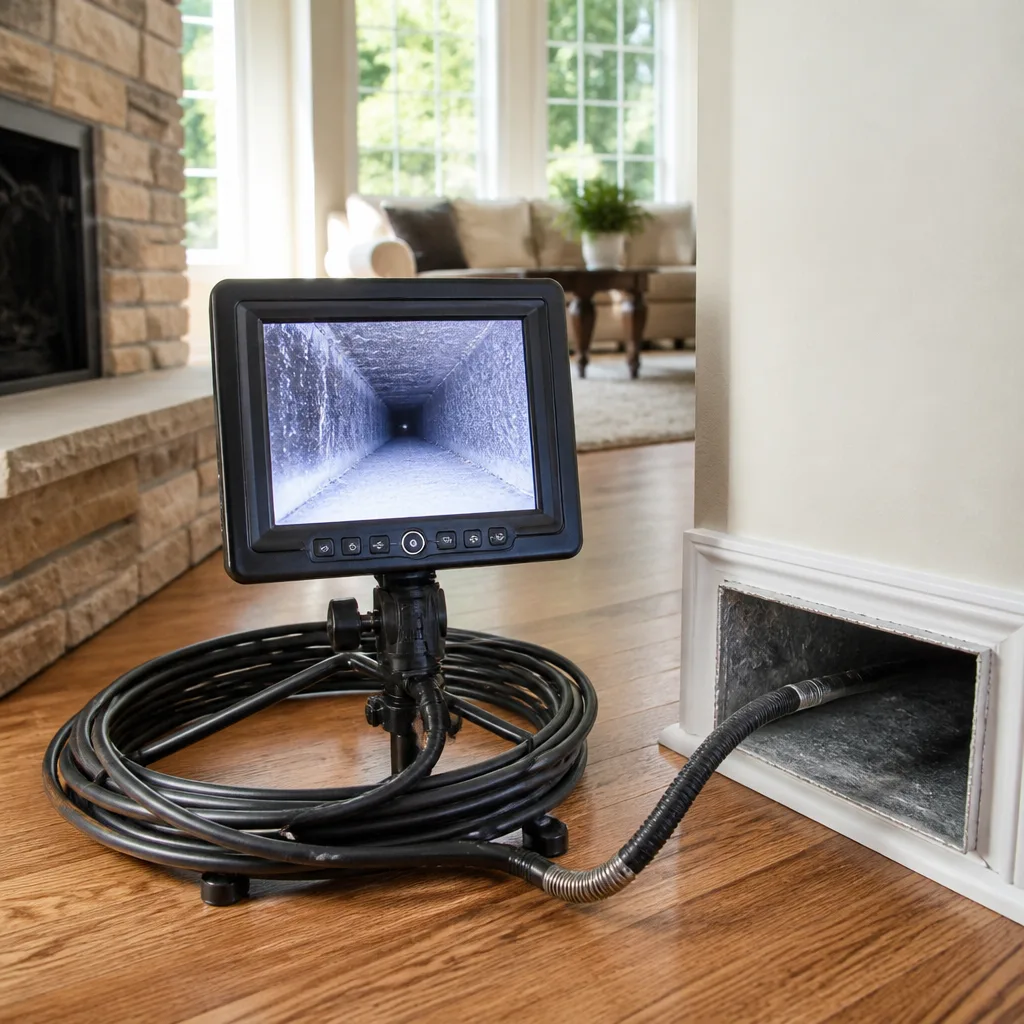 Camera inspection
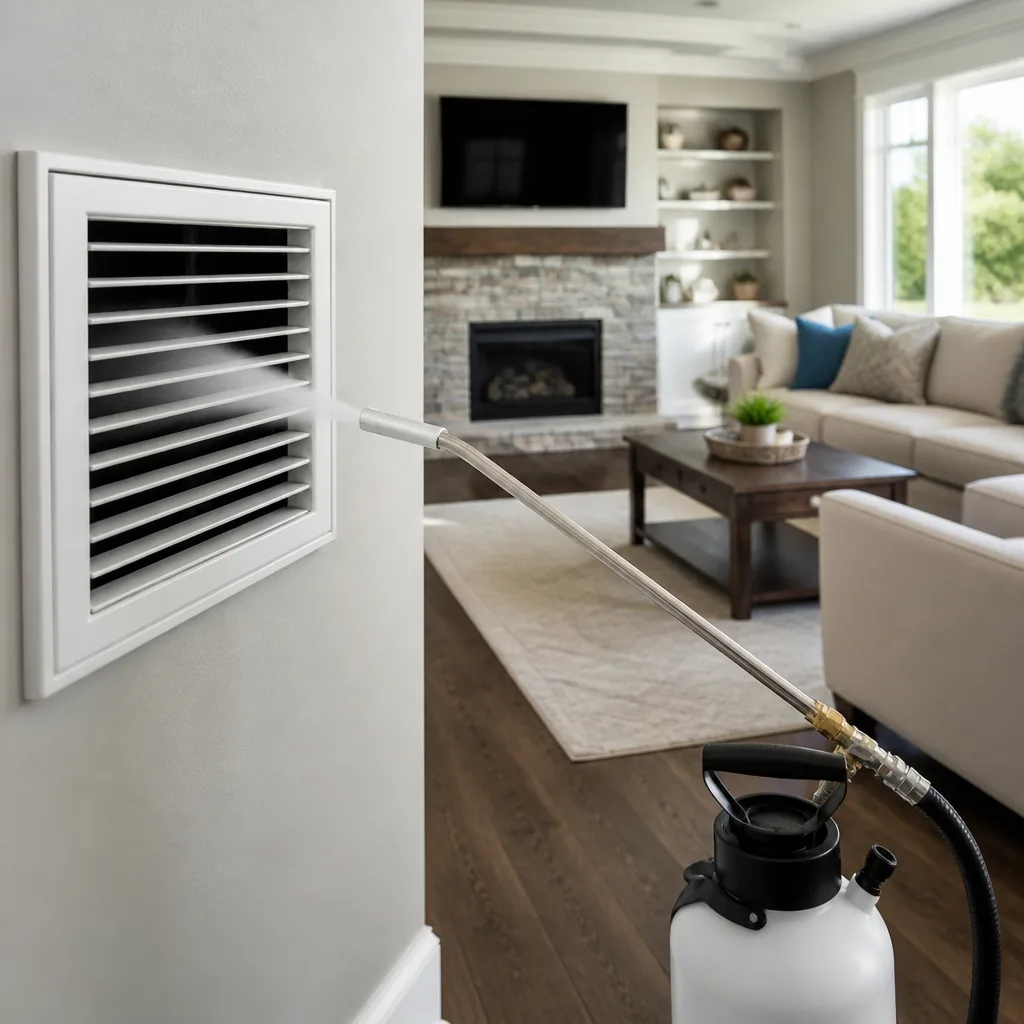 Sanitizing & deodorizing
Whole-system duct and dryer vent check with before-and-after photos - you see exactly what came out of your vents
That "$99 whole-house special" is a bait ad - the real number appears once they are in your hallway, or the "clean" is a shop-vac at the register. We photograph the inside of your ducts before and after instead.
Air Duct Repair Maintenance Schedule: What to Do and When
The standard “inspect your ducts every 3 to 5 years” advice was built for cold-climate homes where the furnace runs four months out of the year. In Hialeah, your system runs close to eleven months without a real break. That single fact changes the whole calendar. Ducts here bake through wet-season humidity and dry-season attic heat in a cycle national checklists don’t account for, so a schedule borrowed from a Minnesota homeowner’s guide will leave you two or three years behind on the wear that actually matters. This guide gives you a maintenance calendar built for Miami-Dade conditions: what to check each season, what you can handle yourself, what needs a contractor, and how to log it all so a slow decline never sneaks up on you.
Quick Answer
For most Hialeah homes, air ducts should be inspected once a year and cleaned every 2 to 3 years, not the 3 to 5 years a national template suggests, because the system runs nearly year-round. Repair checks belong on a twice-a-year cycle: once before the wet season in late April or May, and again right after hurricane season ends in November, which is the most important inspection window of the year. Filter changes stay monthly during peak cooling and no less than every three months.
Styles & brands we work with
- Whole-home duct cleaning
- Dryer vent cleaning
- Camera inspection
- Sanitizing & deodorizing
Table of Contents
- Why Hialeah Ducts Need a Different Schedule Than the National Template
- Your Wet Season vs. Dry Season Task Breakdown
- What You Can Do Yourself vs. What Needs a Contractor
- Flex Duct Lifespan Under South Florida Attic Conditions
- How to Keep a Maintenance Log That Catches Slow Decline
- The Maintenance Triggers That Void Manufacturer Warranties
- Why Post-Hurricane Season Is the Critical Inspection Window
- Common Mistakes to Avoid
Why Hialeah Ducts Need a Different Schedule Than the National Template
Most published duct-maintenance timelines come from research done in cold climates, where the HVAC system heats for maybe four months and sits idle the rest of the year. Hialeah doesn’t work that way. Air conditioning here runs almost continuously, and every hour of runtime pushes air, moisture, and dust through the same duct surfaces. That constant cycling is what wears a system down, and it’s why the interval between cleanings should be shorter here, not the same as a national guideline.
Two local conditions do most of the damage:
- Year-round runtime. A cold-climate system might log 3,000 hours a year. Ours log closer to 6,000 to 8,000. Debris accumulates about twice as fast, so a 3-to-5-year national cleaning window really becomes a 2-to-3-year window in Hialeah.
- Attic heat. Attics in Miami-Dade regularly climb above 140°F during the dry season. Flex duct, seals, and connections age under that heat far faster than in a mild attic. Heat is the enemy of every flexible material in your duct run.
Then there’s humidity. A wet-season Hialeah keeps indoor moisture high for months, and any small gap in a duct becomes a place where condensation collects and dust cakes onto the walls. That caked layer is the breeding ground for the organic growth that clean ducts are supposed to prevent. A homeowner in a dry climate can stretch a cleaning interval. In Hialeah, stretching it is how a small issue becomes a repair job. Our technicians have up to 9 years of experience reading exactly this kind of wear, and the pattern is consistent: the systems that get inspected on a local calendar hold up, and the ones on a cold-climate calendar don’t.
Your Wet Season vs. Dry Season Task Breakdown
Hialeah’s year splits into two maintenance profiles. The wet season, roughly May through October, is when humidity and rain drive mold risk and leak risk up. The dry season, November through April, is when attic heat peaks and duct materials age fastest. Your tasks should shift with the seasons, not follow one flat annual checklist.
Wet Season (May – October): Watch for Moisture
- Change filters more often. High humidity loads filters with moisture-laden dust. Check monthly and replace as needed rather than waiting for the three-month mark.
- Check condensate lines and drain pans. A clogged condensate line during the wet season is one of the most common causes of water where it shouldn’t be, and standing water near ductwork invites growth.
- Spot-check registers for damp smells. A musty smell at one register during a humid stretch is an early signal that moisture is reaching the duct interior.
- Do a pre-season inspection in late April or early May. Before the wet season is the right time to catch a loose connection or a sagging flex run, while the attic is still workable and before humidity stresses every seal.
Dry Season (November – April): Watch for Heat and Cracks
- Inspect duct connections in the attic. As attic temperatures climb and drop, mastic and tape at the joints crack. A visual check of the accessible runs pays off here.
- Check for airflow balance drift. If some rooms cool well and others struggle, the dry season is when the difference shows up. Note it in your log.
- Look at flex duct for sagging or crushed runs. Heat makes flex duct soften and sag, which chokes airflow and makes the blower work harder.
- Schedule a professional cleaning or repair inspection. Dry season is the natural time for the bigger service visit, since the wet-season stress test is behind you and the wear is visible.
This seasonal split is the core difference between a Hialeah maintenance schedule and a generic national template. The generic template doesn’t have a wet season and dry season to juggle.
What You Can Do Yourself vs. What Needs a Contractor
Some duct maintenance is genuinely a homeowner task. The rest requires pressure diagnostics, negative-air equipment, and an understanding of how a ducted system actually moves air, and doing it wrong can make things worse. Here’s the honest split.
Homeowner Tasks (Safe and Worth Doing)
- Change the filter. Monthly during peak cooling. This is the single highest-value thing you can do, and a clogged filter is the most common avoidable cause of system strain.
- Vacuum visible registers and return grilles. A surface clean keeps dust from being drawn back in. Use a brush attachment.
- Check condensate lines and pans. Look for standing water, algae buildup, or a clogged drain. A clear line prevents a lot of problems.
- Clear the area around outdoor and return vents. Furniture or stored items blocking a return grille choke airflow just as surely as a crushed duct.
- Log what you observe. Note filter dates, unusual smells, and rooms that cool poorly. This record becomes your early-warning system.
Contractor Tasks (Needs Real Equipment and Diagnostics)
- Interior duct cleaning. Surface vacuuming doesn’t reach the caked layer on duct walls. That takes a rotary-brush system. We use Rotobrush rotary-brush equipment to mechanically scrub duct interiors, paired with Nikro HEPA-rated negative-air vacuums that capture what we dislodge so it doesn’t re-enter your living space.
- Sealing and repairing breaches. A gap or disconnected joint needs to be found with pressure diagnostics, not guessed at, then sealed properly. A tape patch from the hardware store fails fast in a hot attic.
- Contamination-level situations. Fine particulates or suspected growth call for more than a shop vac. We deploy Abatement Technologies air filtration equipment for elevated-contamination scenarios where routine cleaning isn’t enough.
- Airflow balancing and pressure testing. Diagnosing why one side of the house can’t keep up means measuring static pressure and airflow, which requires instruments and training.
If a problem surfaces during air duct cleaning, we handle the repair in the same visit rather than sending you to a second vendor. Cleaning, structural repair, and dryer vent cleaning all fall under one specialized team, so a breach found mid-clean doesn’t become a scheduling headache.
Flex Duct Lifespan Under South Florida Attic Conditions
Flex duct is the flexible, insulated duct most common in Hialeah attics, and its lifespan here is shorter than the “20-plus years” figure you’ll see quoted for mild climates. The polyester jacket, the inner liner, and the insulation all degrade under sustained heat above 140°F and year-round cycling. A realistic expectation in a Miami-Dade attic is a noticeably shortened service life, and the moment to act is when repair stops paying for itself.
Here’s how to think about when repair becomes uneconomical:
- Repair makes sense when a single joint, a short crushed section, or a small tear is the only problem. Sealing and reconnecting a sound run is the smart spend.
- Repair starts losing value when the same run fails repeatedly, or when the inner liner has torn and collapsed along most of its length. You’re patching a duct that’s structurally finished.
- Replacement is the better call when the flex has lost its insulation value, sags across long spans, or has multiple collapsed sections feeding the same rooms. At that point the cost of repeated repairs outruns a clean replacement.
The heat also attacks the connections. Mastic and tape crack and pull away, and each crack opens a path for hot attic air to be drawn into the supply stream. That’s why a duct that “looked fine” last dry season can be leaking this one. Flex duct in Hialeah doesn’t fail all at once; it fails by degrees, which is exactly why the maintenance log matters. When we find a run like this during cleaning, we tell you straight whether it’s a repair or a replacement, and we set one flat price per system before any work starts.
How to Keep a Maintenance Log That Catches Slow Decline
A maintenance log isn’t paperwork for its own sake. Its real job is to document airflow balance over time, so a gradual performance decline gets caught before it becomes an expensive failure. Most homeowners notice problems only when a room gets noticeably stuffy or the bill jumps. A simple log catches the drift earlier.
Here’s what to record, and how:
- Date every filter change and note the filter type. Over a year, the pattern tells you whether your real replacement interval is matching the three-month rule or running shorter.
- Rate each room’s cooling once a month on a simple scale (strong, okay, weak). Do it during peak afternoon heat for consistency. A room that slips from strong to weak over a season is your first clue.
- Note any smell at any register and when it appeared. A musty note during the wet season is worth a phone call; a routine dust note is not.
- Record each professional visit: what was cleaned, what was repaired, and any pressure or airflow readings the technician shares. Those numbers are the baseline the next visit is compared to.
- Log dryer vent cleaning dates separately. This is a fire-safety item, not just an efficiency item, and it deserves its own line.
A one-page log, kept in a kitchen drawer or a phone note, is enough. The value comes from the trend line, not the detail. If two rooms both drift toward “weak” over one dry season, that pattern points to a duct problem rather than a coincidence, and it’s the kind of insight no single inspection can give you.
The Maintenance Triggers That Void Manufacturer Warranties
Here’s a detail most homeowners don’t learn until they file a claim: many newer HVAC systems have warranty language that requires the equipment to be maintained according to the manufacturer’s schedule. Skip the duct and airflow side of that maintenance and the manufacturer can argue the failure wasn’t covered. It’s not a scare tactic; it’s in the fine print of a lot of equipment warranties.
The duct-related triggers to watch:
- Filter neglect. A clogged filter that strains the blower over time is one of the most common reasons a warranty claim gets challenged. The manufacturer can point to restricted airflow as the cause of the failure.
- Uncorrected duct leaks and pressure problems. A system that’s been running against a leaking, oversized, or crushed duct network can fail early, and the warranty can treat that as an installation-and-maintenance issue rather than a defect.
- No maintenance record. When you can’t show that the system was serviced on schedule, a warranty claim gets harder to support. This is where the log earns its keep.
- Contamination found and ignored. Documented duct contamination that goes unaddressed, especially moisture-driven growth, is a maintenance failure, and it can complicate a claim.
The takeaway is simple: keep your filter changes current, keep your ducts serviced on the Hialeah timeline rather than the national one, and keep the log. If your equipment is newer, check the warranty terms against your actual schedule while you’re still covered. If we’re cleaning or repairing your ducts and find a problem that bears on a warranty question, we’ll point it out so you’re not blindsided later.
Why Post-Hurricane Season Is the Critical Inspection Window
November is the single most important month on a Hialeah duct calendar. Hurricane season runs from June through November, and the storms bring wind-driven rain, pressure changes, and hours of high humidity against the building envelope. Even when a storm doesn’t damage the structure, the stress it puts on attic ductwork is real, and it shows up after the season ends. Post-season inspection is when you catch it.
What a post-hurricane-season inspection looks for:
- Displaced or disconnected flex runs. Wind and pressure changes can shift ductwork in the attic, pulling joints apart without any obvious damage to the roof.
- Water intrusion reaching duct insulation. Driven rain can find its way to attic insulation, and wet duct insulation is a moisture source that feeds growth.
- Cracked mastic and tape at joints. The heat-and-humidity cycling of a storm season widens cracks that were minor in spring.
- Debris pushed into returns. Storm debris and dust get drawn into the system and load the returns faster than usual.
Late November is the right time to schedule a full inspection, because you’re looking at the accumulated wear of an entire storm season, and you want problems fixed before the dry season’s attic heat goes to work on them. Mold risk peaks on either side of the wet season, but it’s the wet-season stress that creates the conditions, so the post-season check is your chance to catch growth before it spreads. If you’re not sure whether your system needs cleaning versus repair, a single inspection answers it. That’s the visit worth not skipping.
Common Mistakes to Avoid
- Following the national 3-to-5-year cleaning window. That number comes from cold-climate systems that sit idle most of the year. In Hialeah, where air runs almost continuously, it leaves you years behind. Cut it to 2 to 3 years.
- Waiting for a problem before scheduling anything. Ducts fail by degrees, not suddenly. Annual inspection catches the slow decline of airflow balance while it’s still a cheap fix.
- Skip the post-hurricane-season check because the house “looked fine.” Attic duct stress from a storm season isn’t visible from a living room. November inspection is when you find the joints that pulled apart.
- Treat a musty smell during the wet season as normal. South Florida humidity is normal. A musty smell at a register during the wet season is not; it’s a moisture signal worth logging and checking.
- Let filters go three months during peak cooling. In the wet season especially, filters load faster with moisture-laden dust. Check monthly, replace as needed.
- Patch a failing flex run repeatedly instead of evaluating replacement. Once a run is structurally finished and the inner liner has collapsed, repeated repairs cost more than a clean replacement.
- Skip the drying machine vent on cleaning day. A clogged dryer vent is a fire hazard, and it’s easy to forget when the focus is the HVAC ducts. Put it on the log and clear it on schedule.
See the difference
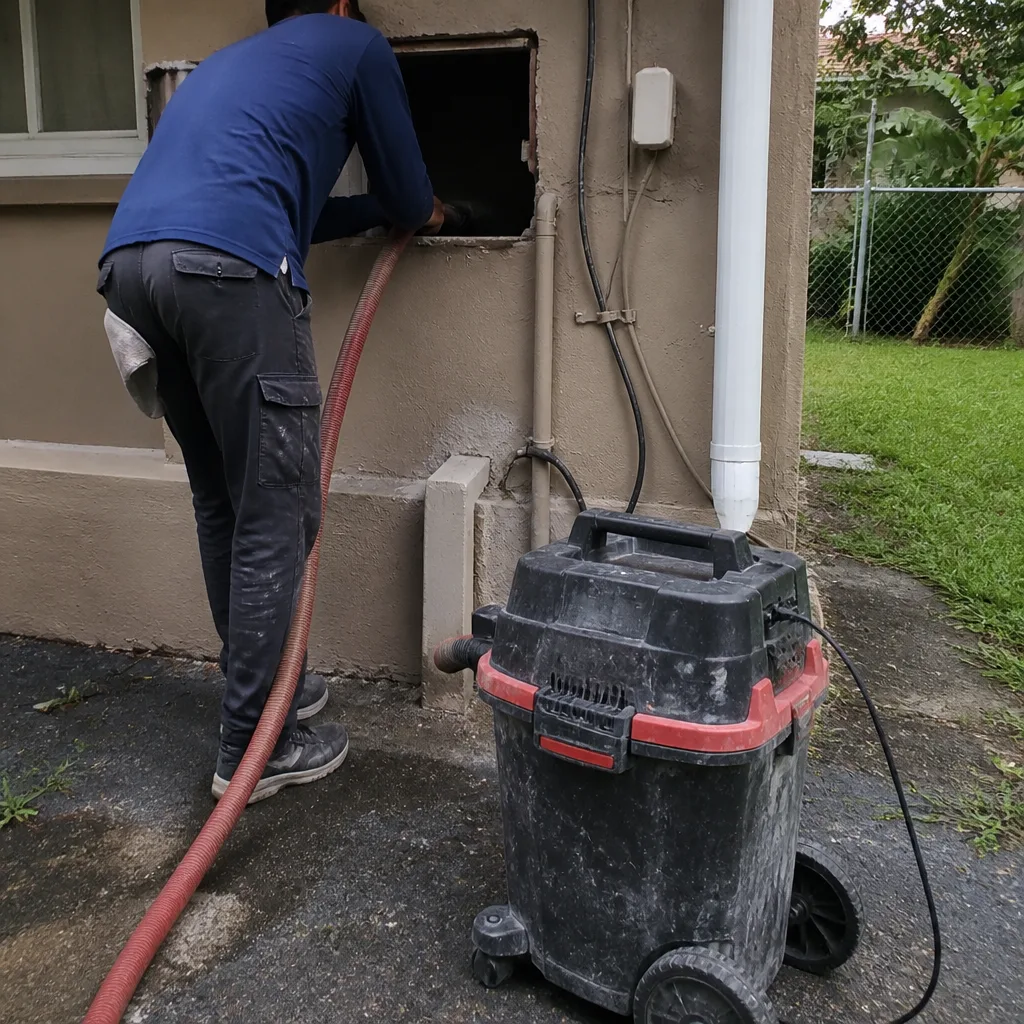 Before
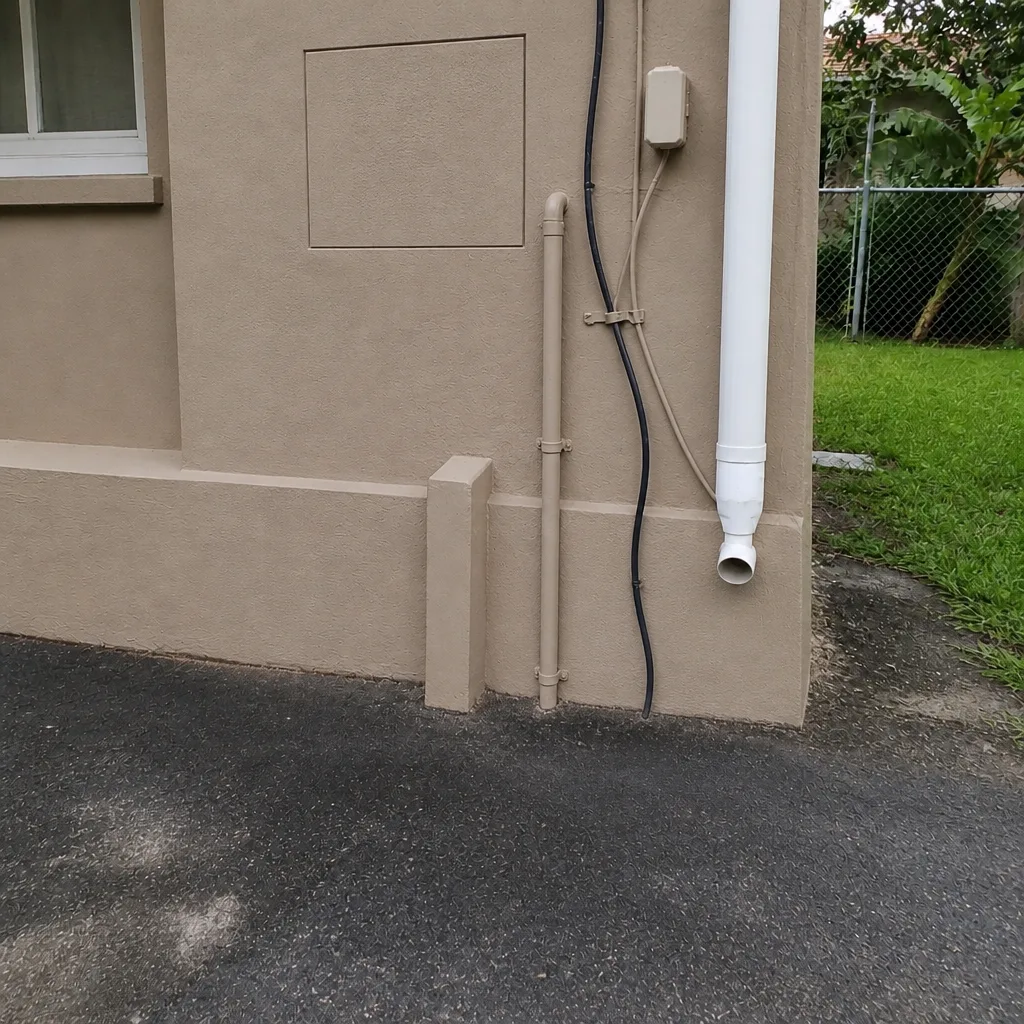 After
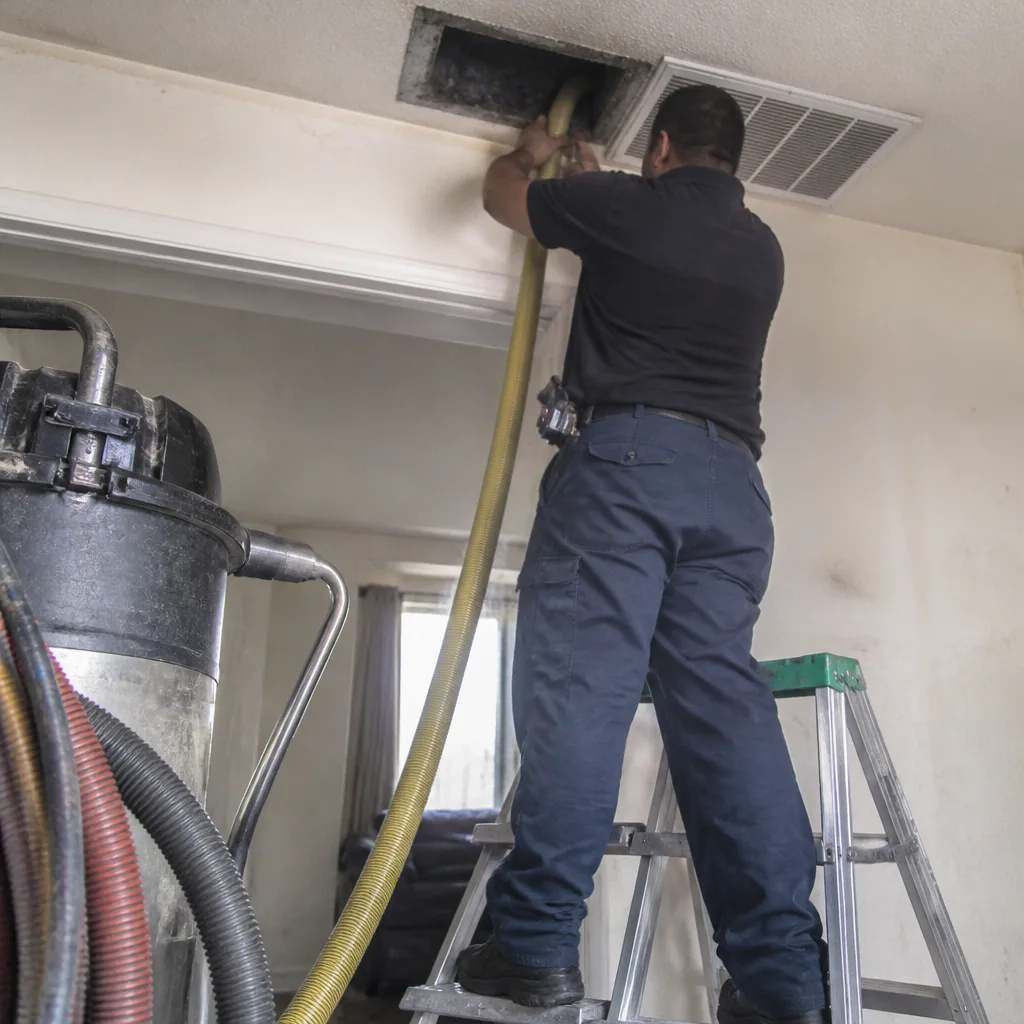 Before
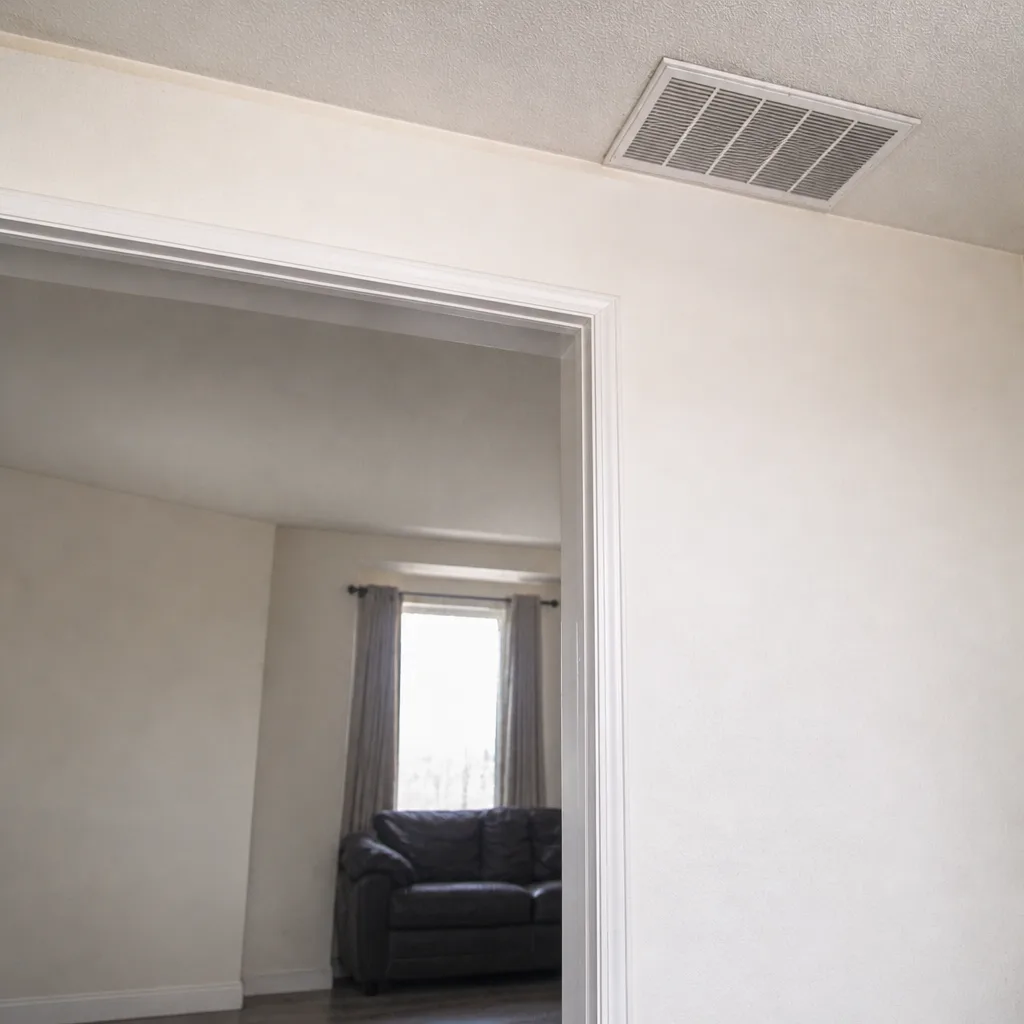 After
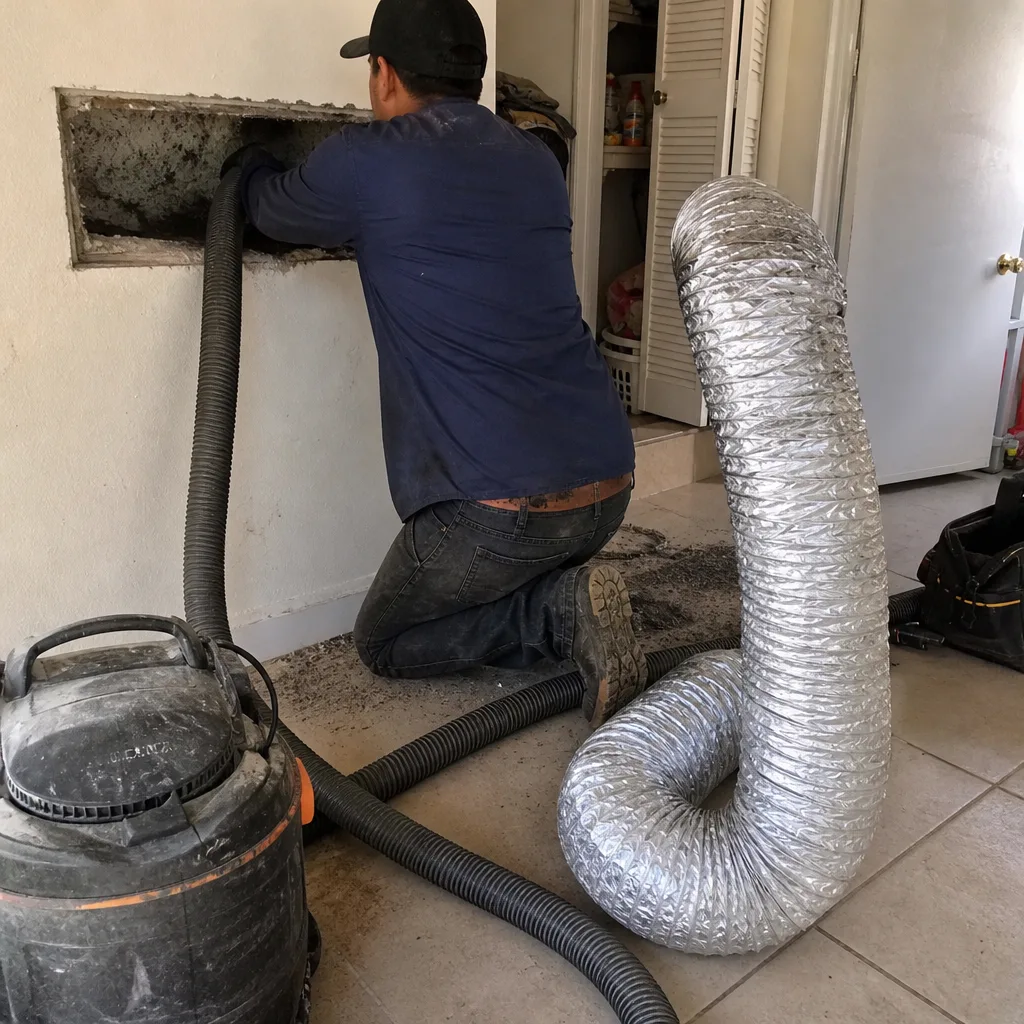 Before
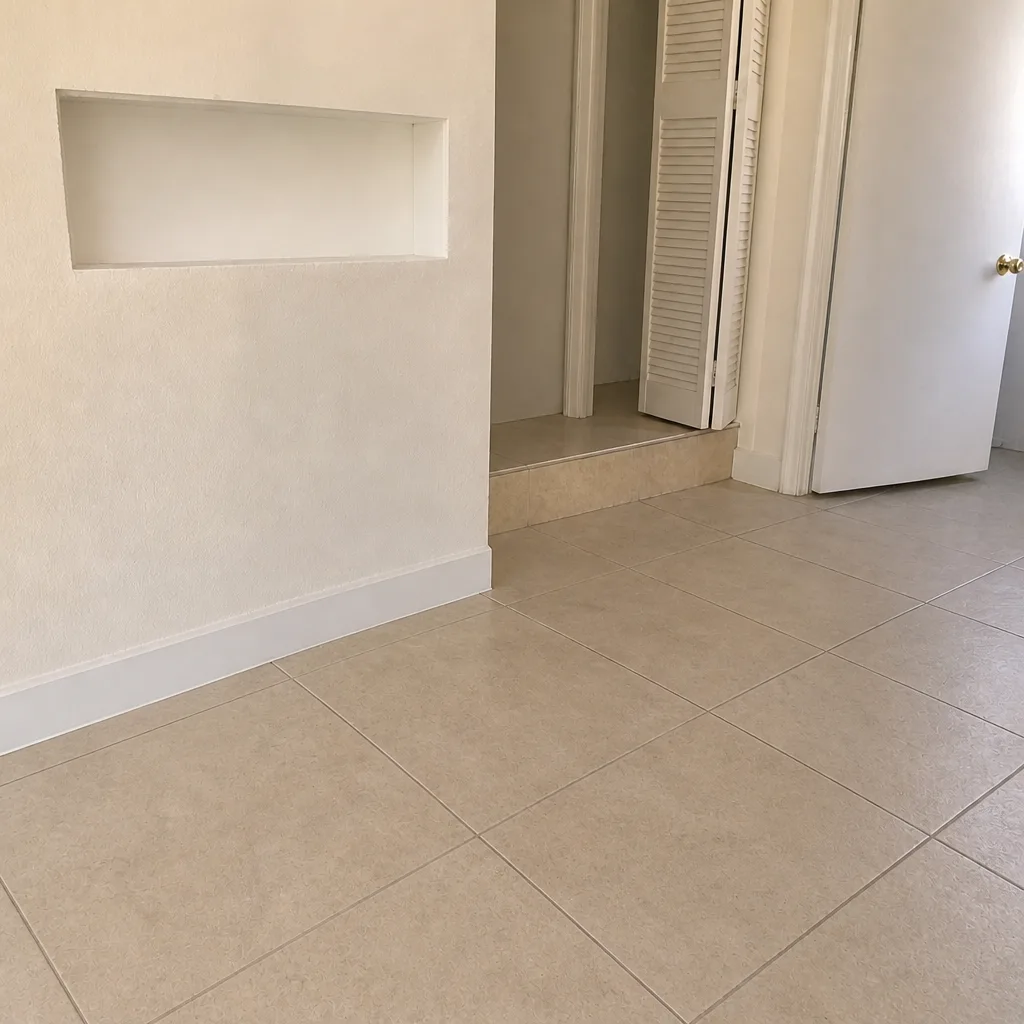 After
When to Call a Professional
Call a professional the moment any of these show up: a musty smell that appears and lingers during the wet season, a room that can no longer keep up with the rest of the house, visible or suspected duct damage found in the attic, water intrusion that reached the duct insulation, or a filter that clogs far faster than normal. A dryer vent that’s slow to dry clothes is its own reason to call, because vent clogs are a leading cause of residential fires. Beyond the triggers, schedule a professional cleaning on the 2-to-3-year Hialeah interval and an inspection every year. Hialeah Duct Cleaning offers free estimates in Hialeah, and we use Rotobrush rotary-brush systems with Nikro HEPA-rated negative-air vacuums so the debris we dislodge is captured, not pushed back into your air. Call (888) 831-4689 to book your estimate.
Frequently Asked Questions
Every 2 to 3 years for most Hialeah homes, with an inspection once a year. The shorter interval reflects a system that runs nearly year-round and pushes about twice the air volume a cold-climate system does, so debris builds faster. Call (888) 831-4689 for an exact quote, and estimates are free.
Yes. November closes out hurricane season, so it’s the point at which you can see the full season’s wear on attic ductwork: pulled joints, cracked seals, and any water that reached the insulation. Fixing what you find in November protects the system before dry-season attic heat does more damage. We answer 24/7 to take your booking; fast dispatch runs 7am to 7pm, Sunday through Friday.
You can vacuum the visible registers and return grilles, but you can’t reach the caked layer on the duct walls that way. Removing that takes a rotary-brush system and a negative-air vacuum rated to capture fine debris, which is contractor equipment. Surface vacuuming often stirs up more than it removes. Call (888) 831-4689 to book a proper cleaning.
Because the cheapest quotes usually cover a surface pass with light-duty equipment that doesn’t touch the interior buildup. The number that matters is what’s actually removed and whether the crew uses real contractor-grade tools. We use one flat price per system, agreed before work starts, with before-and-after photos of your own ducts so you can see the difference. Call (888) 831-4689 for an exact quote.
Often, yes. Many manufacturer warranties require maintenance on the manufacturer’s schedule, and a clogged filter or persistent duct leak can be cited as the cause of a failure, which complicates a claim. Keep filter changes current, service your ducts on the Hialeah timeline, and keep the log. Call (888) 831-4689 if you want an inspection that documents the condition of your ductwork.
Replace when a run has failed repeatedly, when the inner liner has collapsed along most of its length, or when the insulation value is gone and it sags across long spans. Repair is the right call for a single joint, a short crushed section, or a small tear. Heat above 140°F ages flex duct faster than the mild-climate lifespan figures you’ll read elsewhere. Call (888) 831-4689 and we’ll tell you which one makes sense.
The Bottom Line
The national “clean every 3 to 5 years” advice doesn’t fit Hialeah, because air conditioning here runs nearly eleven months and attic heat pushes past 140°F. Shift to an annual inspection, a cleaning every 2 to 3 years, and a twice-a-year repair check timed to the wet and dry seasons. Do the simple homeowner tasks – filters, visible registers, condensate lines – and keep a one-page log so airflow drift shows up early. The post-hurricane-season inspection in November is the one you don’t skip. And when repair turns into replacement, get an honest read before you pay for another patch. Hialeah Duct Cleaning offers free estimates in Hialeah, with one flat price per system agreed before work starts. Call (888) 831-4689. We answer 24/7. Fast dispatch from 7am to 7pm, Sunday through Friday, closed Saturday.
For more on the services behind this schedule, see Hialeah Duct Cleaning and our page for Hialeah.
Written by the team at Hialeah Duct Cleaning.