
Last updated November 15, 2026
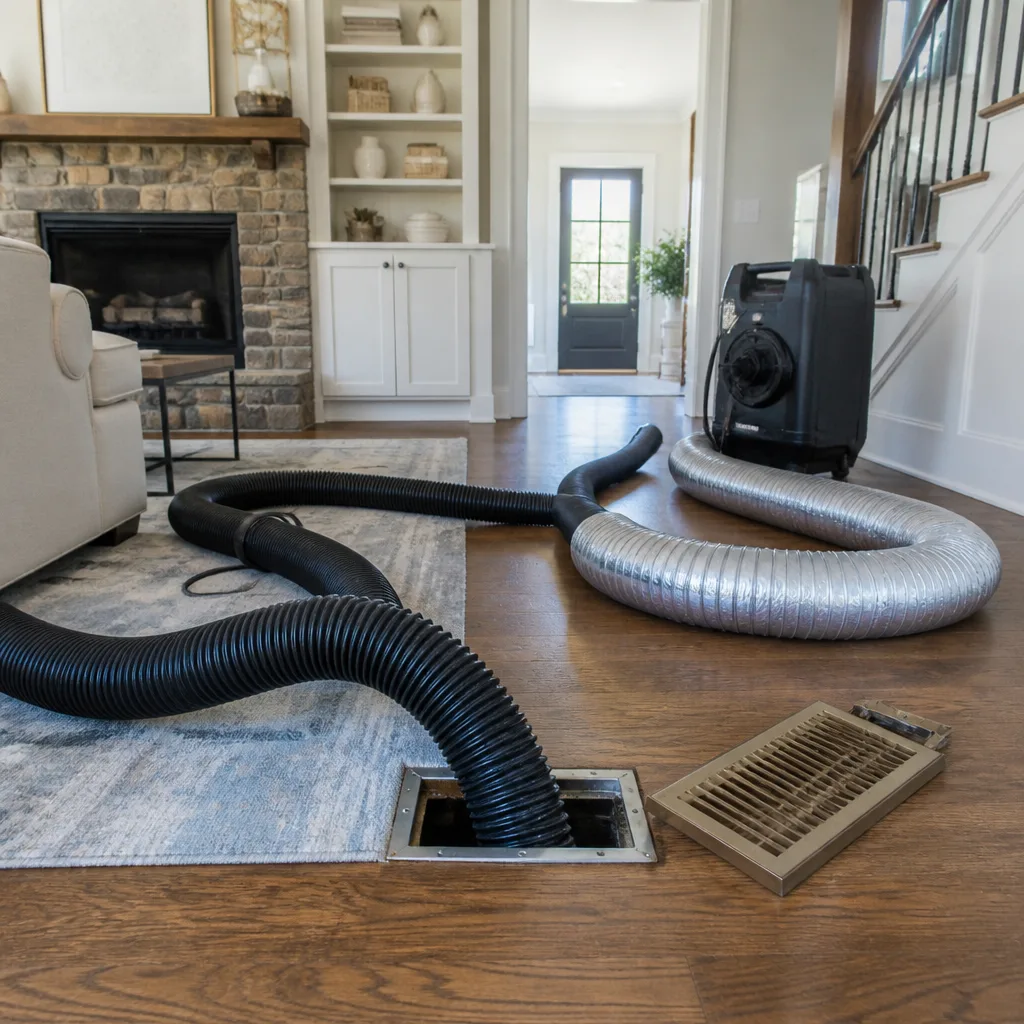 Whole-home duct cleaning
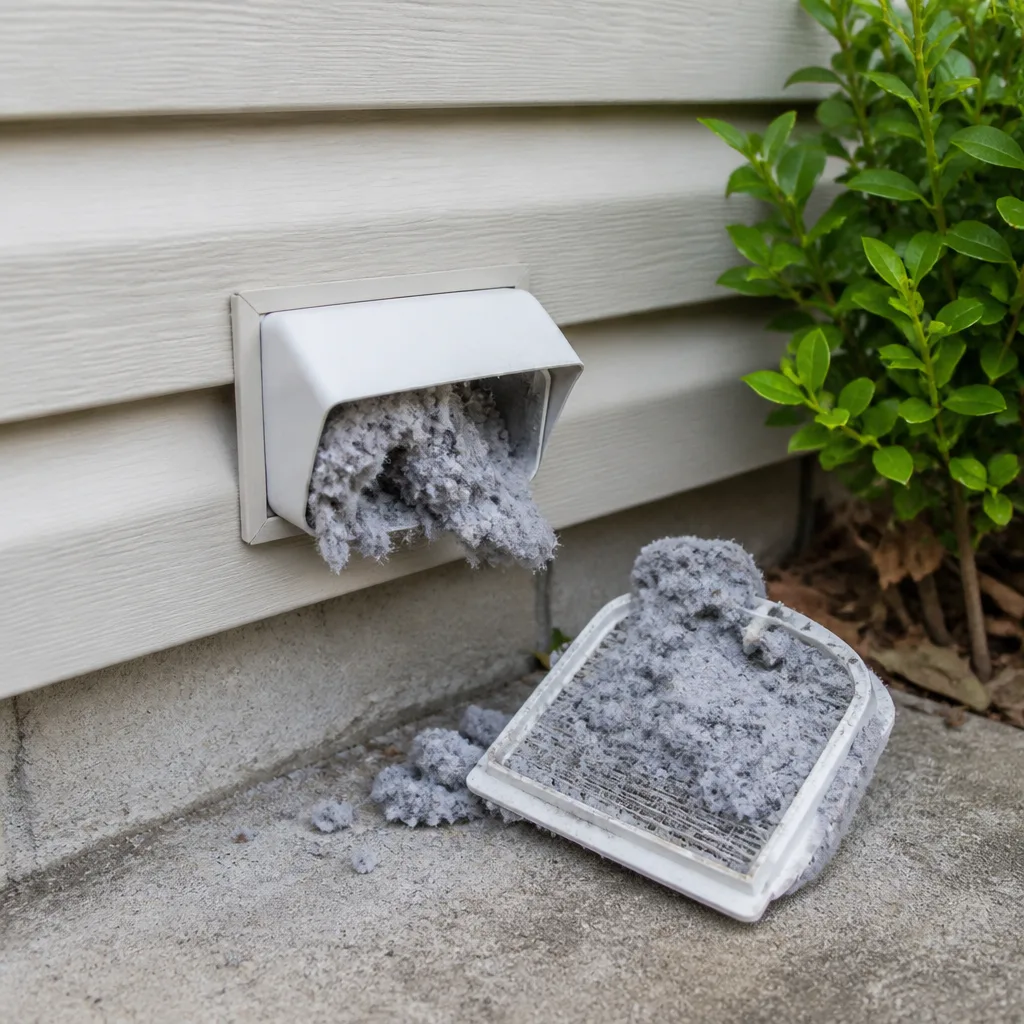 Dryer vent cleaning
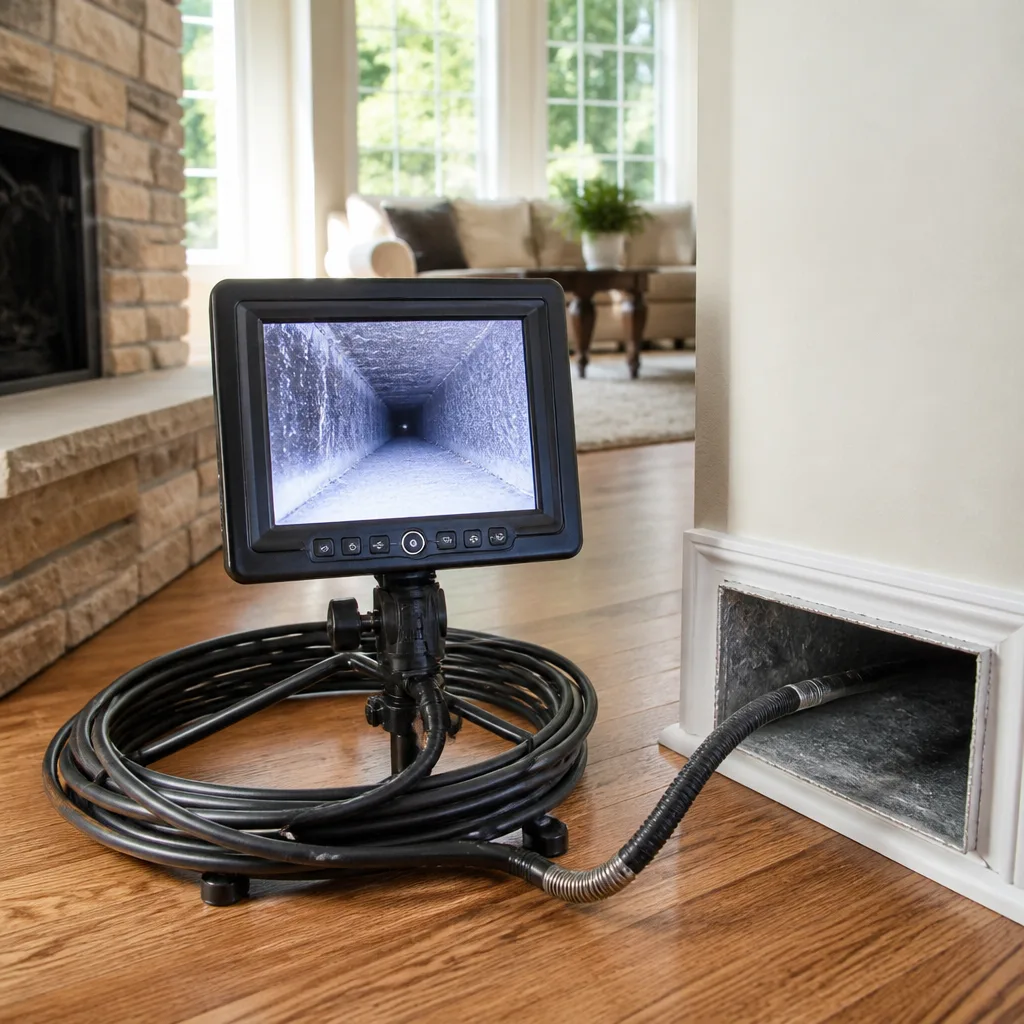 Camera inspection
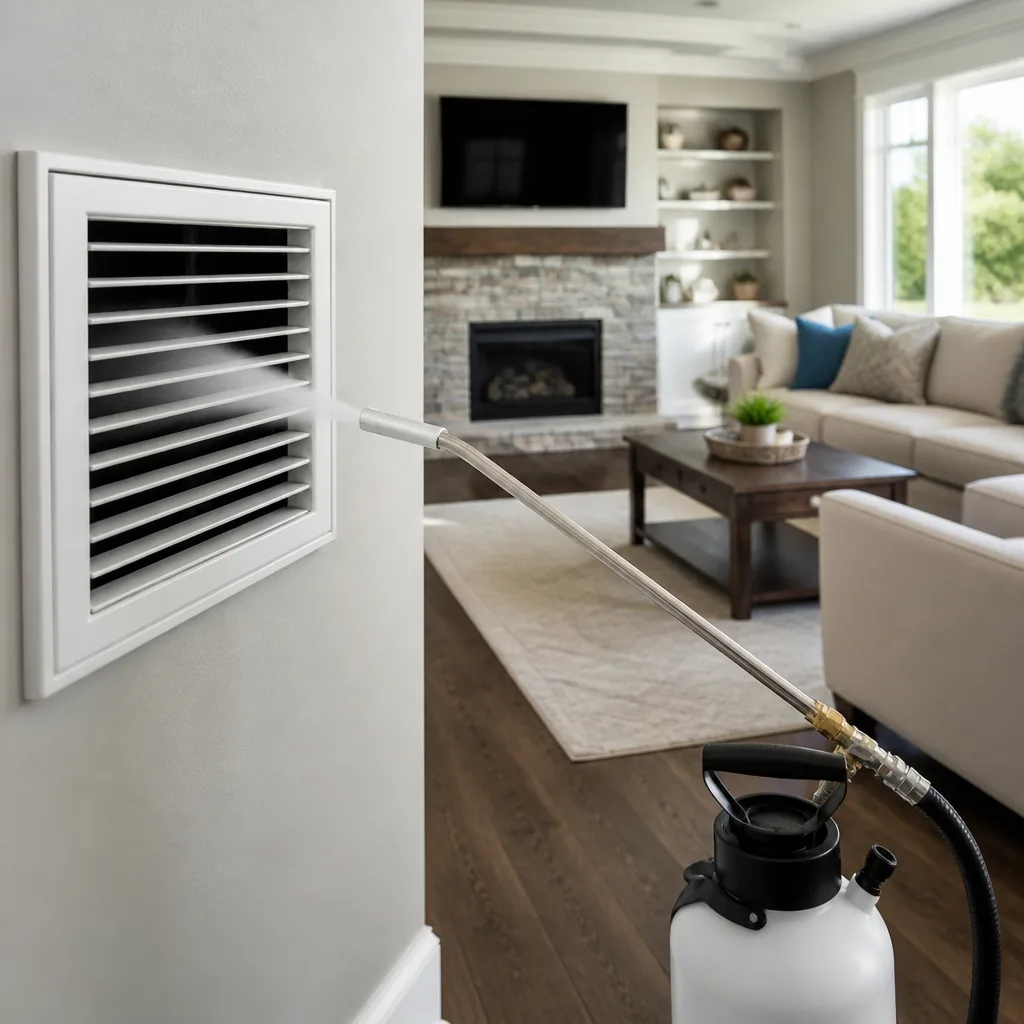 Sanitizing & deodorizing
Whole-system duct and dryer vent check with before-and-after photos - you see exactly what came out of your vents
That "$99 whole-house special" is a bait ad - the real number appears once they are in your hallway, or the "clean" is a shop-vac at the register. We photograph the inside of your ducts before and after instead.
The Complete Guide to Air Duct Cleaning in Hialeah
Most air duct cleaning guides were written for climates where the system rests for four months a year. In Hialeah, your HVAC runs 11+ months straight, which means contamination builds at a rate those guides never account for. Limestone dust, year-round humidity, and slab-on-grade construction combine here in a way that changes what actually accumulates inside a duct system, how hard it packs, and which sections are hardest to reach and verify. This guide maps the full process for Hialeah homes specifically: the equipment that dislodges compacted debris, the access challenges slab construction creates, how to tell dirty ducts from ducts with microbial growth, and what a real post-cleaning verification looks like. If you’ve read a generic duct cleaning article and still felt unsure what you were getting, read this instead.
Quick Answer
Air duct cleaning in Hialeah involves mechanically scrubbing the interior duct walls with a rotary-brush system while a HEPA-rated negative-air vacuum holds the duct under suction so dislodged debris never re-enters your living space – then verifying the result with a camera inspection before anyone calls the job finished. It matters more here than in seasonal climates because continuous HVAC runtime compacts debris faster and pushes it deeper into the duct lining. A correct job uses contractor-grade equipment, captures rather than redistributes, and shows you proof of what came out.
Styles & brands we work with
- Whole-home duct cleaning
- Dryer vent cleaning
- Camera inspection
- Sanitizing & deodorizing
Table of Contents
- Why Hialeah Duct Contamination Builds Differently
- Slab-On-Grade Construction and Return Duct Access
- The Equipment That Actually Matters
- What a Full Cleaning Job Looks Like, Step by Step
- Post-Cleaning Verification: Why “We Ran the Vacuum” Isn’t Proof
- Dirty Ducts vs. Ducts With Microbial Growth
- Dryer Vent Cleaning: The Safety Side of the Same System
- How Often Ducts Really Need Cleaning Here
Why Hialeah Duct Contamination Builds Differently
In a climate with four real seasons, the air handler spends a chunk of the year idle. Dust settles, but the system isn’t moving air, so debris stays loose and sits where it lands. Hialeah doesn’t get that pause. The AC runs almost continuously, which means air is always moving and always carrying particles through the same passages. That constant airflow does two things: it delivers more debris into the system over a given year, and it presses existing debris against the duct walls with steady pressure so it compacts instead of staying loose.
Compaction is the part most generic guides skip. Loose dust is easy to vacuum away. Debris that has been pressed against galvanized steel or flex duct lining by months of moving air starts to adhere, and a light surface vacuum passes right over it. That’s why the tool matters, and it’s why a discount cleaner with a shop vac can “clean” a duct and leave the layer that actually matters still bonded to the walls.
The local dust load adds to it. Hialeah sits on and around limestone, and fine mineral dust from the ground, from construction, and from everyday wear gets pulled into return air along with the usual lint, pet hair, and cooking particles. Mix mineral dust with humidity and you get a film that clings. Add the humidity itself – South Florida air carries moisture much of the year, and even a well-run system sees condensation at the coil and in the plenum – and suspended particles have a reason to stick rather than drift.
- Continuous runtime – more airborne debris delivered into the system over the same calendar period.
- Compaction – steady airflow presses debris against duct walls so it bonds instead of staying loose.
- Mineral dust – fine limestone and construction dust that clings when combined with moisture.
- Humidity – condensation at the coil and plenum gives particles a surface to adhere to.
What this means for a Hialeah homeowner is simple: a maintenance interval that makes sense in a mild climate is too long here. A system that sees three or four months of downtime a year may genuinely go several years between cleanings. A system running nearly nonstop in Hialeah accumulates faster, and the compaction means the cleaning has to be mechanical, not just suction.
Slab-On-Grade Construction and Return Duct Access
Much of Hialeah’s housing is built slab-on-grade, with no basement and no crawlspace. The mechanical system frequently lives in a closet, attic, or a tight utility chase, and the return ductwork is routed through the structure rather than under a floor you can walk beneath. That matters for duct cleaning because access is everything. You can only clean and verify what you can reach.
In a home with a basement, a technician can often get to a long run of return duct from below and clean it end to end. In slab construction, the same run may be enclosed in a wall cavity or furred into a ceiling, with limited access panels. A crew that doesn’t plan for that will either skip those sections or claim they cleaned them without any way to prove it. The honest approach is to open access where it’s needed, document what’s reachable, and tell you plainly if a section requires a cut-in that you should approve first.
Slab construction also affects where the return air originates. Returns in hallways and central plenums pull from the middle of the home, which is also where the most foot traffic and the most settled dust live. That return path tends to be the dirtiest part of a slab-home system, and it’s often the section with the least convenient access. When we assess a Hialeah home, the return routing is one of the first things we look at, because it determines how much of the job is straightforward and how much needs a plan.
- Locate every return and supply run and note which ones are enclosed in structure.
- Identify access points – existing panels, grilles, and closet or attic openings you can work through.
- Flag enclosed sections that need a cut-in, and get your approval before making one.
- Clean from the farthest point back so dislodged debris moves toward the vacuum, not deeper into the system.
- Verify each run with a camera before closing it up.
If you’re comparing quotes, ask each one how they’ll handle a return duct buried in a wall cavity. The answer tells you whether you’re hiring a real air duct cleaning operation or someone who plans to vacuum the grilles and leave.
The Equipment That Actually Matters
Duct cleaning is a two-part problem: you have to loosen what’s stuck to the walls, and you have to capture it before it escapes into your rooms. Those are different jobs, and each needs its own tool. A single shop vac does neither well.
For the first part, we use Rotobrush rotary-brush systems. These drive a spinning brush head through the duct, mechanically scrubbing the interior surfaces and breaking the bond that holds compacted debris to the lining. That’s the difference between scrubbing and surface vacuuming – the brush agitates the layer that continuous airflow has pressed on, and it reaches around bends and into the corners of rectangular runs where suction alone won’t.
For the second part, we run Nikro HEPA-rated negative-air vacuums. The vacuum is connected to the system and pulls the duct under negative pressure before any brushing starts. That way, when the brush dislodges debris, the air movement is carrying it toward the vacuum and out of the system rather than back through your supply registers. Without that negative pressure, the act of cleaning can actually push a cloud of dust into the living space. The HEPA filtration is what makes the difference at the exhaust end: fine particles are captured rather than blown through the machine and back into the room.
For heavier contamination – visible growth, fine particulate that’s spread through a larger area, or situations where the dust load in the air during cleaning is going to be significant – we bring in Abatement Technologies air filtration units. These are the kind of filtration equipment used when the job is less about routine dust and more about keeping the air in the work area clean as the work proceeds. It’s the tool that separates a routine cleaning from a contamination-level response.
- Rotobrush rotary-brush system – mechanical agitation that scrubs the duct wall and breaks compacted debris loose.
- Nikro HEPA negative-air vacuum – holds the duct under suction so dislodged debris is captured, not redistributed.
- Abatement Technologies filtration – for situations with elevated contamination or fine particulates in the work zone.
We also work with Honeywell and Aprilaire indoor air quality products, which matters after the cleaning is done. Filtration and humidity control upgrades work best when the ducts delivering that air are clean – the equipment can only condition the air it’s given. Cleaning and IAQ upgrades are complementary, not competing, services.
What a Full Cleaning Job Looks Like, Step by Step
A duct cleaning done correctly follows a sequence, and the sequence is what protects your home from getting dustier instead of cleaner. Here’s what a proper job looks like from arrival to sign-off.
- System assessment. We identify the air handler, every supply and return run, and the access points available. This is where we find out how much of the system is exposed versus enclosed in slab construction.
- Protect the space. Floor coverings go down in the work areas, and the negative-air vacuum is connected and running before any brush touches a duct.
- Open access. Existing panels and grilles come off. Where a run is enclosed, we discuss the cut-in before making it.
- Agitate each run. The rotary brush runs through every reachable supply and return, scrubbing the walls. The brush goes in from one end and works back toward the vacuum.
- Clean the components. The air handler cabinet, blower area, and coil surfaces are cleaned where they’re part of the job. A clean duct system feeding a dirty cabinet is half a job.
- Inspect. A camera goes into the ductwork and we look at what the brush left. Findings get shown to you, not just described.
- Repair findings. If the inspection turns up a gap, a disconnected joint, or a crushed section of flex duct, we handle it during the same visit so you’re not booking a second appointment.
- Reassemble and verify airflow. Grilles and panels go back, the system runs, and we confirm airflow at the registers.
Steps four and five are where the equipment earns its keep. Steps six and seven are where most of the value lands for the homeowner, because that’s where you find out what condition the system is actually in. If you want a related walkthrough of the same reasoning, our guide on dryer vent cleaning shows why the same capture-first approach applies to the exhaust side of a home.
Post-Cleaning Verification: Why “We Ran the Vacuum” Isn’t Proof
Anyone can claim they cleaned your ducts. The question is what evidence you have when they leave. “We ran the vacuum” tells you nothing about whether the brush actually reached the far end of a run, whether the return in the hallway got scrubbed, or whether a section of flex duct collapsed on itself halfway through. Verification is the part of the job that separates a real cleaning from a show.
Camera inspection is the tool. A small inspection camera goes into the duct through an access point or a register opening, and the technician can see the interior wall, the joints, and the corners of the run. What you’re looking for in the footage is the absence of the debris layer that was there before – clean metal or clean flex lining, no clinging film, joints intact.
There’s a second verification step that matters just as much, and it’s one the customer can check directly: before-and-after photos of your own ducts. Not stock images, not a generic gallery on a website, but the actual runs in your home. Ask for them. A contractor who’s doing the work has them; a contractor who’s guessing usually doesn’t. We show our customers the images from their own system for exactly that reason.
- Camera footage of each reachable run after cleaning, not just before.
- Before-and-after photos taken from the same vantage point in your own ducts.
- A walk-through of what was reached, what was enclosed, and what was repaired.
- Airflow check at the registers after reassembly.
A written estimate and a clean verification record won’t tell you the temperature of the air, but they will tell you whether the work happened. If you’re comparing quotes and one is significantly cheaper, ask what their verification process is. If the answer is vague, the price reflects the missing step.
Dirty Ducts vs. Ducts With Microbial Growth
Not every dirty duct is a contamination problem, and the difference changes the response. Routine dust, lint, and mineral debris is a cleaning job. Visible growth on the duct lining, or a persistent musty odor that returns after cleaning, is a different situation and needs a different protocol.
The first thing to know is that “mold in the ducts” gets used loosely in this trade. Actual microbial growth on duct surfaces requires the combination of moisture and a food source that the growth can colonize – typically organic material like dust, lint, or a compromised duct liner. In a Hialeah home where humidity runs high and the system is running continuously, the conditions for that are more present than in a dry climate. But presence of conditions isn’t the same as presence of growth, and a contractor shouldn’t tell you you have a growth problem before they’ve actually looked.
What a proper assessment looks like: a camera inspection of the interior surfaces of the air handler, the plenum, and the duct runs, looking specifically for discoloration, visible growth patterns, or degraded liner material. If growth is found, the response goes beyond routine cleaning – the affected surfaces need to be cleaned, the moisture source needs to be addressed (usually the coil, drainage, or a humidity issue), and in cases where the lining is compromised, the section may need to be replaced rather than cleaned. This is the situation where Abatement Technologies filtration and HEPA-level capture become standard practice rather than optional, because the dust load in the work area during cleaning needs to be controlled.
- Routine dust and debris – cleaning job, standard negative-air capture and rotary brushing.
- Musty odor that doesn’t clear – inspect for moisture source before assuming it’s just dust.
- Visible growth on duct lining – contamination-level cleaning with Abatement Technologies filtration and HEPA capture.
- Degraded or compromised liner – cleaning may not be enough; section replacement may be the correct answer.
We don’t sell remediation contracts – our scope is cleaning and repair, and if the assessment turns up a growth problem that needs more than cleaning, we’ll tell you so plainly. That’s a conversation worth having honestly rather than letting a cheaper quote decide it for you.
Dryer Vent Cleaning: The Safety Side of the Same System
A dryer vent is a duct, and it accumulates lint the same way an HVAC duct accumulates dust – with one difference that matters enormously. The heat source. A clogged dryer vent restricts airflow, the dryer runs hotter, and lint is highly flammable. The result, in the worst case, is a fire that starts behind the dryer and moves fast through the vent run.
That’s the reason we treat dryer vent cleaning as a genuine safety service rather than a maintenance item. The standard is not “lint pulled from the vent opening” – it’s clearing the full run from the dryer connection to the exterior termination, and inspecting the entire length. A run with a partial clog is a fire risk even if a quick vacuum of the outlet looks clean.
- Disconnect and check the appliance-side connection for crushed or kinked flex duct, which is common in tight utility closets.
- Run the vent cleaning equipment through the full length of the duct to the exterior wall or roof termination.
- Inspect the entire run with a camera – especially on longer routes with bends.
- Check the exterior termination for proper venting and any obstruction at the outlet.
- Reconnect and confirm airflow at the dryer.
Hialeah’s housing stock includes a lot of tight utility closets and laundry rooms where the dryer vent run is long and bends more than once. Those configurations are where lint accumulates fastest, because airflow slows at every bend. A cleaning that stops at the first elbow leaves the worst of the clog in place.
How Often Ducts Really Need Cleaning Here
There’s no single interval that fits every home, and the “every three to five years” number you see quoted in many guides was written with seasonal climates in mind. In Hialeah, the practical answer depends on several factors specific to your house.
- Continuous runtime – if the system never gets a break, expect a shorter interval than in a climate with a real off-season.
- Pets and occupants – pet hair and foot traffic add debris into return air faster.
- Recent renovation – construction dust from drywall, flooring, or paint work goes straight into the return system and usually justifies a cleaning afterward.
- Allergy symptoms that ease when you’re away from home – a sign worth investigating, not diagnosing.
- Visible dust at the registers – streaks or settled dust around supply grilles often signal more inside the run.
- Water events or musty odor – inspect before deciding whether it’s a cleaning or something more.
For most Hialeah homes running continuously, a check every few years is a reasonable baseline, and a cleaning when the inspection shows accumulation is the right trigger. If you’ve never had the system inspected, the first visit should include a look at the condition, not just a cleaning. If you want a broader picture of what that first appointment looks like, the overview on Hialeah Duct Cleaning covers our services and process.
Common Mistakes to Avoid
- Hiring a shop vac and calling it duct cleaning. A standard shop vac cannot scrub duct walls or hold a duct under HEPA-rated negative pressure. What it can do is blow compacted dust into your rooms. Ask what equipment the contractor will run before you book.
- Skipping the camera verification. A cleaning without an inspection leaves you with no proof of what was reached or what was left. In Hialeah’s slab-construction homes, a significant portion of the run may not be visible without a camera.
- Ignoring the return side. Most of the debris in a Hialeah home enters through the returns, which are often the hardest sections to access in slab-built housing. A cleaning that focuses only on supplies misses the dirtiest part.
- Assuming musty odor means mold in the ducts. Odor can come from the coil, drainage, or humidity inside the air handler. An inspection finds the source before anyone commits to a treatment protocol.
- Putting off dryer vent cleaning. The vent is a fire safety system, not a maintenance chore. A clogged vent restricts airflow and runs hot; in tight Hialeah utility closets with multiple bends, lint builds fast.
- Choosing the lowest quote without asking what’s in it. A quote that leaves out the camera inspection, the return cleaning, or the air handler cabinet is cheaper because it’s a smaller job – not because you’re getting a deal.
- Closing up a repair finding for a second appointment. A duct with a gap or crushed section will re-accumulate debris and leak air. If a repair is found during cleaning, it should be handled the same visit.
See the difference
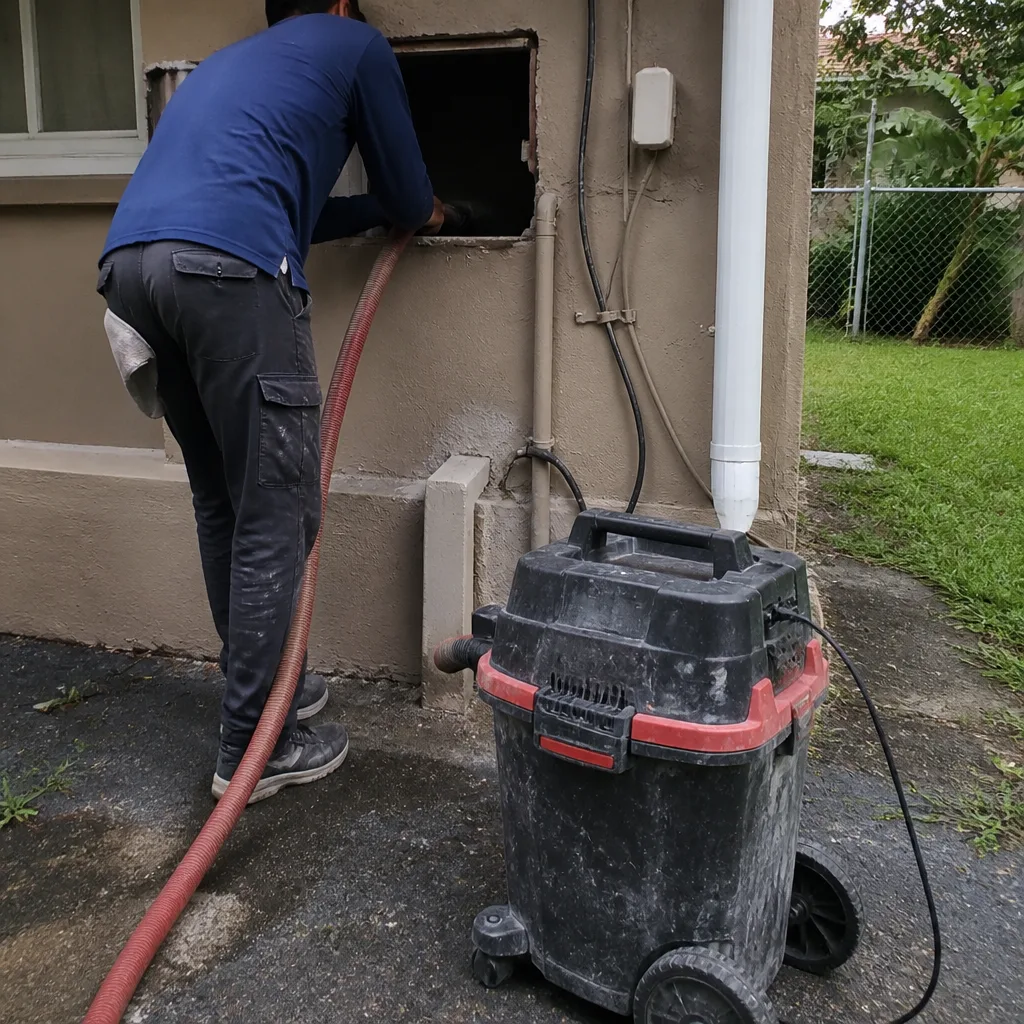 Before
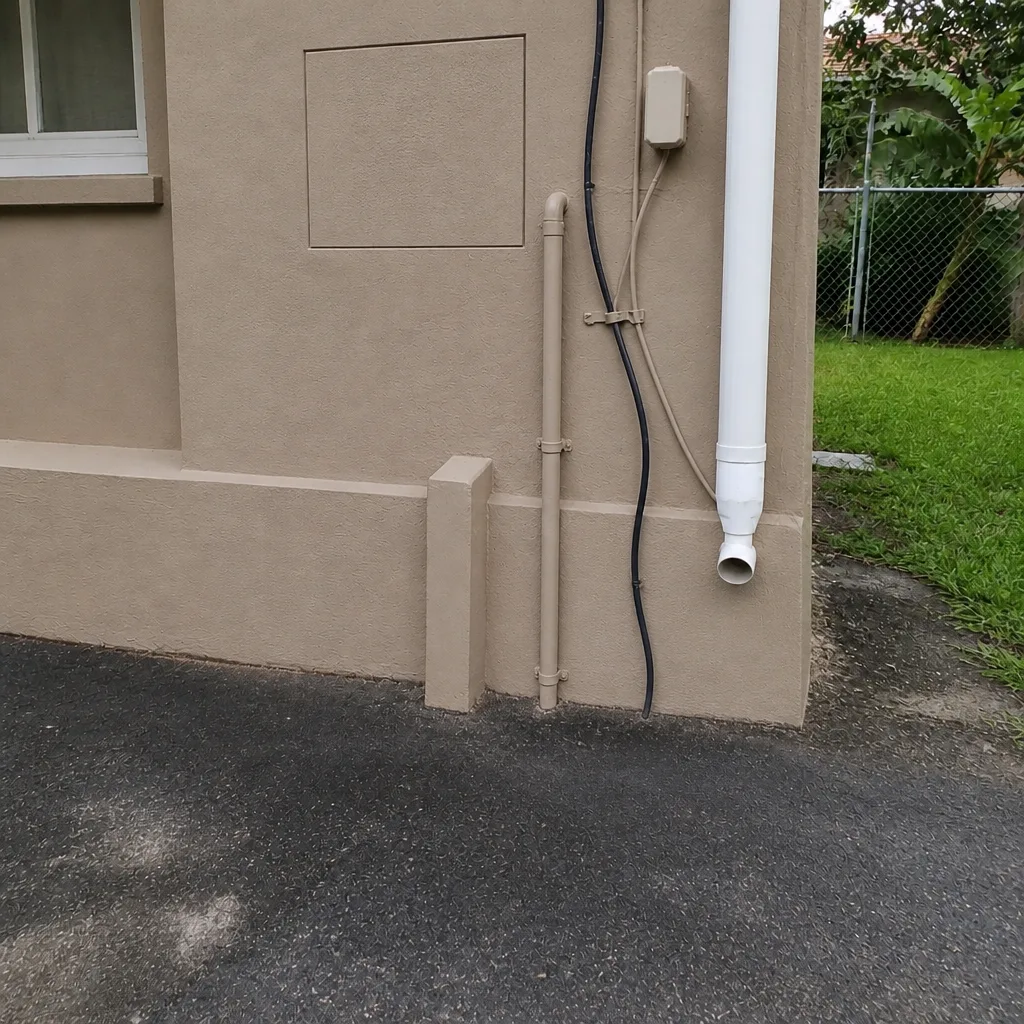 After
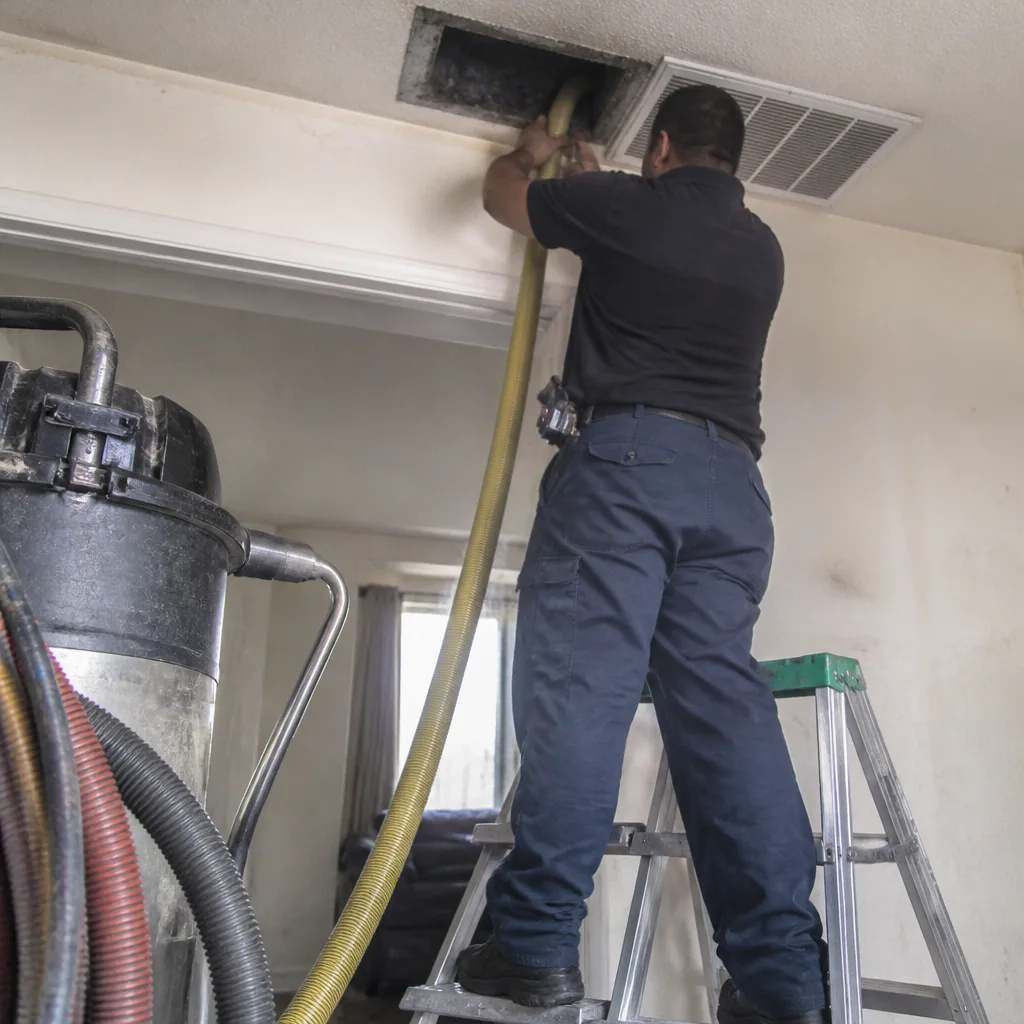 Before
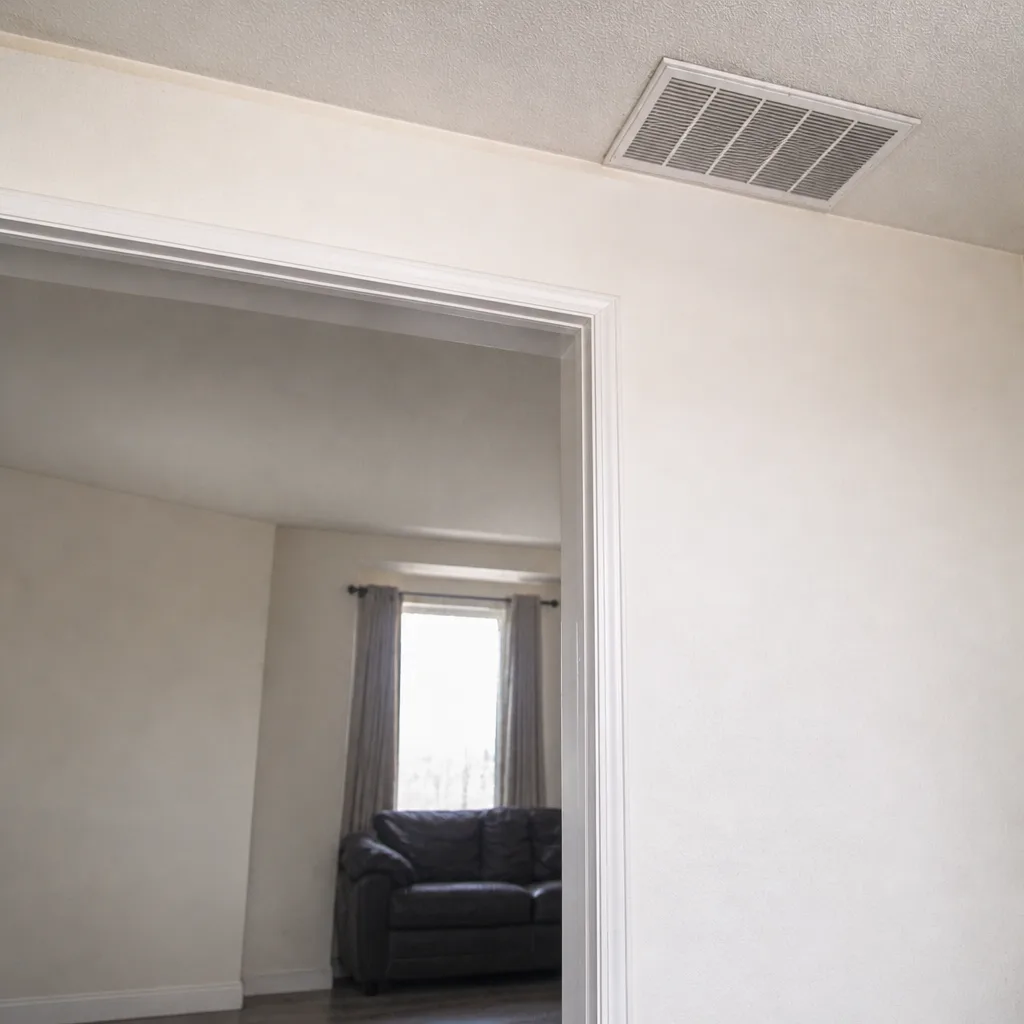 After
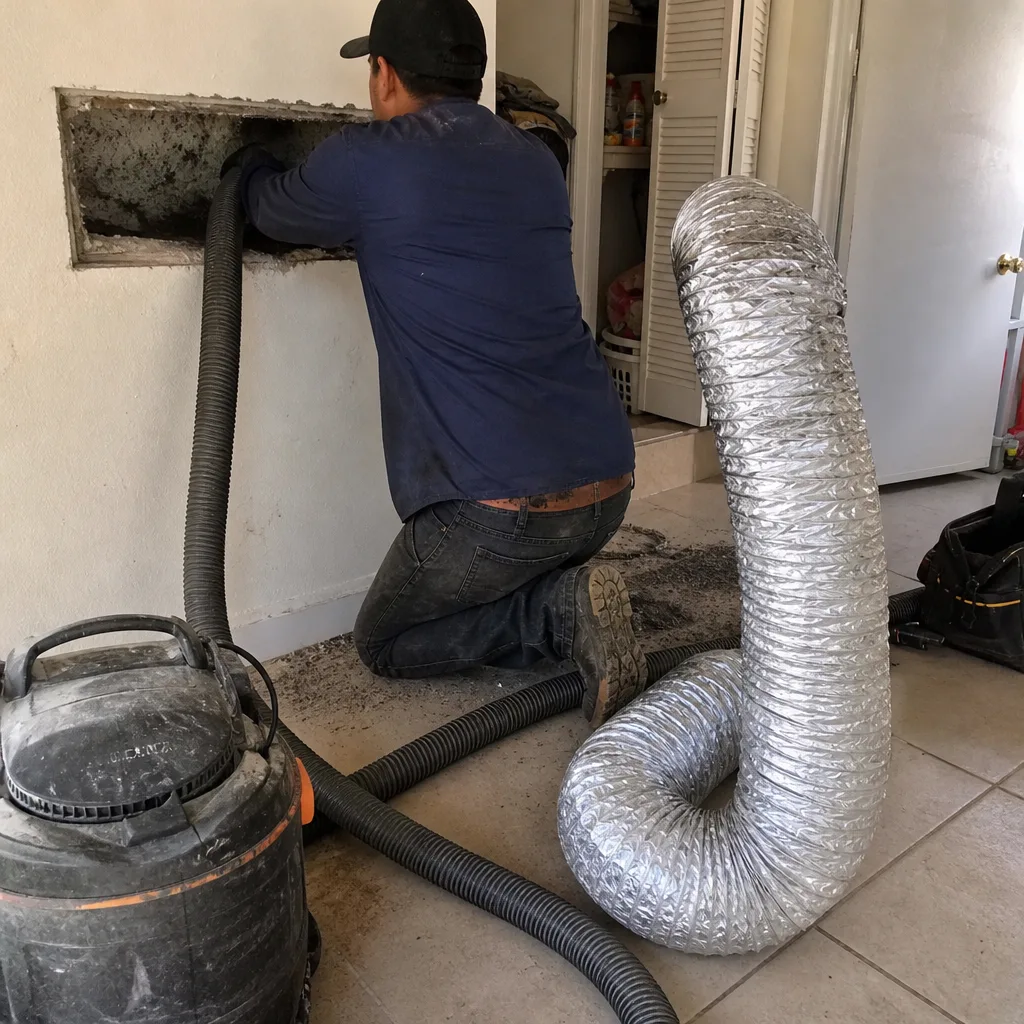 Before
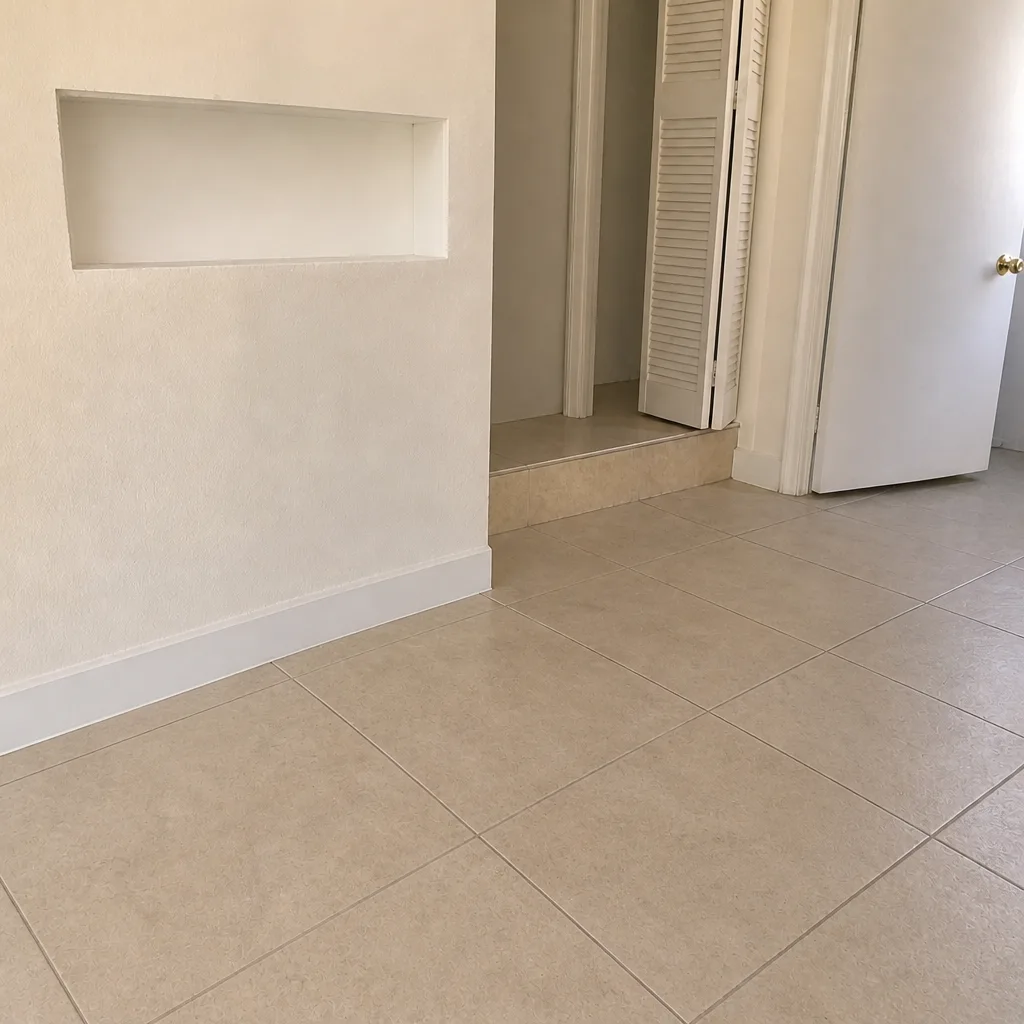 After
When to Call a Professional
Some situations are worth a call before you spend time looking for a workaround. If you’re seeing visible dust streaks at the registers, smelling a musty odor that returns after the system has run a while, or noticing that the home is dustier than the maintenance routine should allow, a duct inspection is the right next step. After a renovation, after moving into a home where the duct history is unknown, or after a water event that may have reached the air handler, an inspection should come before anything else. The same applies to the dryer vent: a dryer that takes two cycles to dry a load, or a laundry room that feels warmer than it should, deserves a vent inspection rather than a guess.
Hialeah Duct Cleaning offers free estimates in Hialeah. Call (888) 831-4689. We answer 24/7, with fast dispatch from 7am to 7pm, Sunday through Friday. Our technicians have up to 9 years of experience, and we work with Rotobrush and Nikro equipment as standard practice, not as an upsell.
Frequently Asked Questions
Air duct cleaning in Hialeah is priced per system, not per vent, and the price is set by a written estimate after we’ve seen the system. The estimate is free, and the same price applies whether you have a simple single-story layout or a slab-construction home with returns enclosed in wall cavities. Call (888) 831-4689 for an exact quote – estimates are free.
Most Hialeah homes should have the system inspected every few years, and cleaned when the inspection shows accumulation – which often happens sooner here than the three-to-five-year interval quoted in generic guides, because continuous HVAC runtime compacts debris faster. Homes with pets, recent renovations, or allergy concerns usually need it sooner. Call (888) 831-4689 to schedule an inspection.
Cheaper quotes usually reflect a smaller job: fewer runs cleaned, no camera verification, no return-side cleaning, or equipment that vacuums the surface without scrubbing the walls. A quote that doesn’t include a camera inspection isn’t giving you the same product. Ask what’s actually included before comparing price. Call (888) 831-4689 if you want a line-by-line explanation of what our estimate covers.
You know because you see the proof: before-and-after photos of your own ducts and camera footage from each reachable run. Not stock images. In Hialeah’s slab-construction homes, a camera inspection is the only way to verify that an enclosed return was actually cleaned rather than skipped. We show our customers the images from their system. Call (888) 831-4689 for a free estimate.
You need repair if the inspection finds a gap, disconnected joint, crushed flex duct, or compromised lining – cleaning alone won’t fix those, and a system with a leak will re-accumulate debris and lose efficiency. The repair is handled during the same visit as the cleaning. If you suspect a problem, call (888) 831-4689 for a free estimate and we’ll assess both.
Yes, and the difference matters. Routine dust and mineral debris is a cleaning job with standard HEPA negative-air capture. Actual microbial growth requires a moisture source, a camera inspection to confirm, and a contamination-level protocol – usually Abatement Technologies filtration alongside HEPA extraction. We don’t sell remediation contracts; if the assessment shows something outside our scope, we’ll say so. Call (888) 831-4689 to schedule an inspection.
The Bottom Line
Duct cleaning in Hialeah is not the same job it is in a climate with four real seasons. Continuous HVAC runtime, mineral dust, humidity, and slab-on-grade construction change both how fast contamination builds and which sections of the system are hardest to reach and verify. The equipment has to scrub the duct wall mechanically and capture the debris under HEPA-rated negative pressure – surface vacuuming and shop vacs don’t count. Verification means camera footage and before-and-after photos of your own ducts, not a verbal assurance. And if the inspection turns up a repair or microbial growth, the right answer is to handle it in the same visit or tell you plainly what’s needed. Everything else is a smaller job dressed up to look like a full one.
Ready to see what’s actually inside your ducts? Call Hialeah Duct Cleaning at (888) 831-4689 for a free estimate. We answer 24/7, with fast dispatch from 7am to 7pm, Sunday through Friday. Our technicians have up to 9 years of experience, and we run Rotobrush and Nikro equipment as standard practice.
Written by the team at Hialeah Duct Cleaning.