
Last updated November 15, 2026
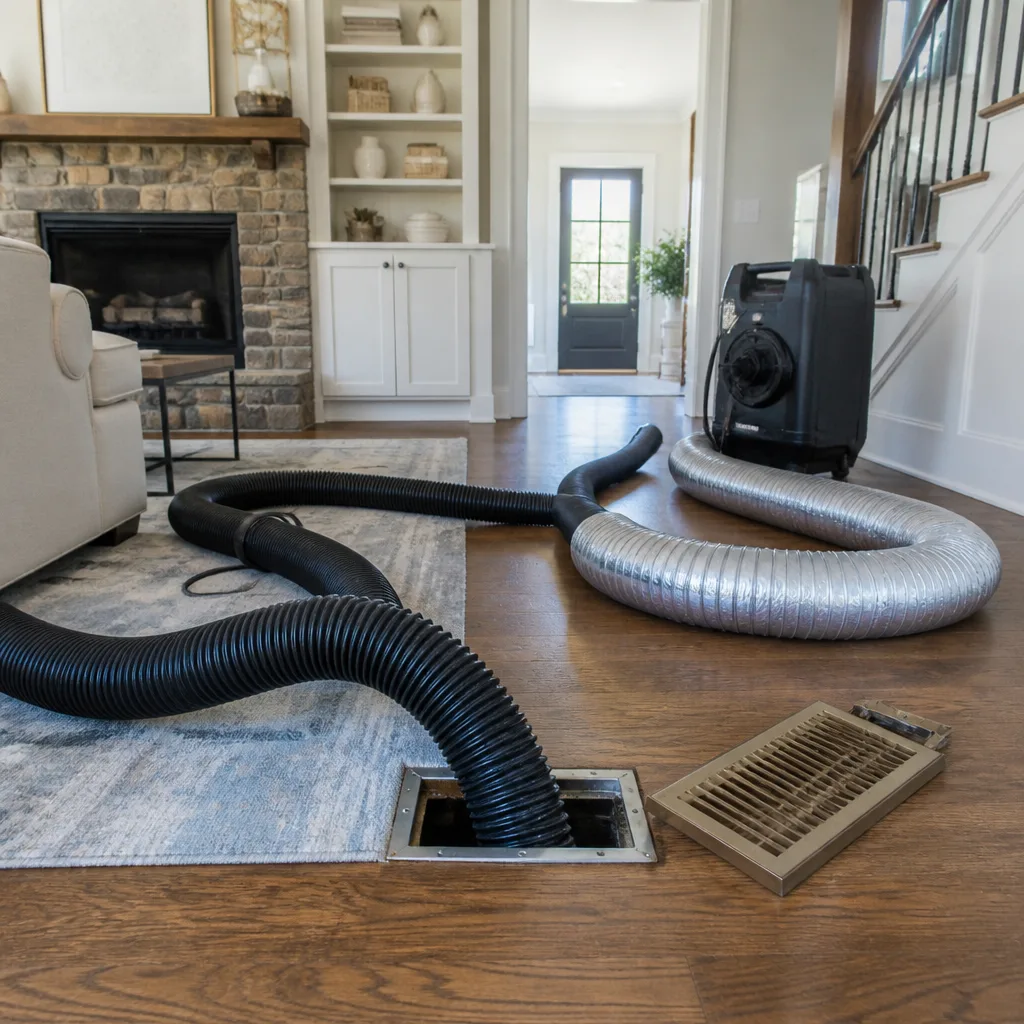 Whole-home duct cleaning
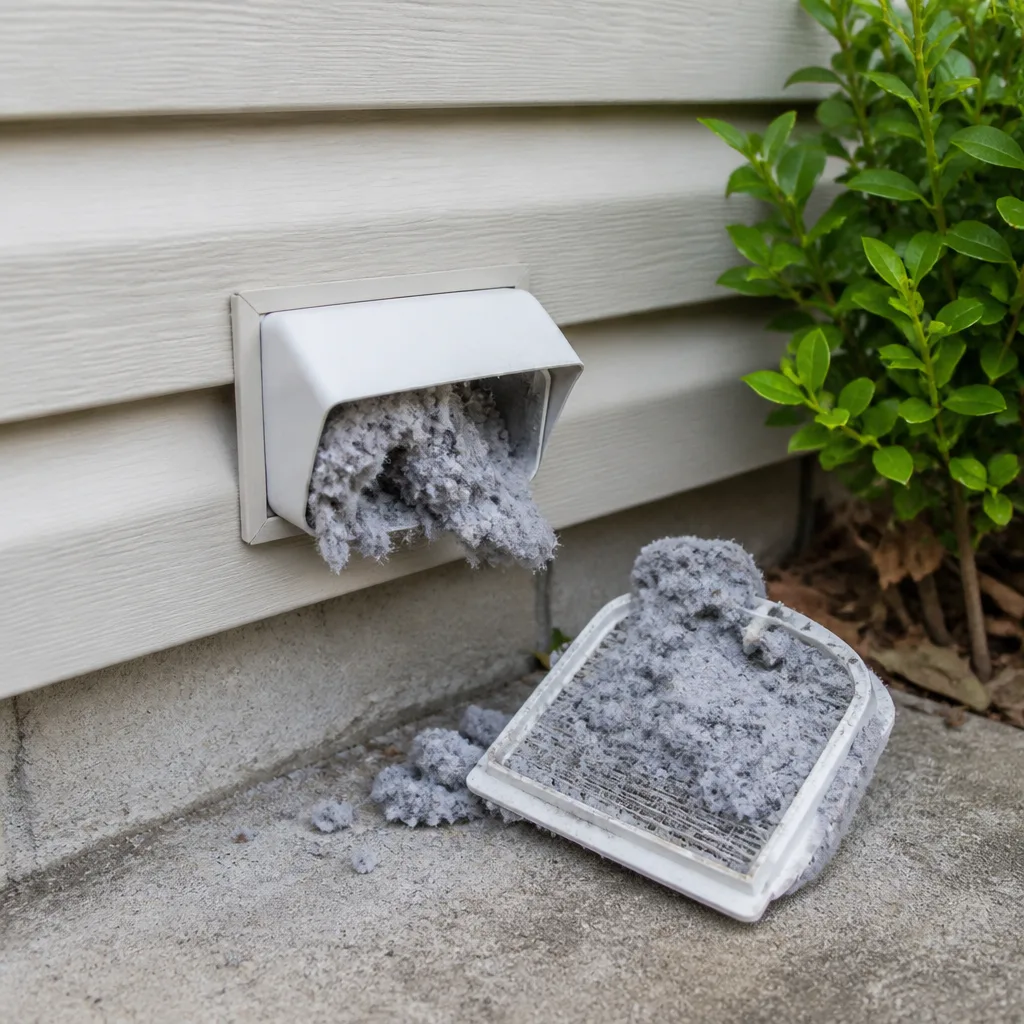 Dryer vent cleaning
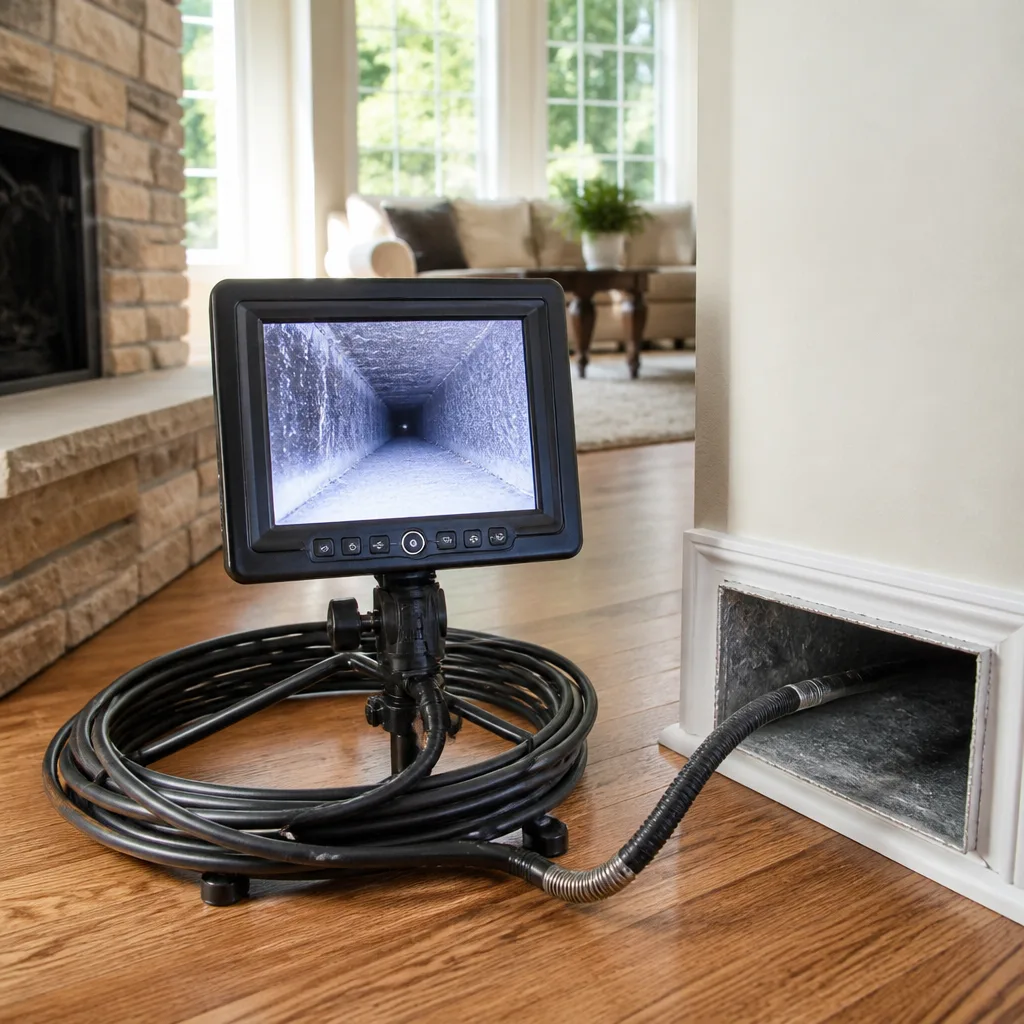 Camera inspection
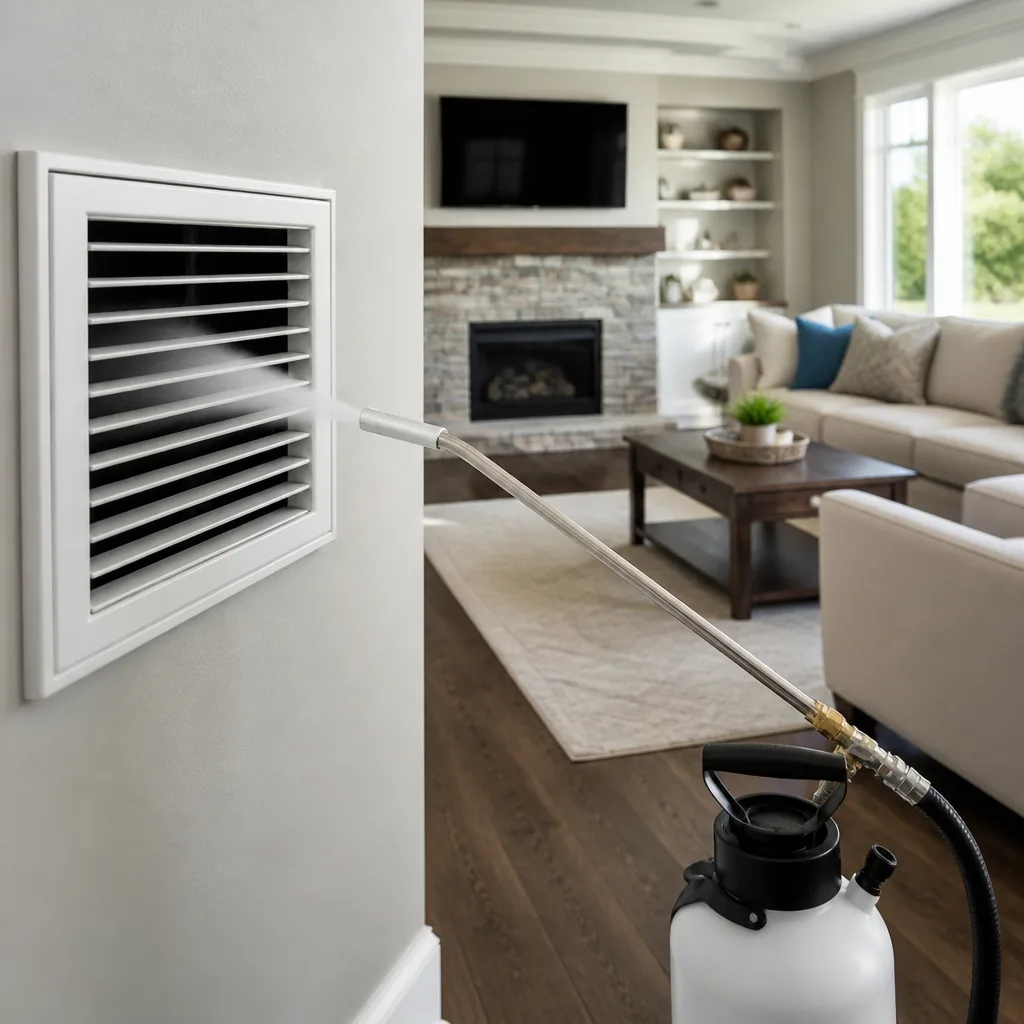 Sanitizing & deodorizing
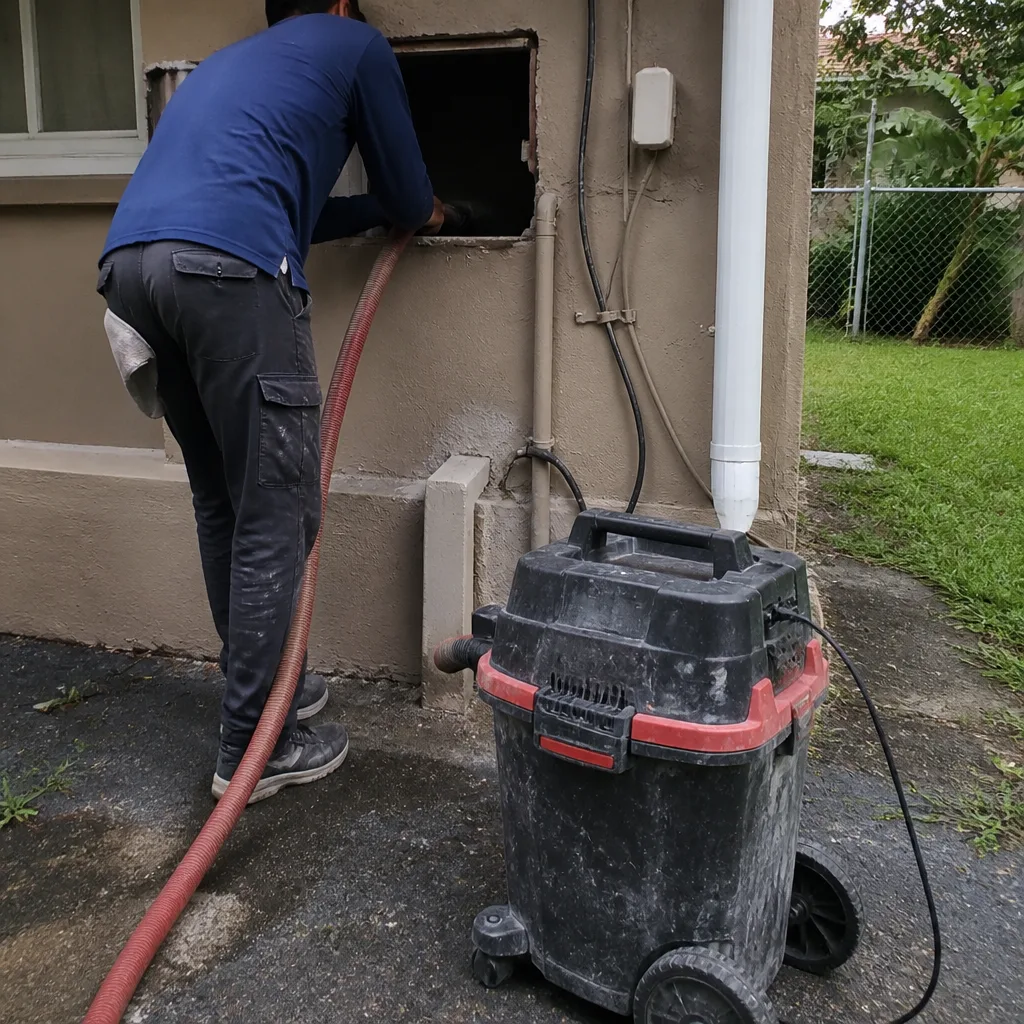
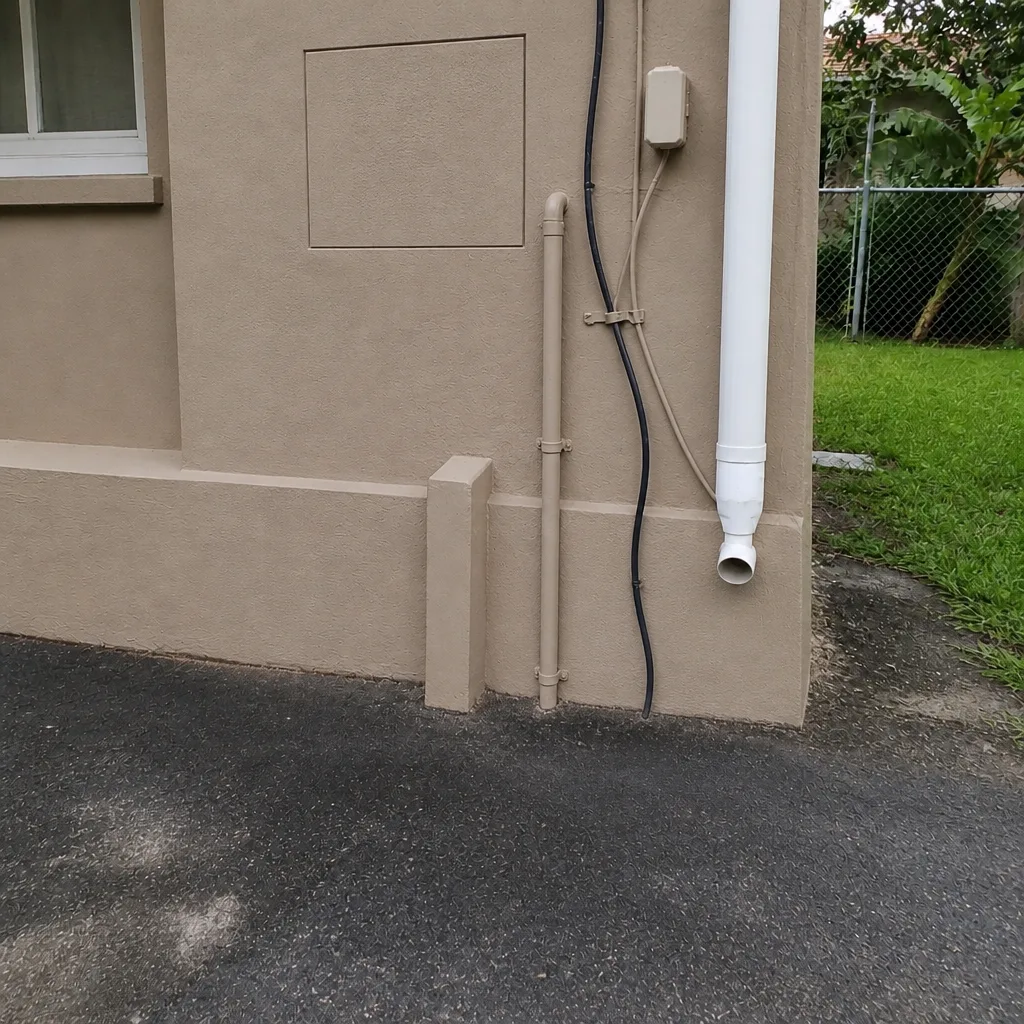
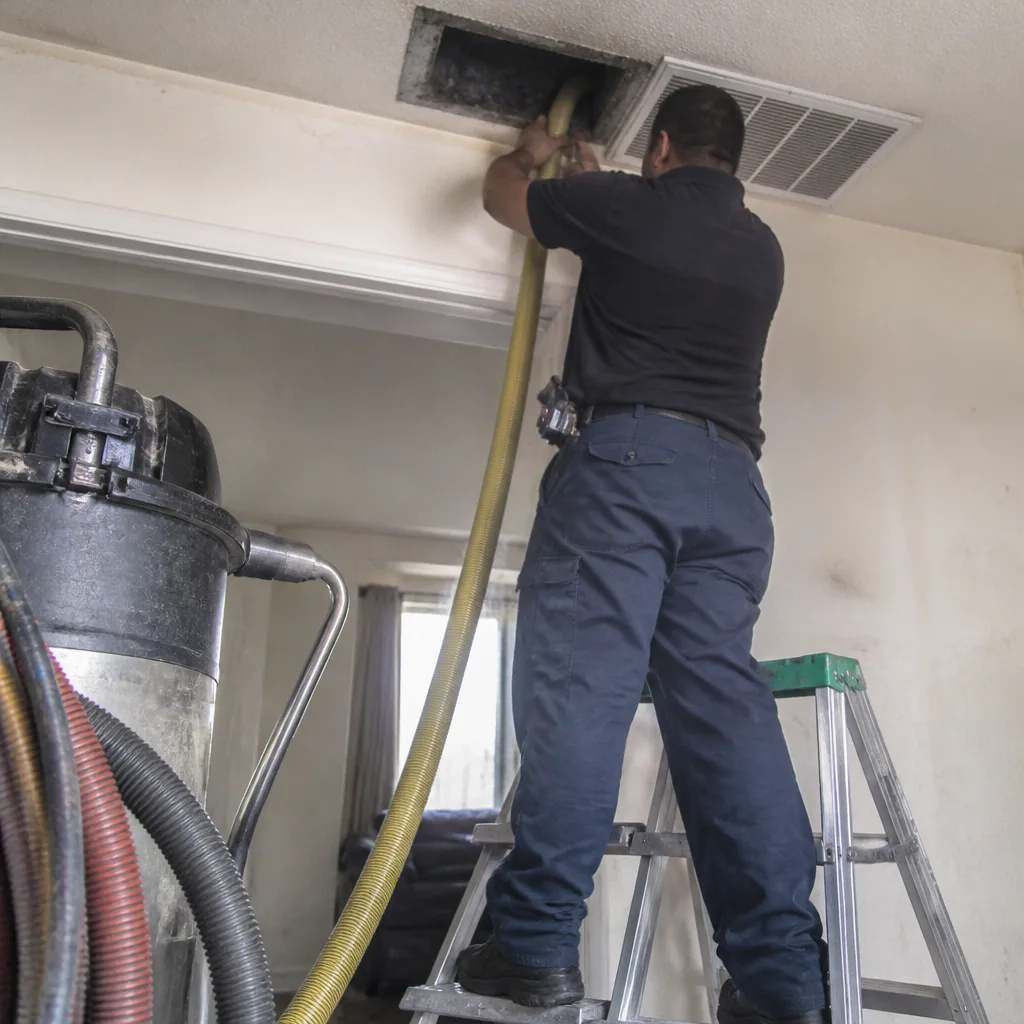
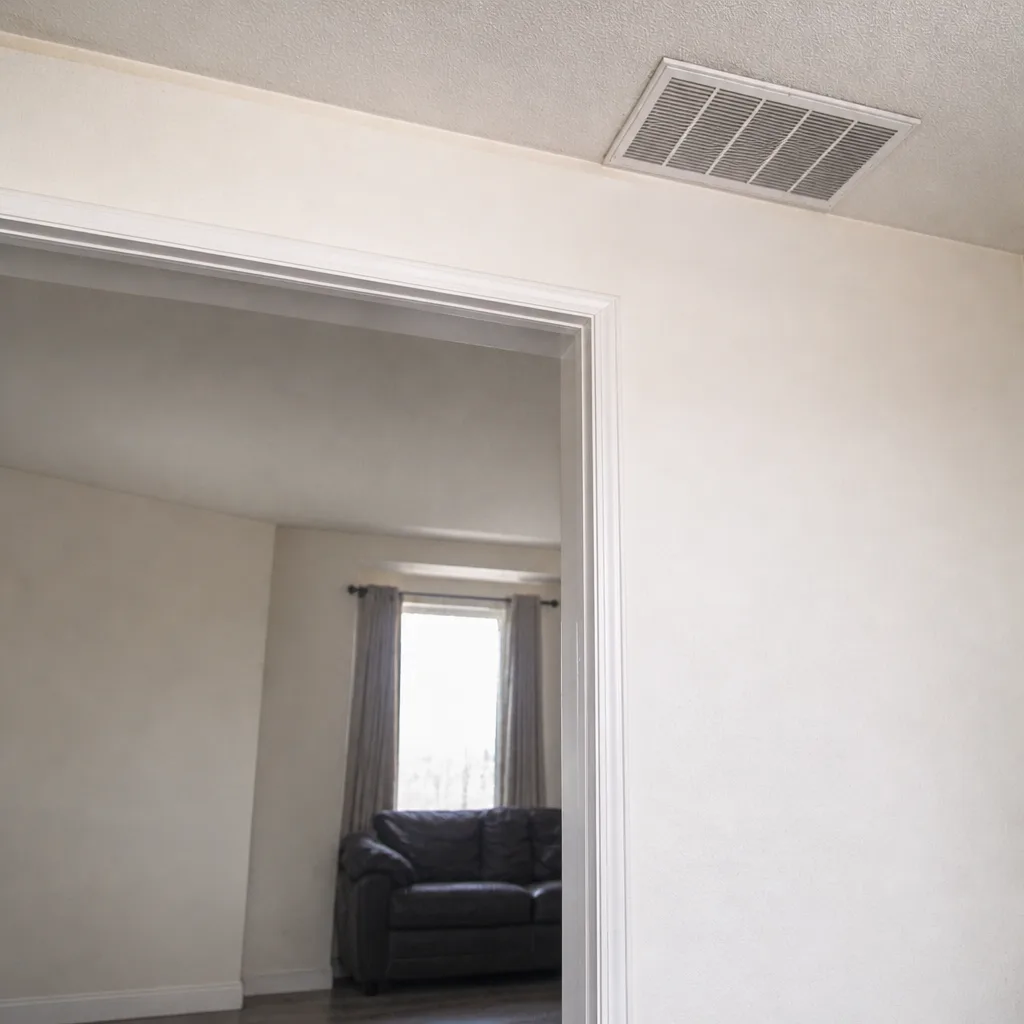
Whole-system duct and dryer vent check with before-and-after photos - you see exactly what came out of your vents
That "$99 whole-house special" is a bait ad - the real number appears once they are in your hallway, or the "clean" is a shop-vac at the register. We photograph the inside of your ducts before and after instead.
Air Duct Cleaning Warning Signs: A Hialeah Homeowner’s Reference Guide
Dust pouring out of your registers is a late-stage warning sign. By the time you see that, the problem has usually been building for months. The earlier indicators are quieter: a musty smell that only shows up when the air handler kicks on, a bedroom that never cools like the rest of the house, or an electric bill that climbs every June through August without any change in how you live. In Hialeah, where the cooling season runs long and the humidity sits high, those quiet signs matter more than they do almost anywhere else. This guide covers the subtle indicators most homeowners miss, how to read them, and when they cross the line from a minor annoyance into a job that needs a professional.
Quick Answer
The most reliable early warning signs of dirty ducts in a Hialeah home are a musty odor that appears only when the HVAC system runs, uneven cooling between rooms on a single story, rising summer electric bills with no usage change, visible fiber or dust accumulation around supply and return grilles, and a system that runs far longer than it used to. Any two of these together usually justify a professional inspection. Visible dust blowing from a register is a late-stage sign, not an early one.
Styles & brands we work with
- Whole-home duct cleaning
- Dryer vent cleaning
- Camera inspection
- Sanitizing & deodorizing
Table of Contents
- What a Musty Smell When the Air Kicks On Actually Means
- Uneven Room Temperatures: Leakage, Blockage, or Balancing?
- Why Your Summer Electric Bill Climbs Beyond the Normal Seasonal Spike
- The No-Tools Inspection You Can Do at Your Grilles
- Warning Signs in Homes With Original Ductwork Installed Before 2000
- High-Runtime Systems and What They Tell You
- Dryer Vent Warning Signs Red Homeowners Overlook
- When the Ducts Need Repair, Not Just Cleaning
What a Musty Smell When the Air Kicks On Actually Means
A musty odor that appears only when the air handler starts is a diagnostic clue, not a cosmetic problem. In our experience, that specific pattern – smell on startup, fading after a few minutes – points to one of two different problems, and they have different fixes. Getting the distinction right saves you from paying for work that doesn’t address the actual source.
The first possibility is dirty evaporator coils. The evaporator coil sits inside the air handler, wet with condensation through most of the Hialeah cooling season. Dust that settles on a constantly damp coil becomes a growth medium. When the blower starts, air passes across that coil and picks up the smell. A coil cleaning addresses this. Duct cleaning alone often will not.
The second possibility is microbial growth inside the ductwork itself, often on the insulation liner or in sections where condensation has been sitting. This is where the equipment a contractor brings matters. Surface vacuuming will not resolve growth that has worked into duct liner. Cleaning that reaches the problem requires equipment like Abatement Technologies air filtration units and HEPA-rated negative-air machines that can handle fine particulates and spores without redistributing them into your living space.
How to tell them apart before you call:
- Smell fades quickly after startup – leans toward coil contamination, because the initial rush of air carries the smell and then the coil surface dries or stabilizes.
- Smell persists throughout the cycle, or is stronger at certain registers – leans toward duct interior contamination, because specific runs are the source.
- Smell is worse in humid stretches – consistent with either, but a strong indicator that moisture is driving the problem rather than dust alone.
That last point matters in Hialeah specifically. Our humidity means a condensation problem can sit undetected for months without ever going fully dry. That’s the environment where microbial growth gets a foothold.
Uneven Room Temperatures: Leakage, Blockage, or Balancing?
A room that’s consistently 3 to 5 degrees warmer than the rest of a single-story Hialeah home is usually a duct problem, not a thermostat or refrigerant problem. But not every uneven temperature is a cleaning issue. There are three distinct causes, and only one of them resolves with cleaning.
The first is duct leakage. A gap at a joint, a loose connection at a boot, or a tear in flex duct sends conditioned air into an attic or wall cavity instead of into the room. The room feels warm because it genuinely isn’t getting its share of cold air. Cleaning won’t fix leakage; the duct run has to be sealed or repaired. This is one reason we handle repair alongside cleaning – if we find a breach while cleaning, the fix happens in the same visit.
The second is blockage. Debris, a collapsed section of flex duct, or an obstruction at a register boot restricts airflow. This is where cleaning and inspection overlap, because dislodging the blockage is part of the job.
The third is airflow balancing. The system may simply be delivering air unevenly due to damper positions, register design, or the original duct layout. No amount of cleaning will fix a balancing issue.
Here’s how to narrow it down yourself, using no tools:
- Hold your hand at the supply register in the warm room and then at one in a cool room. A meaningful difference in airflow force suggests blockage or a leak on that run.
- Look at the register face for dust patterns. A heavily dusted register on the warm room’s run, combined with weak airflow, points to restricted flow and debris buildup.
- Compare the same room across morning and late afternoon. If the temperature gap widens as the day heats up, the run is losing effectiveness under load, which is typical of leakage or a compromised run.
- Look for any visible sagging or crushed section of exposed flex duct in an attic or garage. A crushed run restricts flow the way a kink restricts a hose.
If the gap holds steady and airflow feels comparable, you’re probably looking at balancing. If airflow is weak, cleaning and a duct inspection is the right first step. Call (888) 831-4689 for an assessment if you’re not sure which category you’re in.
Why Your Summer Electric Bill Climbs Beyond the Normal Seasonal Spike
Every Hialeah homeowner expects higher electric bills in June, July, and August. That’s normal. The warning sign is a bill that climbs beyond what the seasonal increase explains, in a home where nothing else changed – same number of people, same appliances, same thermostat settings, same square footage cooled. When that happens, duct degradation is one of the most common causes.
The mechanism is straightforward. A duct system that’s leaking or partially restricted forces the system to run longer to reach the same indoor temperature. Longer runtime means more electricity consumed. A dirty evaporator coil does the same thing, because heat transfer drops and the system works harder for less cooling. Neither problem announces itself with a bang; it shows up as a slow, steady increase in consumption over a cooling season.
How to read the pattern before you blame your utility:
- Compare year over year on the same months, not month over month. Rate changes and seasonal creep distort month-to-month comparisons.
- Check whether anything else changed. A new appliance, a different number of people at home, a thermostat setting change – any of those can account for a jump.
- Look at runtime hours if your thermostat logs them. If runtime is up but outdoor temperatures match last year, the system is working harder for the same result, which is a signal on the duct or coil side.
- Watch the trend across three consecutive cooling seasons. A gradual climb over years is the classic duct fatigue pattern. A sudden jump in a single season points more toward a specific mechanical failure.
Hialeah’s long cooling season means systems here run many more hours per year than systems in cooler climates, and that runtime accelerates wear on flex duct, joints, and insulation. A duct system that’s fine in a mild climate can be showing its age here simply because it’s been asked to work harder for more of the year.
The No-Tools Inspection You Can Do at Your Grilles
You can learn a lot about your duct system by looking at your supply and return grilles closely. This is not a diagnostic substitute for a professional inspection, but it will tell you whether the system is due for one. All of this can be done with your eyes and no tools.
What to look for at supply registers:
- Fiber accumulation. Fine, gray, woolly buildup around the register face and on the vanes. This is often material from deteriorating duct liner or flex duct shedding into the airstream, which is different from ordinary dust and warrants a closer look.
- Discoloration. Darkening or staining around the register frame, particularly near the ceiling line, can indicate moisture or growth.
- Dust trails. Streaks extending outward from the register suggest airflow carrying dust past the diffuser, sometimes caused by a slight gap in the boot-to-drywall seal.
- Airflow direction. Hold a thin tissue at the register. A strong steady deflection is normal. Weak or uneven deflection on one register vs. others points to restriction or leakage on that run.
What to look for at the return grille:
- Filter fit. A filter that doesn’t seal against the frame pulls unfiltered air around the edges, sending dust directly into the system and the coil.
- Filter condition at your usual change interval. If a filter that normally lasts a normal cycle comes out heavily loaded in half the time, the system is moving more dust than it should be.
- Debris visible behind the grille. Loose dust on the return plenum surface is common, but heavier accumulation or signs of moisture need professional attention.
One rule of thumb from our work in Hialeah: if the fiber accumulation pattern at your registers is woolly and gray rather than powdery and brown, think liner before you think ordinary dust. That distinction often signals pre-2000 ductwork that’s starting to break down.
Warning Signs in Homes With Original Ductwork Installed Before 2000
Hialeah has a lot of older housing stock, and homes with original ductwork installed before 2000 deserve their own section because the failure modes are different. If your ducts are original to the house, watch for these specific signs.
- Fiberglass liner deterioration. Older rigid ductwork was often lined inside with fiberglass acoustic insulation. That liner can degrade over time, break down into fibers, and shed into the airstream. The fiber accumulation pattern at your registers is the tell. When liner is failing, cleaning a duct that is shedding fiber has to be done carefully so the cleaning process doesn’t make it worse – a reason to have the system evaluated by someone who understands the equipment required.
- Aging flex duct shedding material. Early flex duct designs and older installations can develop pinholes, cracking, and material breakdown, particularly in hot attic conditions like Hialeah’s. Once the inner liner breaches, the run sheds material every time air moves through it.
- Disconnected or crushed runs. Flex duct installed in the 1980s and 1990s is often sagging or crushed at bends by now. Restricted flow is common in these homes.
- Improperly sealed joints. Older installations frequently relied on tape that has since failed. Leakage at joints is often significant in homes of this era.
- Undersized return. Many older homes have a single return that was adequate for the original system but is undersized for later equipment upgrades, which drives higher static pressure and worsens duct wear.
In these homes, the right approach is not always cleaning first. Sometimes the ducts need repair – a disconnected run reconnected, a crushed section replaced, a joint sealed – before or alongside cleaning makes sense. Our air duct cleaning work in Hialeah routinely uncovers these problems, and repairing them during the same visit means you’re not left coordinating a second contractor.
High-Runtime Systems and What They Tell You
A system that runs noticeably longer than it used to reach the same indoor temperature is telling you something is degraded. This applies whether it’s dust loading, a dirty coil, leaking ducts, or a mechanical issue, and the pattern matters. Systems in Hialeah run a long cooling season already; a runtime increase on top of that is a signal to examine the whole air path, not just the equipment.
What high runtime often reveals when we inspect:
- Rebound dust after cleaning. If the ducts were cleaned and the runtime increase came back within a season, the likely cause is contaminated evaporator coil or a compromised duct run reintroducing dust, not a cleaning that was insufficient.
- Restricted return air. A return that can’t move enough air creates high static pressure, longer runtime, and more wear on the blower. It also accelerates duct liner wear.
- Liner shedding into airflow. As liner fails, resistance to airflow changes and the system works harder.
What high runtime should NOT be blamed on: a duct cleaning that was done properly. If a system cools well after a thorough cleaning done with professional-grade rotary-brush equipment and HEPA extraction, and runtime stays high, the problem is elsewhere in the system.
A practical note on what good cleaning equipment does: the difference between professional rotary-brush cleaning and a handyman with a shop vac shows up in runtime results. A rotary-brush system – Rotobrush is the standard we use – mechanically scrubs duct walls and agitates debris loose. HEPA-rated negative-air extraction (we use Nikro) captures what’s dislodged so it doesn’t recirculate. Surface vacuuming alone doesn’t produce a runtime improvement because it doesn’t remove the material bonded to the interior.
Dryer Vent Warning Signs Red Homeowners Overlook
Dryer vent blockage is a safety issue, not a convenience issue, and it’s one of the most overlooked warning signs in any home. A clogged dryer vent restricts exhaust airflow and is a leading cause of residential house fires. The signs are subtle enough that people live with them for years without realizing what they’re looking at.
Signs your dryer vent needs evaluation:
- Clothes take longer than one cycle to dry, or a second cycle is needed consistently.
- The dryer or the laundry room feels unusually hot during a cycle.
- Lint accumulates on the floor or wall around the dryer, outside the trap area.
- The exterior vent flapper doesn’t open fully, or opens weakly, when the dryer runs.
- There’s a burning or overheated smell in the laundry area during drying.
- The lint trap fills faster than it used to.
Why the risk compounds here: Hialeah’s humidity means loads of laundry tend to run longer, so the dryer works through more lint accumulation per year than in a drier climate. Add a vent run with several bends or a long horizontal stretch, and restriction builds more quickly. Routine dryer vent cleaning clears the full run and inspects for crushed sections or disconnected joints. It’s the same team that handles duct cleaning, so it’s one visit to address both.
When the Ducts Need Repair, Not Just Cleaning
The single most common mistake we see homeowners make is assuming every duct problem is a cleaning problem. Some problems are structural, and cleaning a structurally compromised duct can make things worse – particularly with aging flex duct or liner that’s already failing. Here’s how to tell the difference.
Signs you likely need cleaning:
- Dust and debris accumulation visible at grilles and registers, with structural duct runs intact.
- Musty odor that traces to general interior contamination, not a specific moisture issue.
- Filter loading faster than normal with no visible duct damage.
Signs you likely need repair, alone or alongside cleaning:
- Uneven cooling that persists after airflow feels normal on all runs, pointing to a disconnect or crushed run in an inaccessible area.
- Fiber accumulation at registers in a home with original ductwork from before 2000, suggesting liner breakdown.
- Visible sagging, crushed sections, or disconnected joints in exposed ductwork.
- Whistling or loud airflow noise at a specific register, which often indicates a restricted or damaged run.
How we handle it: while we’re cleaning, we inspect the system as we go. If we find a gap, a crushed section, or a disconnected joint, we repair it on the spot – no second appointment, no separate contractor to coordinate. That’s one reason keeping duct cleaning, duct repair, and dryer vent cleaning under one roof matters. In older Hialeah homes, it’s common to find repairs needed while cleaning is already underway, and it’s better to fix them when the access is open than to schedule a return visit.
For homes that have or are considering a whole-home filtration or humidity control upgrade, it’s worth knowing that cleaning and IAQ upgrades work best in sequence. Honeywell and Aprilaire filtration and humidity products perform at their rated effectiveness when the ducts delivering the air are clean and sealed. Adding filtration to a compromised duct system wastes the upgrade.
Common Mistakes to Avoid
- Assuming dust at the register means your ducts are the only problem. Dust at a supply register can originate from a filter that doesn’t seal, from the return plenum, or from a crushed run pushing dust past a gap. Cleaning without identifying the source lets the problem return quickly.
- Judging a duct job by the number of vents. Per-vent pricing encourages a quick surface pass at each register rather than proper cleaning of the full system, including the trunk. Ask for a flat price for the whole system, agreed before work starts.
- Skipping the evaporator coil. If your musty smell is coming from the coil, cleaning the ducts alone won’t fix it. Ask the contractor to identify the source of the odor, not just treat the duct interiors.
- Ignoring dryer vent warning signs as a laundry-room quirk. A dryer that needs two cycles for one load is telling you something. The safety stakes are high enough that the symptom deserves immediate attention.
- Cleaning original pre-2000 ductwork without inspecting the liner. If the liner is failing, cleaning can make the shedding worse. Any contractor who doesn’t inspect liner condition on older ducts is skipping a step that matters.
- Assuming high runtime is normal after cleaning. If runtime stays high after proper cleaning, the duct wasn’t the problem – the coil, the return sizing, or the equipment is. Don’t accept a “give it a few weeks” answer.
- Not asking for before-and-after photos. A properly cleaned duct system produces photographic evidence, both inside the duct at the start and at the finish. If a contractor can’t produce that, you have no way to know what was actually done.
See the difference
 Before
 After
 Before
 After
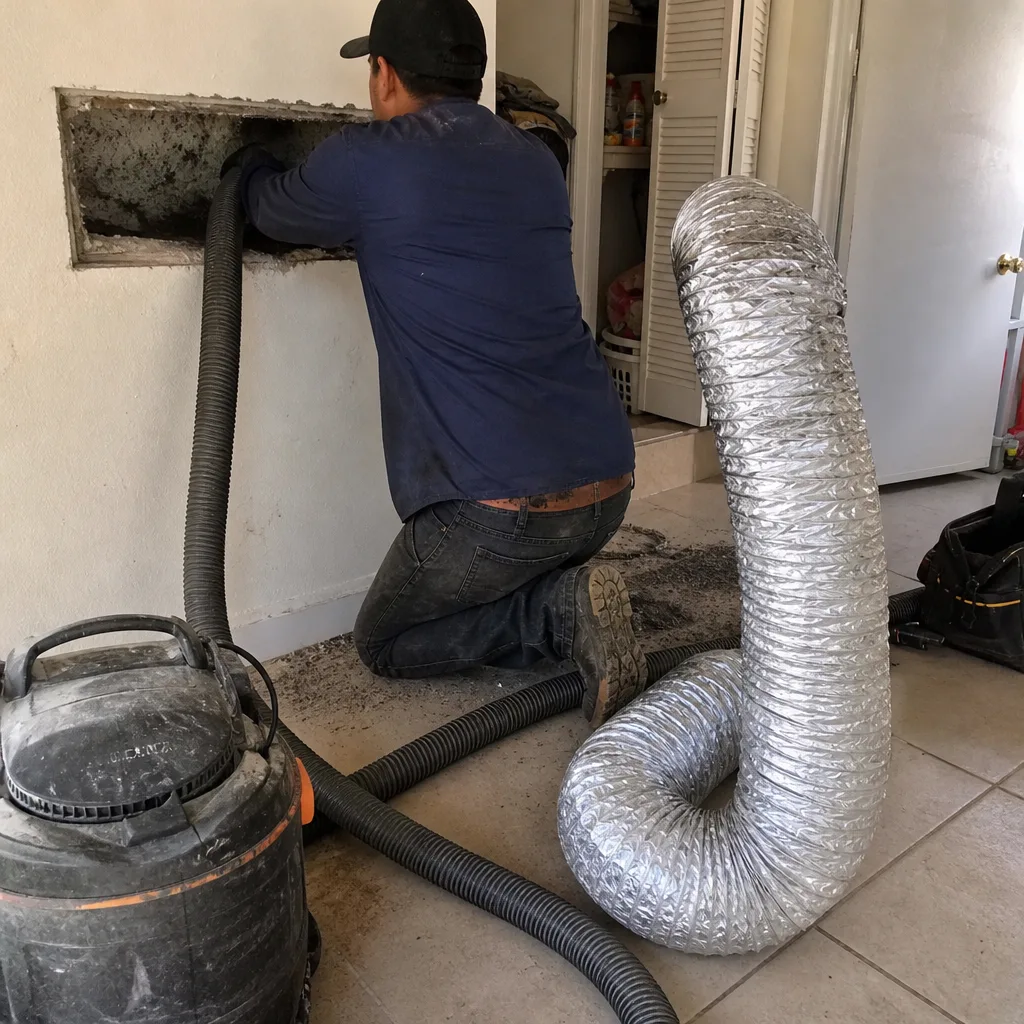 Before
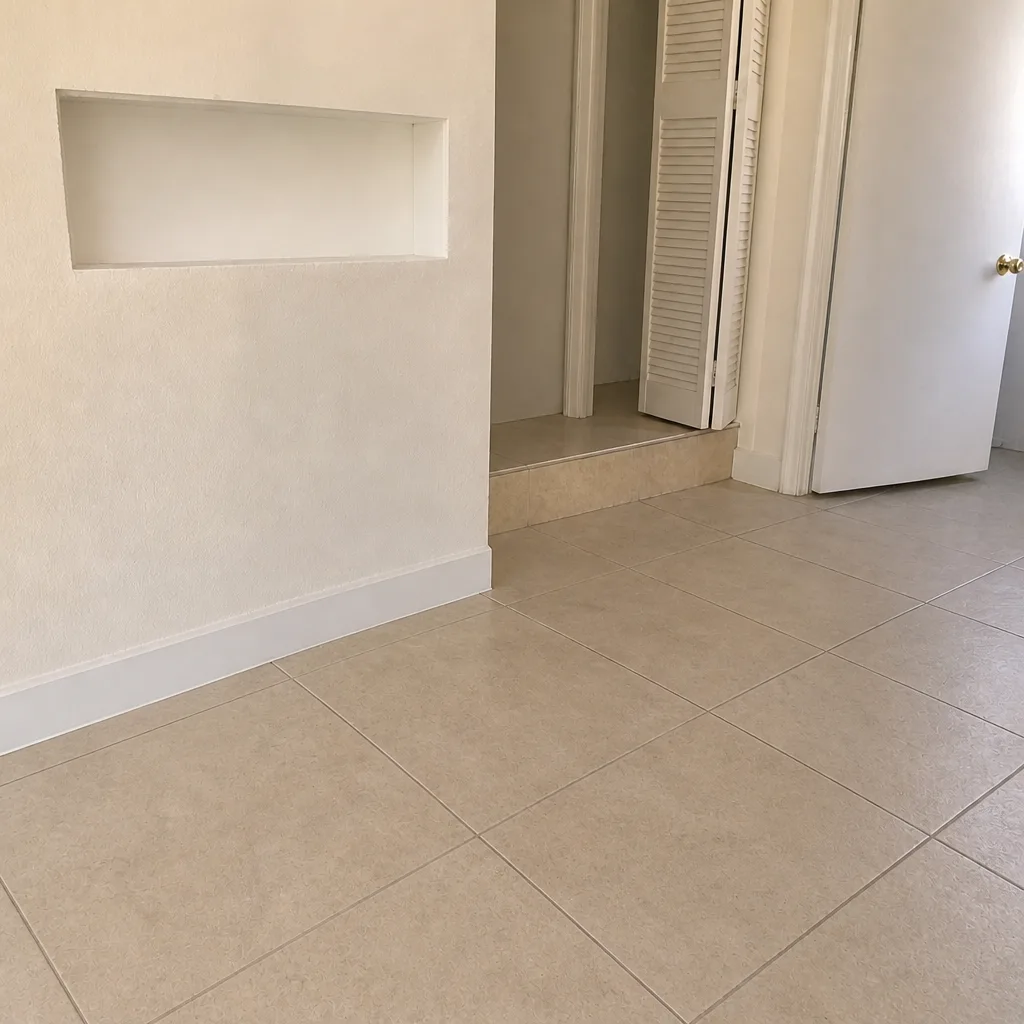 After
When to Call a Professional
Call a professional if you’re seeing any two of the warning signs in this guide together, if you have original ductwork in a pre-2000 home and you’re noticing fiber accumulation at registers, if your dryer vent is slow or you’re seeing lint around the dryer, or if a room in your home won’t cool comparably no matter what the thermostat does. If you’ve had ducts cleaned and the musty smell returned within a season, call – the source wasn’t addressed. Hialeah Duct Cleaning offers free estimates in Hialeah. Our technicians have up to 9 years of experience, we use professional-grade Rotobrush and Nikro equipment, and every job gets a flat price per system agreed before work starts, with before-and-after photos of your own ducts. Call (888) 831-4689. We answer 24/7. Fast dispatch from 7am to 7pm, Sunday through Friday.
Frequently Asked Questions
Air duct cleaning in Hialeah is priced per system, not per vent, and the exact price depends on the size of your ductwork, how many runs are accessible, and whether repairs are needed. We give a written estimate before any work begins, and that written estimate sets the final price. Beware of very low advertised figures – they typically cover only the most accessible registers and grow into a much larger invoice once the technician is on site. For an exact figure for your home, call (888) 831-4689. Estimates are free.
Cheaper quotes generally come from one of three patterns: a per-vent price that doesn’t cover the full system, surface vacuuming without rotary-brush agitation that removes only loose dust, or a teaser figure that gets revised once the technician is in the home. What separates a real cleaning from a cheap one is the equipment. Rotary-brush cleaning scrubs the duct walls mechanically. HEPA-rated negative-air extraction captures what’s dislodged. A hand-held vacuum does neither. When you compare quotes, ask what equipment is being used and whether the price is flat for the whole system. Call (888) 831-4689 for an honest whole-system estimate – free.
Ask for before-and-after photos taken inside your own ducts. A proper cleaning produces evidence: photos at the start and finish of the accessible runs. If a contractor can’t produce that, you have no way to confirm the work. Ask before the job starts, and make it part of the estimate conversation. Call (888) 831-4689 if you’d like to see how we document jobs.
Most homes here benefit from an inspection every few years and cleaning when the inspection shows genuine buildup, rather than on a fixed schedule. The variables that shift the timing in Hialeah are the long cooling season, high humidity, and housing age – homes with original ductwork from before 2000 and homes with pets tend to need attention sooner. If you’re seeing the earlier warning signs in this guide, don’t wait for the fixed interval. Call (888) 831-4689 and we’ll assess what your system actually needs rather than sell a set schedule.
No. A musty smell that appears only when the HVAC starts, then fades, often points to a contaminated evaporator coil rather than the ducts themselves. A smell that persists through the cycle or is stronger at certain registers more often traces to duct interior contamination. The two need different fixes. Identifying the source first is the whole point of an inspection – cleaning the ducts when the coil is the source wastes the cleaning. Call (888) 831-4689 for an assessment.
No – a shop vacuum can’t reach the interior of duct runs, won’t agitate material stuck to duct walls, and can redistribute fine dust back into your living space instead of capturing it. It’s also worth flagging that some duct problems, if disturbed improperly, are genuinely hazardous – microbial growth, fiber shedding from failing liner, or contamination in an aging system shouldn’t be handled by a homeowner. For those types of contamination, professional filtration equipment like Abatement Technologies units exists for a reason. Call (888) 831-4689 if you’re seeing signs of that kind of buildup.
The Bottom Line
The warning signs that matter most in a Hialeah home show up months before dust starts coming out of your registers. A musty smell on startup, uneven cooling between rooms on a single story, summer electric bills that climb past the seasonal spike, fiber accumulation at your grilles, and a system that runs longer than it used to – those are the indicators to watch. Homes with original ductwork from before 2000 need extra scrutiny because liner breakdown and aging flex duct have their own failure modes. Learn to read your grilles, compare your bills year over year, and treat a slow dryer as a safety issue. If you’re seeing any of these signs, an inspection is cheap compared to the cost of a system that’s been working against itself for months. For a free estimate, call Hialeah Duct Cleaning at (888) 831-4689. We answer 24/7. Fast dispatch from 7am to 7pm, Sunday through Friday. Serving Hialeah and nearby neighborhoods with professional-grade equipment and flat pricing per system.
Written by the team at Hialeah Duct Cleaning.