
Last updated November 15, 2026
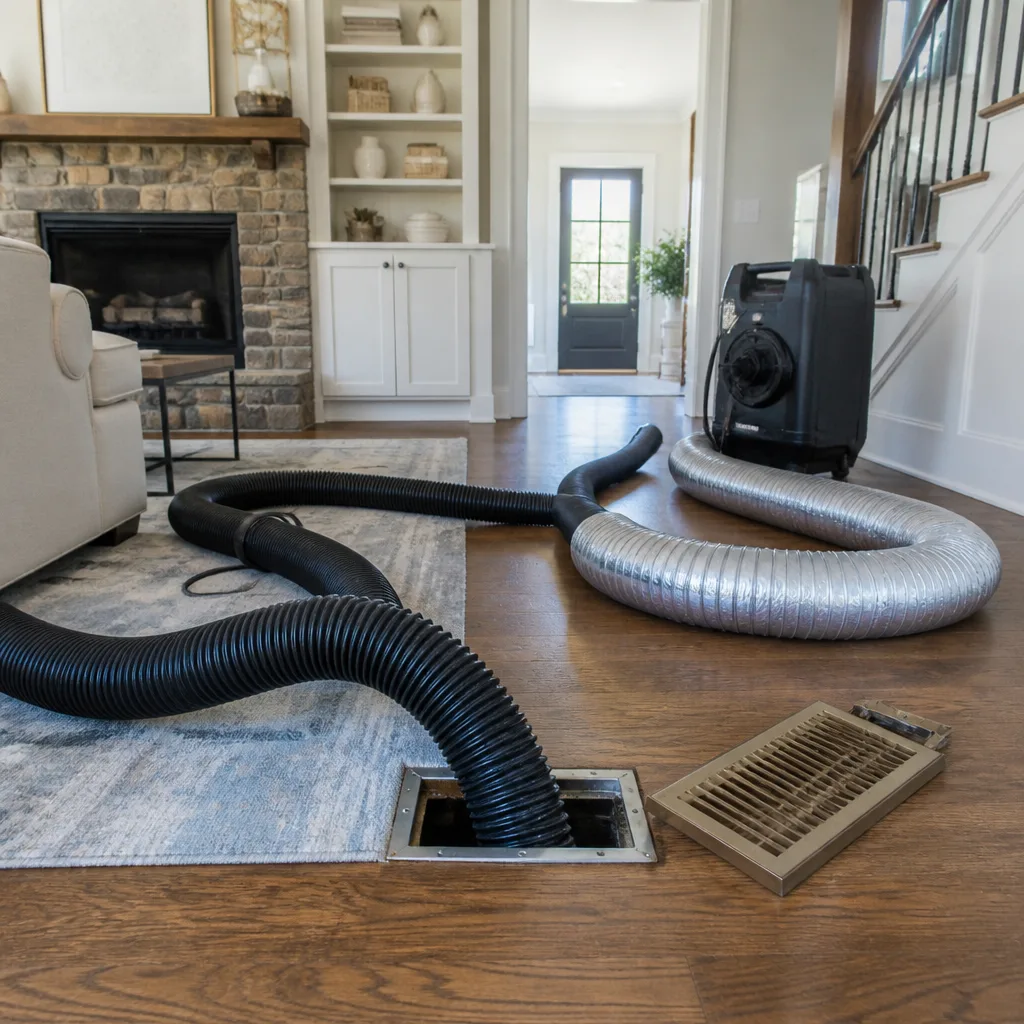 Whole-home duct cleaning
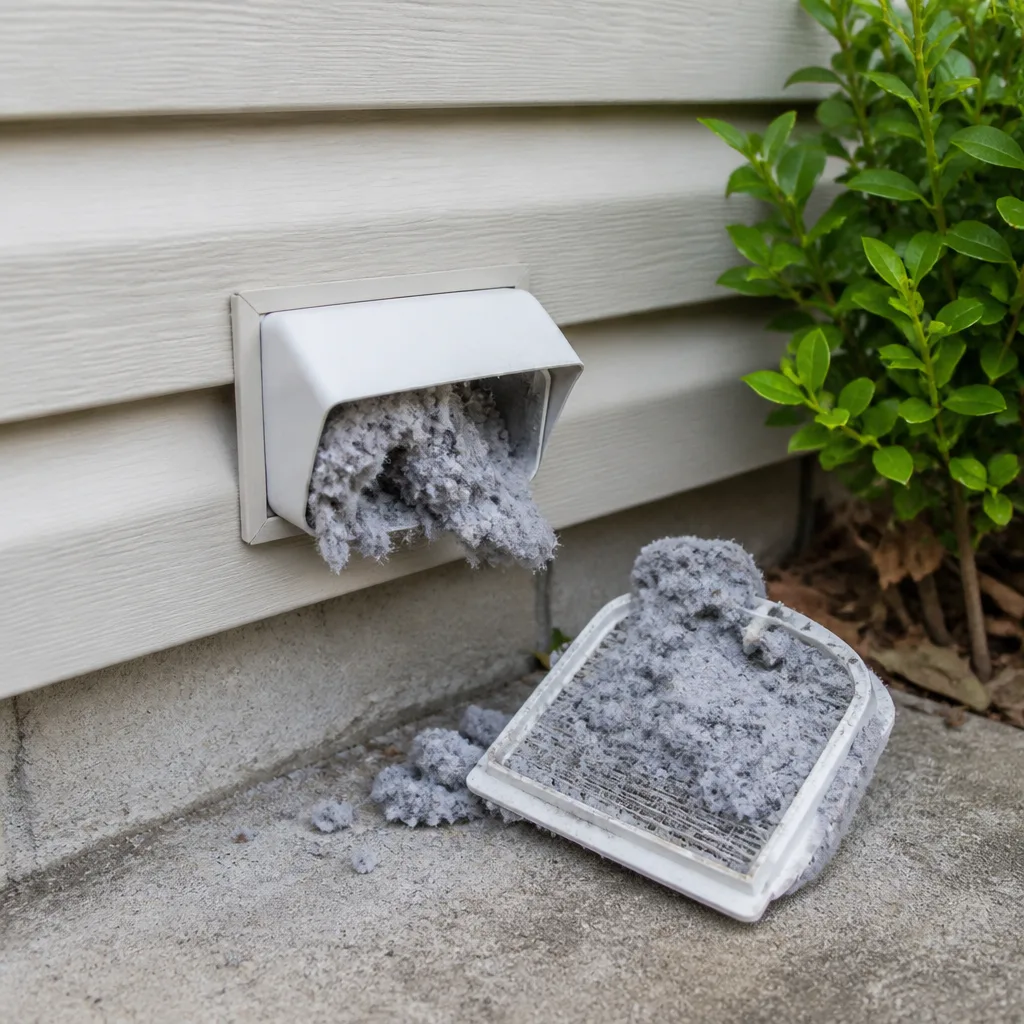 Dryer vent cleaning
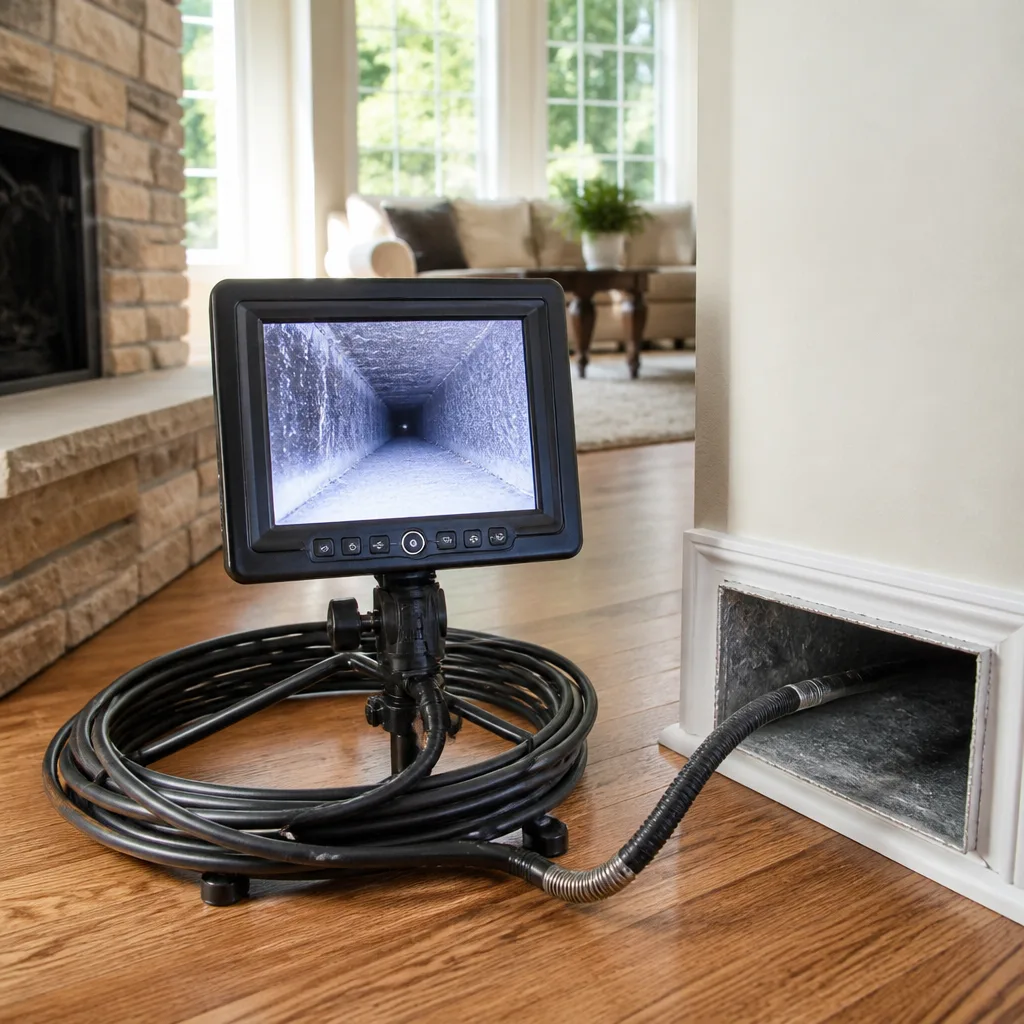 Camera inspection
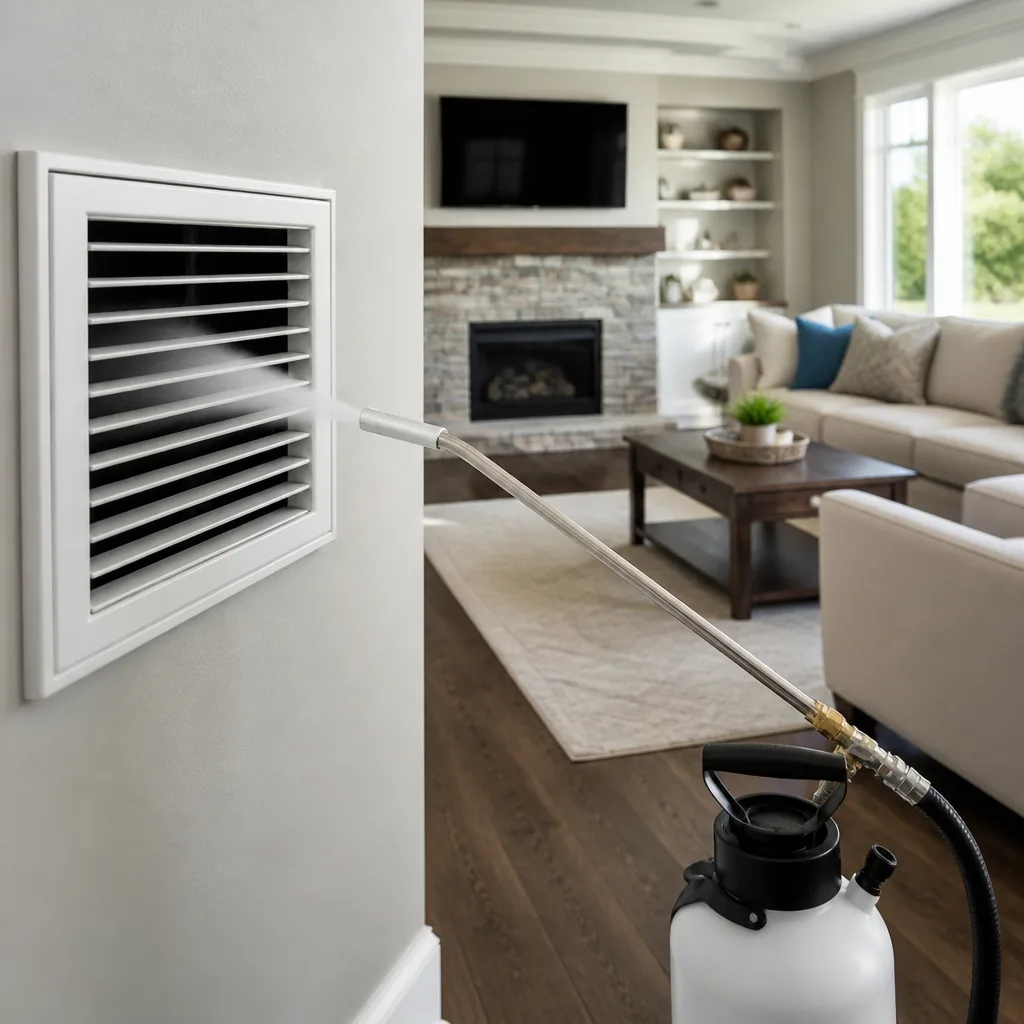 Sanitizing & deodorizing
Whole-system duct and dryer vent check with before-and-after photos - you see exactly what came out of your vents
That "$99 whole-house special" is a bait ad - the real number appears once they are in your hallway, or the "clean" is a shop-vac at the register. We photograph the inside of your ducts before and after instead.
Air Duct Cleaning Permits, Codes & Inspections in Hialeah, FL: What You Need to Know
No permit is required to clean your ducts. A permit may absolutely be required to repair, replace, or modify them – and if your contractor skips that step, the liability lands on your property record, not theirs. That’s the line most Hialeah homeowners never hear drawn, because the duct cleaning industry mostly sells the cleaning and stays quiet about the structural side. We’re drawing it here. This guide walks through what Florida’s building code treats as routine maintenance versus regulated mechanical work, how Miami-Dade County’s local amendments change the picture inside Hialeah city limits, when a City of Hialeah mechanical permit is triggered, how to check whether your contractor actually pulled one, and what records to keep afterward.
Quick Answer
Routine air duct cleaning in Hialeah does not require a permit; it’s classified as maintenance. But repairing, replacing, or modifying ductwork is mechanical work under the Florida Building Code, and in many cases that means a City of Hialeah mechanical permit and an inspection. Miami-Dade County’s local amendments can add requirements beyond the state baseline, especially where an HVAC system modification is involved. If your contractor can’t show you a permit for structural duct work, the work is unpermitted – and the exposure sits with the property, not the contractor.
Styles & brands we work with
- Whole-home duct cleaning
- Dryer vent cleaning
- Camera inspection
- Sanitizing & deodorizing
Table of Contents
- Cleaning vs. Repair: Where the Permit Line Sits
- What the Florida Building Code Regulates
- Miami-Dade County Local Amendments That Apply in Hialeah
- When a City of Hialeah Mechanical Permit Is Triggered
- How to Verify Your Contractor Pulled a Permit
- Your Exposure When Unpermitted Duct Work Is Discovered
- What a Code-Compliant Cleaning and Repair Job Includes
- Records to Keep After the Job
Cleaning vs. Repair: Where the Permit Line Sits
Cleaning is maintenance. Repair is construction. Those are two different categories under the Florida Building Code, and they carry two different regulatory paths. Most of the confusion in Hialeah comes from contractors, or homeowners, treating them as the same thing.
When we clean a duct system in Hialeah, we’re removing accumulated dust, debris, and particulate from the inside of existing ductwork. We’re not changing its shape, its routing, its connections, or its capacity. We’re mechanically scrubbing the interior surfaces with a rotary-brush system and pulling the dislodged material out through a HEPA-rated negative-air machine. Nothing structural changes. No permit applies.
The moment the scope shifts, that changes. Here’s the practical split:
- Cleaning only: No permit. Interior debris removal, surface agitation, extraction, and airflow verification.
- Sealing small gaps at accessible joints: Generally maintenance, but check with the City of Hialeah building department, because the definition of “minor” is what trips people up.
- Replacing a section of flexible or rigid duct: Mechanical work. A permit is typically required.
- Rerouting or extending a duct run: Mechanical work. A permit is typically required.
- Changing duct sizing or adding a takeoff: Mechanical work. A permit is typically required.
- Reconnecting a duct that has separated: Depends on scope, but treated as mechanical repair when it goes beyond a simple re-tape of a single joint.
The line matters most during a sale. Duct work that shows up on a home inspection but not on the property’s permit history becomes a negotiating item at best and a stalled closing at worst. If you’re still deciding who should touch your system, read our guide to air duct cleaning before you book anyone.
What the Florida Building Code Regulates
The Florida Building Code addresses mechanical systems in the Mechanical volume, and that volume is where duct work is regulated. It covers duct construction, materials, installation, sealing, insulation, and support. Routine maintenance cleaning, the kind that leaves the system as it was, sits outside the permit requirement. Construction, alteration, and repair of duct systems do not.
What that means in practical terms:
- The code sets requirements for duct material and how it’s joined. A repair that uses the wrong material or skips the proper joint treatment isn’t just sloppy work; it’s non-compliant.
- Sealing is treated as part of the installation, not an optional extra. Duct leakage in Florida’s hot, humid climate wastes real money on cooling, and the code treats sealing as part of a compliant system.
- Support and routing requirements exist so that ducts don’t sag, kink, or crush inside attics and chases. Flexible duct with a sharp bend can lose a large share of its capacity.
- Insulation requirements matter more here than in milder climates because of condensation. Uninsulated or under-insulated duct in a hot attic sweats, and wet ductwork becomes a biological concern quickly.
Here’s the piece that Hialeah homeowners tend to miss: when you call any duct company for a cleaning and the technician finds a crushed, torn, or disconnected section, the job has just changed category. A company that does real duct repair will tell you the scope changed. A company that wants to avoid paperwork will quietly tape it and move on. Ask which category the work falls into before it starts.
If your duct system is in poor enough condition that airflow problems follow the cleaning, that’s not a maintenance issue anymore. Our page on Hialeah Duct Cleaning covers the full scope of what we handle.
Miami-Dade County Local Amendments That Apply in Hialeah
Florida has a statewide building code, but it allows counties to adopt local amendments, and Miami-Dade County has done exactly that in a number of areas. Hialeah sits inside Miami-Dade County, so those amendments apply to work here, not just the state baseline. This is a real source of confusion for contractors who operate in multiple counties and assume the code is uniform.
The practical effect on duct work and HVAC modification is this:
- Local amendments in Miami-Dade tighten certain requirements around mechanical work, and HVAC system modifications fall in that orbit. If a modification touches the air distribution side in a substantive way, expect a closer look than the state baseline alone would suggest.
- Because rules change and amendments are updated, the right move is to confirm the current requirement with the City of Hialeah building department before work starts on anything structural. We won’t pretend to give you a code citation from memory; we’ll tell you to check the current amendment, and we’ll build the scope to match.
- Contractor licensing in Miami-Dade carries its own requirements. Verify the license, not just the insurance certificate.
The reason this matters is that the plan checker, not the contractor, has the final word on whether a job needs a permit. A contractor working in Hialeah who’s only ever pulled permits in another county may underestimate what Miami-Dade wants to see, and you end up with an inspector’s rejection notice posted on a job that’s already half done. The cost of that miss is yours.
When it comes to dryer vent cleaning, the picture is different: it’s a maintenance service on a separate system entirely. Clogged dryer vents are a leading cause of residential fires, so the priority is access and thorough clearing, not permitting. But if the vent run terminates in a way that doesn’t meet code, that’s a construction question, and you’ll want it addressed.
When a City of Hialeah Mechanical Permit Is Triggered
A City of Hialeah mechanical permit is typically triggered when duct work crosses from cleaning into alteration. The clearest test is a simple question: after the job, is the duct system configured differently than it was before? If yes, expect a permit.
Here’s a step-by-step way to think it through:
- Ask what the scope actually is. Cleaning, sealing, repairing, replacing, or reconfiguring. Get it in writing before anyone arrives.
- Separate cleaning from repair. A cleaning job that discovers damage becomes a cleaning plus repair job. The repair side is what triggers the permit question.
- Call the City of Hialeah building department directly. Describe the work in plain language. Ask whether a mechanical permit is required for that scope. Their answer governs.
- Ask your contractor for the permit number before work begins. Not after. A permit pulled after the fact leaves you with an inspection problem, not a paperwork problem.
- Confirm the inspection is scheduled. A permit without an inspection is an open file, and open files on a property record cause problems later.
Our experience in Hialeah is that the trigger points cluster around three scenarios: a homeowner who’s had a disconnected duct hidden above a ceiling, a renovation where the duct run needed to move, and an older system being extended into a converted room. All three are construction, all three are mechanical, and all three typically want a permit.
How to Verify Your Contractor Pulled a Permit
Verification is not complicated, and it takes about ten minutes. You don’t need to trust the contractor’s word on this; you can check the record yourself.
- Ask for the permit number in writing. Email, text, or on the estimate. If they can’t produce a number, there’s no permit.
- Call the City of Hialeah building department. Give them your address and the permit number. Ask for the permit status: issued, under inspection, or closed.
- Ask whether the inspection has passed. A permit that was issued but never inspected is not the same as a compliant job.
- Check the contractor’s license. Licensing for mechanical contractors sits with the state and with Miami-Dade County. Verify what you’re told.
- Keep a copy of everything. The permit number, the inspection result, and the contractor’s license reference go in your file for the property.
One thing worth flagging: some contractors resist showing permit numbers because they don’t want the inspection. An inspection means a plan checker or inspector looking at the work. That’s exactly the reason you want one. Our own approach is the opposite: we clean what’s cleanable, repair what’s structurally broken, and when the code calls for a permit, we tell you before the job is priced.
Your Exposure When Unpermitted Duct Work Is Discovered
The exposure in unpermitted duct work lands on the property, not the contractor. That’s the part most Hialeah homeowners don’t appreciate until it’s a live problem.
Here’s how it plays out:
- During a sale. A buyer’s inspector walks the attic. They see a replaced duct section that looks newer than the rest of the system. They ask for the permit. If there isn’t one, the seller is now in a disclosure conversation. Sometimes it’s a repair cost negotiated at closing; sometimes it’s a delay while the permit is retroactively pulled, which means an inspection of work that’s already closed up.
- During an insurance claim. A claim that involves the HVAC system, whether from water intrusion, a fire, or mold following a leak, invites a record review. An unpermitted alteration can complicate how the claim is handled and, in some cases, whether the altered component is covered.
- During a later service call. A new contractor opens the system, finds something inconsistent, and has to decide whether to touch it. Some won’t.
None of this is a scare tactic; it’s how property records work. A permit is a document that says a job was reviewed and inspected. Without it, the next person who looks at your house has no reason to assume the work was done right. The fix, in most cases, is to pull a permit retroactively, which means opening up the work for inspection, which means paying for access you didn’t need if the permit had been pulled the first time.
What a Code-Compliant Cleaning and Repair Job Includes
A code-compliant job has a clear scope, a documented process, and a paper trail at the end. Equipment matters here; the standard in our trade is a rotary-brush system paired with a HEPA-rated negative-air machine to capture what gets dislodged. We use Rotobrush rotary-brush systems to mechanically scrub duct walls rather than surface-vacuum them, and Nikro HEPA-rated negative-air vacuums to capture debris so it never re-enters your indoor air. On jobs where contamination runs higher, we bring out Abatement Technologies air filtration units rated for fine particulate.
Here’s what the compliant version of the job looks like in order:
- Inspection and written scope. Before anything gets cleaned, we walk the system and write down what we find. That scope is what the price is based on.
- Isolation of the cleaning zone. The system is put under negative pressure so dislodged debris gets captured rather than distributed into living space.
- Mechanical cleaning. Rotary-brush agitation of the duct walls, followed by HEPA extraction.
- Component cleaning. Registers, grilles, and accessible supply and return components get cleaned as part of the job.
- Structural assessment. If we find a breach, a separation, or a crushed section during cleaning, we tell you and we fix it as part of the job. No second appointment. If the repair scope triggers a permit, we say so before pricing it.
- Airflow verification. Post-cleaning airflow check to confirm the system is pulling and delivering the way it should.
- Before-and-after documentation. Photos of your ductwork, not stock photos, so you can see what was removed and what the system looks like after.
When a system is going to get a whole-home filtration upgrade, it helps to have a clean delivery system first. That’s why we work with Honeywell and Aprilaire product lines: filtration and humidity control work best when the ducts delivering that air are clean. If you’re working on the whole picture, our Hialeah page covers what we do across the city.
Records to Keep After the Job
The most valuable piece of paper you’ll have is the written estimate turned invoice, because that’s the document that proves scope. Beyond that, here’s what to file:
- The written scope of work. What was cleaned, what was repaired, what was replaced.
- Before-and-after photographs. The plainer the better. What was in the ducts, what’s there now.
- The permit number and inspection result, if a permit was required for the repair side.
- The contractor’s license reference. Name, license type, and license number as shown on the estimate.
- The date of service. Useful when you’re working out how often your system genuinely needs cleaning again.
- Any product installation record. If a filtration or humidity component from Honeywell or Aprilaire was installed, keep the documentation for that component.
In our experience, homeowners who keep these records are in a much better position at the point of sale and on any insurance conversation. A well-organized file takes less than ten minutes to assemble and it’s worth more than the ten minutes.
Common Mistakes to Avoid
- Assuming “we cleaned it, so it’s compliant.” Cleaning is compliant by definition because it’s maintenance. Repair isn’t automatically compliant just because it happened to be part of a cleaning job. The two have separate requirements.
- Accepting a verbal scope. In Hialeah, duct work priced from a phone call without an actual look at the system is a scope waiting to change. Get it in writing.
- Choosing the cheapest quote and skipping the permit check. The gap between a low quote and a compliant one is often the permit. If a quote is dramatically under the others, ask what’s missing.
- Skipping the inspection after the permit is pulled. An open permit file on a property record is worse than no permit in some ways. Confirm the inspection passed.
- Ignoring a disconnected duct because “the cleaning guys will get to it.” Cleaning doesn’t fix a separation. A disconnected duct leaks conditioned air into your attic and pulls unfiltered attic air into your living space. If it’s structural, it’s repair scope.
- Trusting a contractor who knocks the permit process. A contractor who complains about inspections is telling you they don’t want the work checked. That’s information.
- Skipping the dryer vent as a separate system. Dryer vent cleaning is a distinct service from air duct cleaning and has a genuine safety outcome, since a clogged vent is a fire hazard, not a nuisance. Don’t let it get folded into an air duct job without being addressed.
See the difference
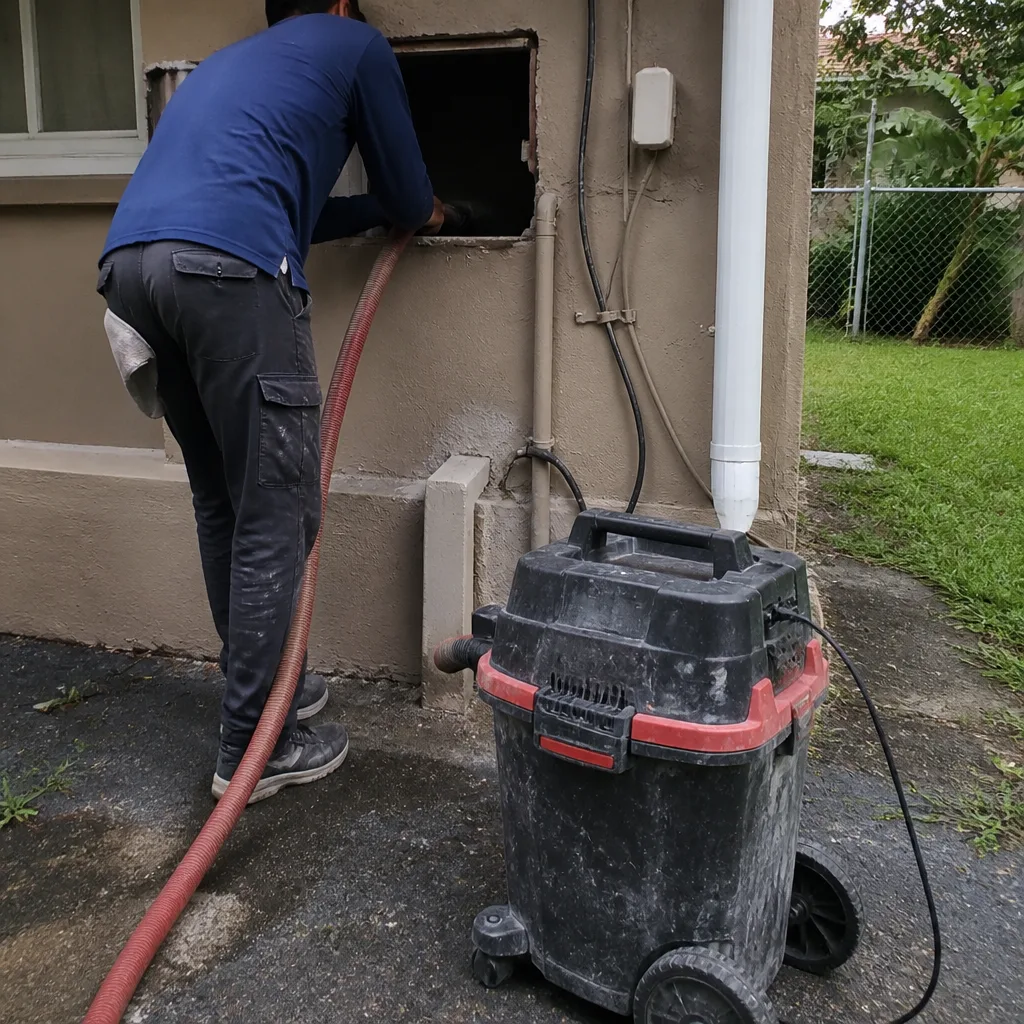 Before
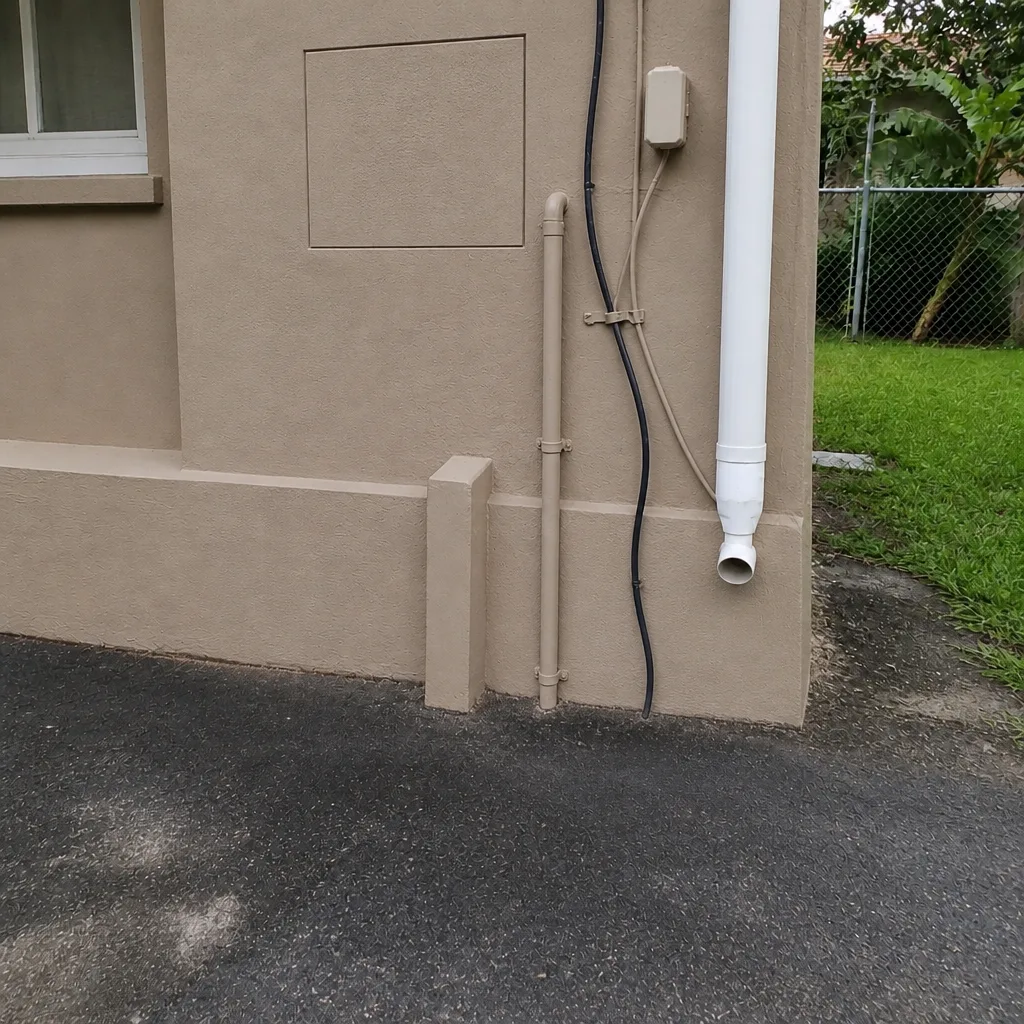 After
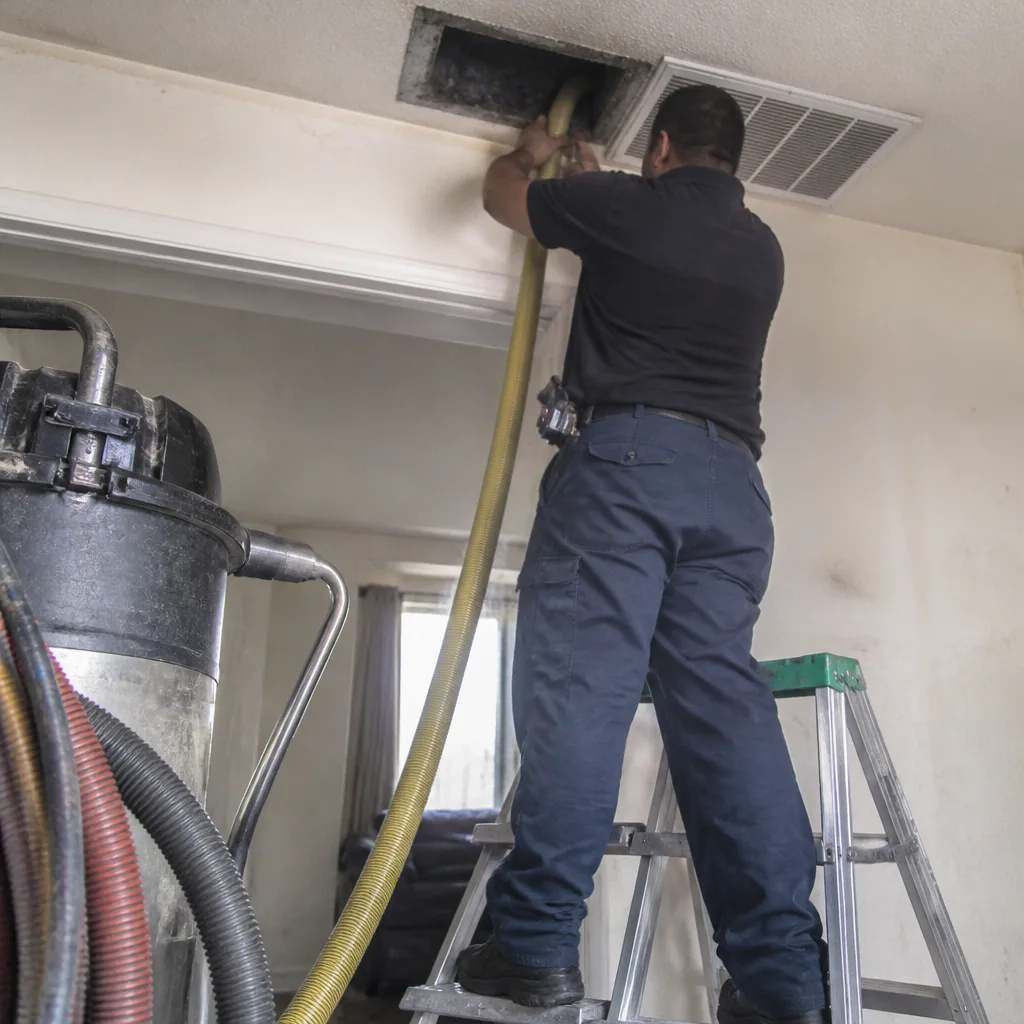 Before
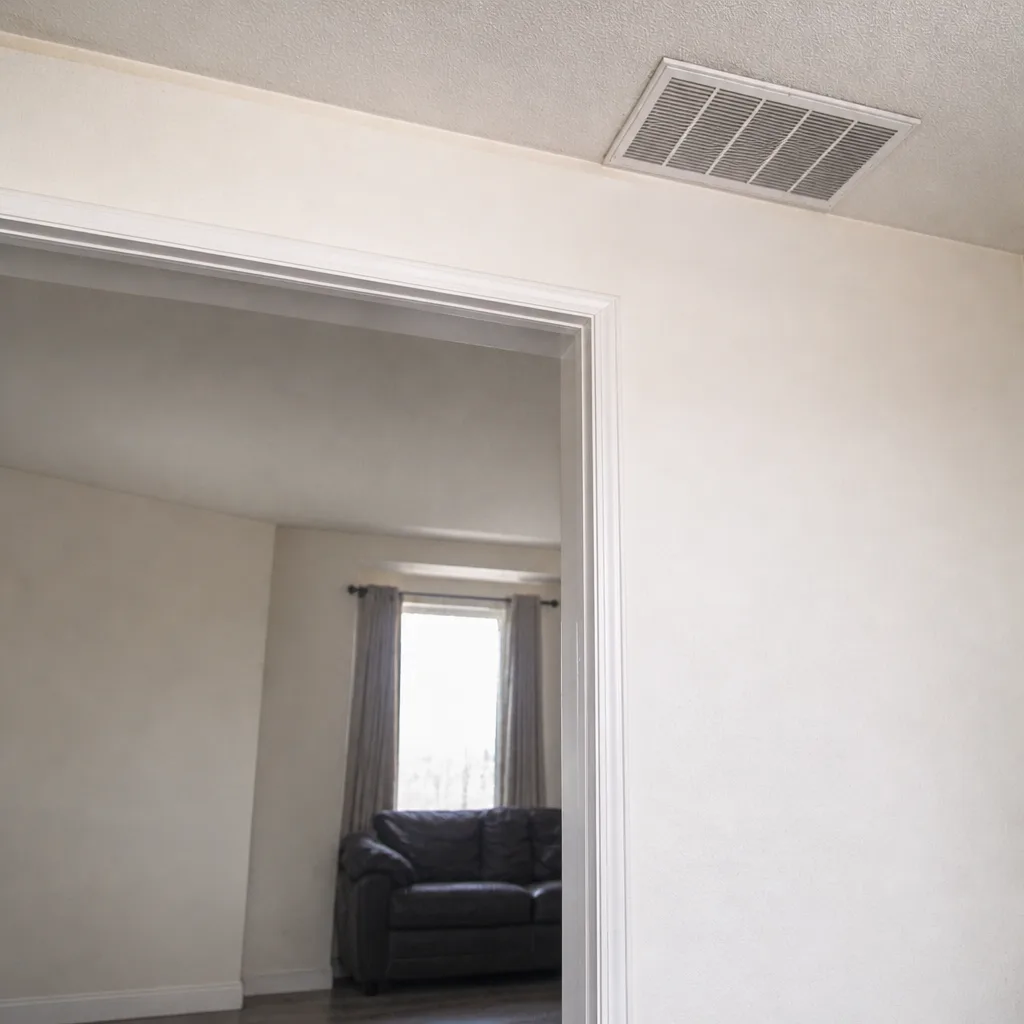 After
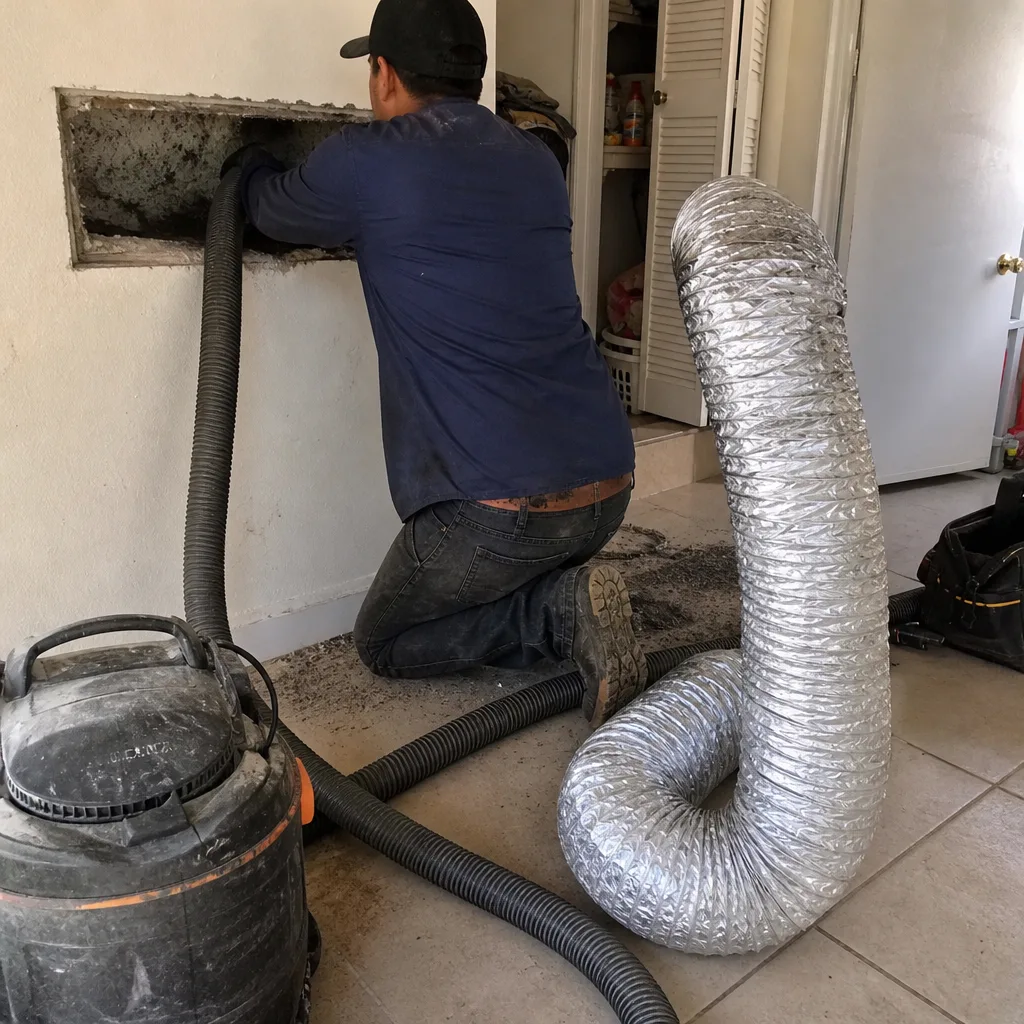 Before
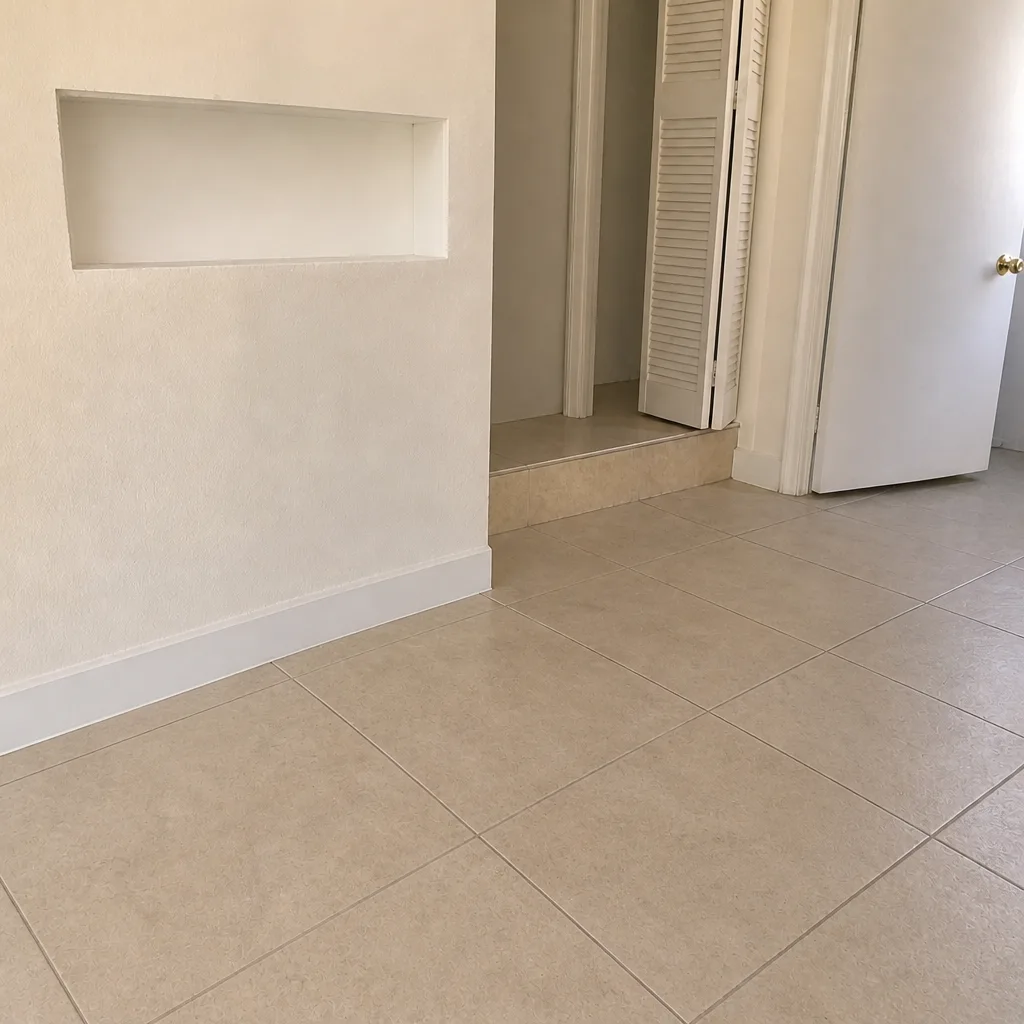 After
When to Call a Professional
Call a professional when there’s a structural duct issue that needs diagnosing, when you suspect a disconnected or crushed duct, when a home inspection flags the HVAC distribution system, or when you’re preparing to sell and want the paperwork in order. Call when your airflow has dropped noticeably in one area of your home, or when you’re seeing dust buildup at the registers after a recent cleaning. Call if you’ve got a dryer that’s taking longer than it should, which is a vent-clogging warning sign.
Hialeah Duct Cleaning offers free estimates in Hialeah – call (888) 831-4689. We answer 24/7. Fast dispatch from 7am to 7pm, Sunday through Friday.
Frequently Asked Questions
No. Routine air duct cleaning in Hialeah is classified as maintenance and does not require a permit. The permit question only enters when the work becomes structural: repair, replacement, or modification of ductwork. If you’re buying a cleaning only, you can skip the permit process entirely. If the job might touch duct structure, call (888) 831-4689 for an exact quote before work starts – estimates are free.
Any change to the duct system’s configuration triggers the permit question. That includes rerouting a run, extending the system into a new room, adding a takeoff, replacing a section of flexible or rigid duct, changing duct sizing, or reassembling a significant section that has come apart. Simple re-taping of a single accessible joint usually falls back into maintenance, but check with the City of Hialeah building department because “usually” isn’t a permit. Call (888) 831-4689 to talk through your scope.
Ask for the permit number in writing and then confirm it directly with the City of Hialeah building department by giving them your address and the number. Ask for status and whether the inspection has been scheduled and passed. A permit that was issued but never inspected is not the same as a compliant job. If a contractor can’t produce a permit number, there isn’t one. Call (888) 831-4689 for a free estimate.
The permit exposure lands on the property, not on the contractor who did the work. In a sale, the buyer’s inspector flags the newer section, the buyer asks for the permit, and the seller is in a disclosure conversation. The usual remedy is pulling the permit retroactively, which means opening up the work for inspection. It’s surmountable but expensive and it delays closings. Call (888) 831-4689 to get ahead of it before listing.
Yes. Miami-Dade County has adopted local amendments to the Florida Building Code, and those amendments apply inside Hialeah city limits. Because amendments change over time, the right move is to confirm the current requirement with the City of Hialeah building department for your specific scope. We won’t guess at a code citation; we’ll tell you to verify and we’ll build the scope to match. Call (888) 831-4689 for a free estimate on the cleaning and repair side.
There’s no fixed schedule that’s right for every home. Dusty environments, recently finished remodeling, pets, and visible debris at the registers all point toward a cleaning. A system that shows no signs of significant buildup doesn’t need a routine cleaning just because time has passed. The honest answer is to look at the system rather than track the calendar. Call (888) 831-4689 for an inspection and free estimate.
The Bottom Line
Cleaning your ducts doesn’t require a permit. Repairing, replacing, or modifying them very likely does, because that’s mechanical work under the Florida Building Code, and Miami-Dade County’s local amendments add requirements beyond the state baseline inside Hialeah city limits. The permit exposure sits with the property, not the contractor, which is why you verify the permit number yourself, confirm the inspection passed, and keep records. A compliant job looks like a written scope, documented before-and-after photos, a written estimate turned invoice, and a permit number where one was needed. Everything else is a phone call away.
Call (888) 831-4689. We answer 24/7. Fast dispatch from 7am to 7pm, Sunday through Friday. Estimates are free, and the price is set per system by the written estimate – no per-vent pricing, no surprises. Our technicians have up to 9 years of experience, and if we find a structural problem while we’re cleaning, we fix it as part of the job and walk you through any permit requirement before it’s priced.
Written by the team at Hialeah Duct Cleaning.