
Last updated November 15, 2026
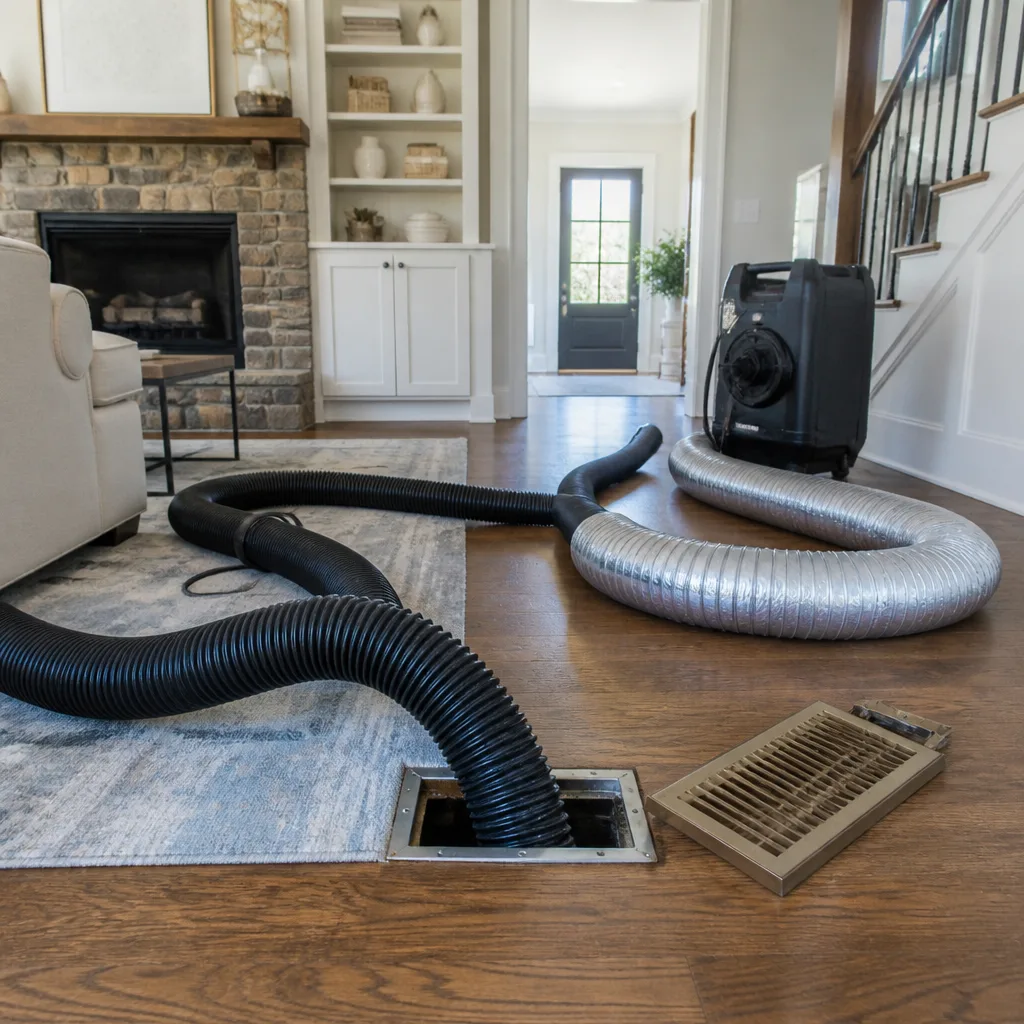 Whole-home duct cleaning
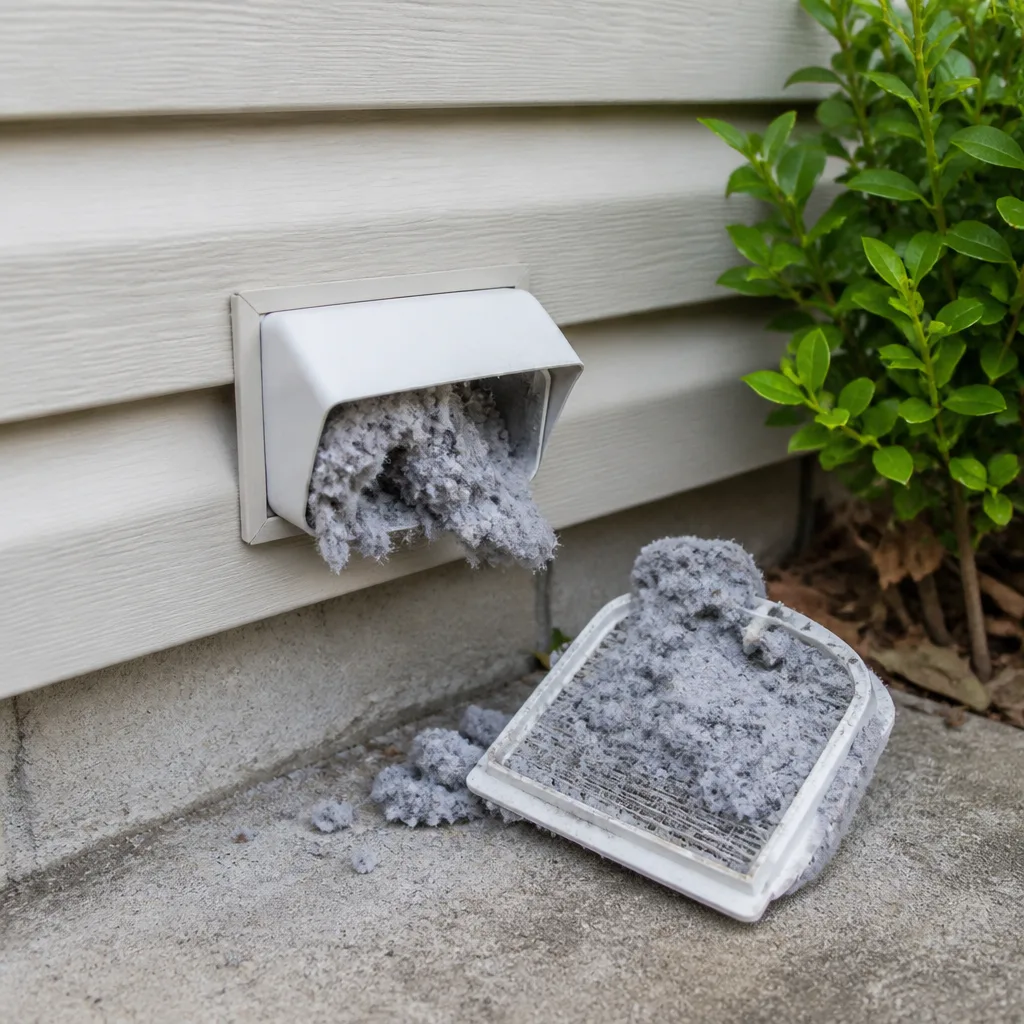 Dryer vent cleaning
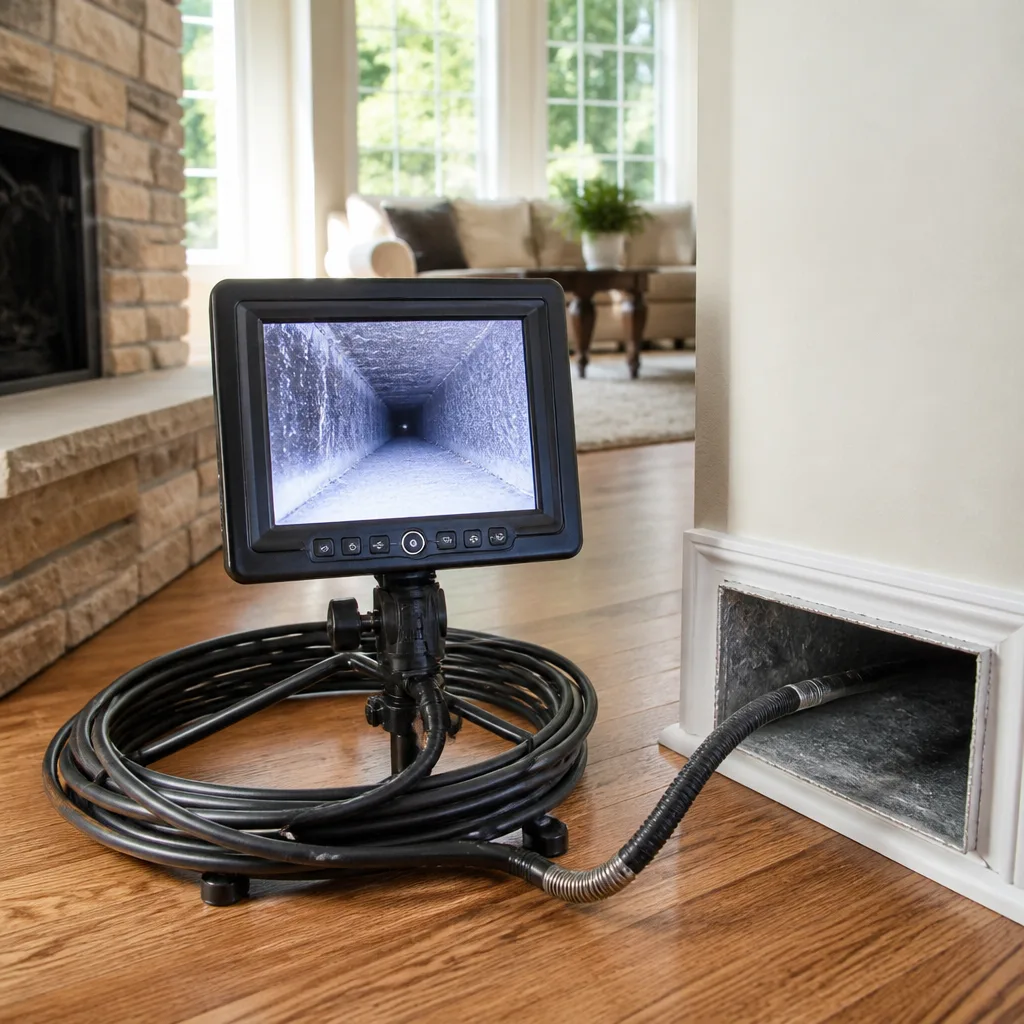 Camera inspection
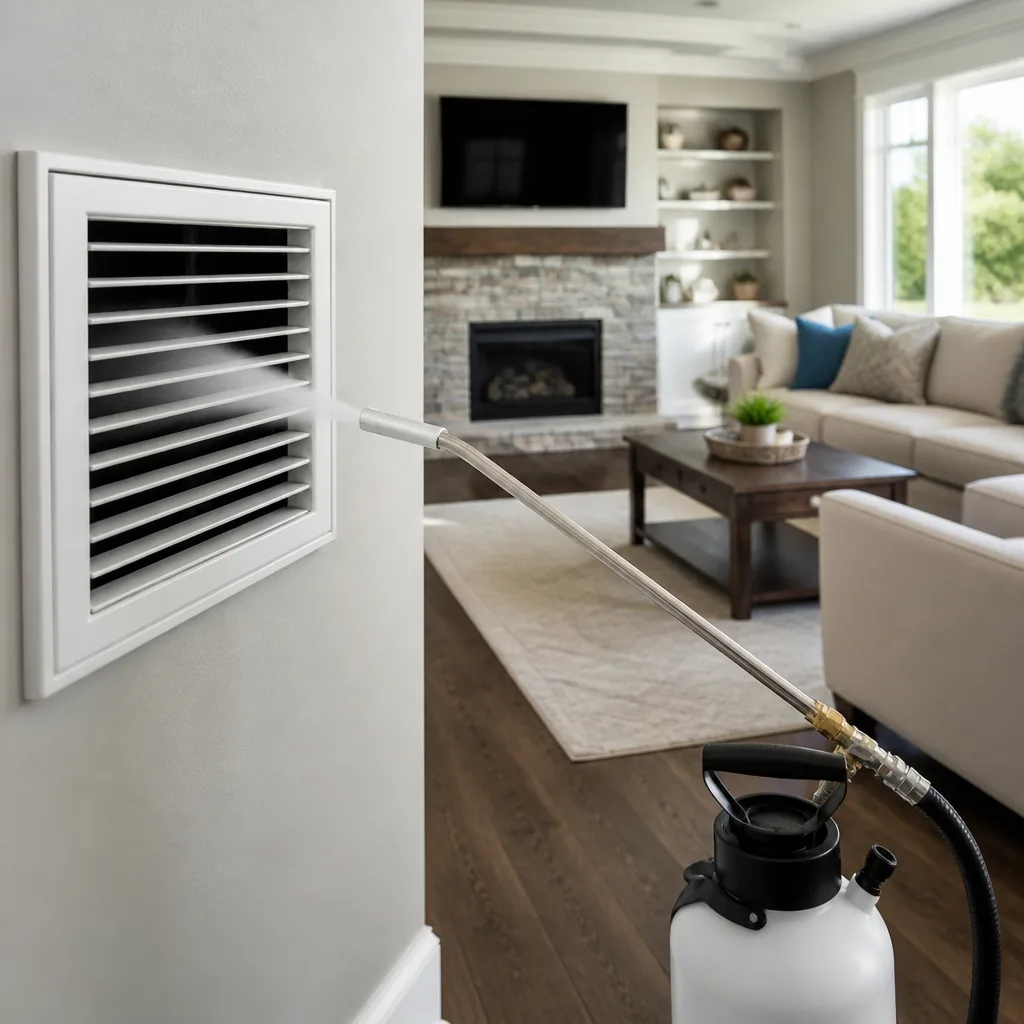 Sanitizing & deodorizing
Whole-system duct and dryer vent check with before-and-after photos - you see exactly what came out of your vents
That "$99 whole-house special" is a bait ad - the real number appears once they are in your hallway, or the "clean" is a shop-vac at the register. We photograph the inside of your ducts before and after instead.
Air Duct Cleaning Emergency Preparedness Guide for Hialeah Homes
Most Hialeah households prepare for hurricane season the same way: shutters, water, batteries, a generator. Almost nobody prepares the duct system. Yet the air handler and the ducts feeding every room are the one part of the house that keeps pulling outside air, moisture, and debris long after the storm has passed. After a major storm like Irma, thousands of South Florida HVAC systems ran for weeks with storm debris, standing water residue, and mold spores pulled into ductwork through displaced registers and damaged rooflines. Most homeowners cleaned the visible damage and never touched their duct systems.
This guide covers what to check after a storm, how to prepare before one, and when cleaning is the right move versus when a duct has to be replaced. It’s written for the specific weather, housing, and building styles you find across Hialeah.
Quick Answer
After a storm or flood, inspect every supply and return register before you run the HVAC. If you find displaced registers, water in the return ducts, or debris pulled into the air handler, don’t run the system until a professional checks it. A professional cleaning is the right response to surface contamination and fine debris; a duct that has held standing water typically needs replacement under IICRC S500 water damage standards, not just cleaning.
Styles & brands we work with
- Whole-home duct cleaning
- Dryer vent cleaning
- Camera inspection
- Sanitizing & deodorizing
Table of Contents
- Post-Storm Duct Inspection: The Sequence That Matters
- Why Running Your HVAC Before Inspection Makes Contamination Worse
- What a 72-Hour Power Outage Does Inside Your Air Handler
- Post-Flood Duct Protocol: Clean It or Replace It?
- Pre-Storm Preparation: What to Do Before the Warning
- How Hialeah Housing Stock Shapes Duct Risk
- Documentation and Insurance for Duct Damage
- Why Equipment Grade Matters on Storm Jobs
Post-Storm Duct Inspection: The Sequence That Matters
A post-storm duct inspection follows a specific order, and skipping a step is how contamination spreads. Work from the perimeter inward: registers first, then the runs, then the air handler. In Hialeah homes, most of this is visible without opening a wall.
- Walk every room and flag missing or displaced registers. Ceiling and floor registers get knocked loose by wind-driven pressure changes and by debris. A register that’s hanging or missing is an open door for storm material to enter the duct run.
- Check floor-level return grilles for water. Return ducts at floor level are the most common point where flood water and splash-back enter the system. Any standing water, damp insulation, or lingering musty smell inside a return is a stop signal.
- Look at the air handler housing. Pull the access panel and inspect the cabinet for debris, leaves, insect activity, and moisture on the evaporator coil and blower wheel. Debris pulled into the air handler during the storm collects here first.
- Check flexible duct connections in the attic or soffit. Flex duct is the most common duct type in Hialeah homes. A storm can dislodge the inner liner from the collar or tear insulation, leaving a gap that leaks conditioned air and pulls attic air into the system.
- Smell-test each room’s supply air after you run the system briefly. A musty or earthy smell at specific registers points to a localized contamination source, not a whole-system problem.
If anything in steps 1 through 4 turns up a problem, stop. Running the system past that point is how a single wet return becomes a whole-house contamination issue.
Why Running Your HVAC Before Inspection Makes Contamination Worse
The instinct after a storm is to get the AC back on. In Hialeah, with summer heat and humidity, that instinct is strong. But a running system is a distribution system, and it doesn’t care whether what it’s moving is cool air or mold spores. Every minute the blower runs with debris in the return or a wet evaporator coil, the contamination gets cycled into living spaces over and over.
Consider what happens mechanically. The return side of your system is under negative pressure. If a register is displaced or a flex duct collar has pulled loose, the blower will pull unconditioned air from the attic, wall cavity, or garage into the duct run and distribute it through every supply. Debris that would have stayed in one section of ductwork gets spread across the whole system in minutes.
That’s not a hypothetical. In our experience with storm-season jobs across Hialeah, the systems that need the most aggressive cleaning are almost always the ones that ran the longest before anyone looked at them. The ones where the homeowner shut the system off until inspection usually need less work. Mechanical agitation matters here, but agitation comes after we know what we’re dealing with.
- Shut the system off at the thermostat if you see water, debris, or displaced registers.
- Don’t run the fan-only setting. It moves air just as effectively as cooling mode.
- Photograph what you find before anyone touches it, for insurance.
- Only restart the system after a professional has cleared it.
What a 72-Hour Power Outage Does Inside Your Air Handler
Extended outages are a quieter problem than flooding, and they’re common after big storms in Hialeah. Three days without power in South Florida’s summer humidity does specific things inside your air handler that homeowners don’t see.
First, the condensate drain. During normal operation, the system removes gallons of moisture from the air each day through the evaporator coil and a condensate line. When power fails during heavy humidity, that coil and the drain pan stay wet. Water sits. Whatever dust and biological material was already on the coil stays in contact with that moisture for as long as the outage lasts.
Second, the air handler cabinet. In a Hialeah home with the AC off for 72 hours, an unconditioned closet or attic-mounted air handler can reach temperatures and humidity levels that support microbial growth on wet surfaces. The coil surface and the insulation inside the cabinet are the two most vulnerable points. Growth starts on wet surfaces, and once it starts, running the system blows it into the ducts.
Third, the ducts themselves. Flexible duct with any condensation inside the liner, or rigid duct with a wet connection, holds moisture. That’s when ducts start to smell like a basement. After a long outage, it’s worth having the system inspected even if there’s no visible storm damage.
What to do: when power comes back, before turning on the AC, check the drain pan for standing water and the coil area for visible growth. If either is found, don’t run the system. Call for an inspection. Our team uses Nikro HEPA-rated negative-air vacuums so that when we do dislodge contamination, it’s captured and not redistributed through the house.
Post-Flood Duct Protocol: Clean It or Replace It?
The decision between cleaning and replacement isn’t a judgment call for a salesperson to make on-site. It follows IICRC S500 water damage standards, and the rule is fairly clean: ductwork that has held standing water, or porous duct material that stayed wet beyond a short drying window, typically has to be replaced rather than cleaned.
The reason is material. Most of the duct in Hialeah homes is either fiberglass-lined rigid duct or flexible duct with an insulated liner. Both are porous. Once water enters the liner, you can dry the surface but not the interior. Cleaning can remove debris and biological growth from a surface. It can’t undo saturation.
Where cleaning is the right answer: dust, fine debris, storm-blown particulates, mold spores on dry duct surfaces, and contamination from a running system with a displaced register. That’s most post-storm situations where water never actually entered the ducts.
Where replacement is the right answer: duct that held standing water, duct with visible delamination or collapsed liner, and duct that stayed wet for more than a short window after a leak. If a section has to be replaced, we handle that alongside the cleaning so you’re not scheduling a second contractor for the repair.
- Surface contamination only: cleaning, with mechanical agitation of the duct walls.
- Water-saturated duct: replacement of that section, then cleaning the rest.
- Breaches or tears found during cleaning: repair on the spot, before we leave.
- Contamination with mold spores across multiple runs: Abatement Technologies air filtration equipment to handle the fine particulate load.
If you’re unsure which case you’re in, we do a free estimate and tell you plainly. Cleaning a duct that needs replacement wastes your money, and replacing duct that just needs cleaning wastes it faster.
Pre-Storm Preparation: What to Do Before the Warning
Pre-storm preparation for your duct system is cheap and takes under an hour. The goal is to reduce what can get in, and to protect your insurance claim if something goes wrong.
- Seal or cover registers. Tape plastic over ceiling and floor supply registers and return grilles before the storm. This keeps wind-driven rain, debris, and fine dust out of the duct run if the storm displaces a register from outside.
- Shut the HVAC off before landfall. Turn the thermostat to off, not fan. If the power comes back mid-storm or right after, you don’t want the system pulling air through a damaged cabinet or a wet return.
- Photograph the system before the storm. Photos of the air handler, coil, and a few registers give your insurer a clean baseline. Dated photos taken before landfall are the strongest evidence you can have about pre-storm condition.
- Document the drains. Check that the condensate drain is clear and the pan is dry before shutting down. A pre-existing wet pan makes it harder to prove storm damage later.
- Note any known duct issues. If a flex connection was already loose or a register was already cracked, write it down. It’s tempting to skip, but a note that predates the storm is worth more than a memory after.
For a fuller picture of routine maintenance, our guide to air duct cleaning covers what a normal cleaning involves in a Hialeah home. That baseline is what makes a post-storm assessment easier: you know what clean looks like.
How Hialeah Housing Stock Shapes Duct Risk
Hialeah is not a single housing type, and duct risk varies by neighborhood. Knowing what’s typical in your area helps you interpret what you find after a storm.
Across much of central Hialeah, older single-family homes built mid-century often have a mix of rigid galvanized duct and retrofitted flexible duct from past renovations. Attic runs in these homes tend to be long and exposed to attic heat, which makes any loose connection a bigger leak than it would be in a newer home. In the denser residential blocks, homes are often close together and share similar storm exposure, but duct condition varies house to house based on when the HVAC was last updated.
Hialeah Gardens and the neighborhoods near the Palmetto Expressway have a mix of newer construction and light-commercial properties. Newer homes usually have better-sealed flex duct, but they also tend to have air handlers in tight closets where a condensate problem has less airflow to dry out. Light-commercial buildings often have rooftop units with long duct runs. After a storm, rooftop units are more exposed to debris pulled in through the outside air intake.
The condos and multi-unit buildings typical of parts of Hialeah present a different issue. Individual units often share return paths or duct chases, so contamination in one unit can migrate. If you’re in a multi-unit building and you’ve had water intrusion, it’s worth asking the building manager whether the return chase above you was affected.
In every case, the age of the system matters less than two things: whether water got into the ducts, and whether the system has been running since. Those two questions drive every recommendation we make on a Hialeah storm job.
Documentation and Insurance for Duct Damage
Duct damage claims are won or lost on documentation. Storm damage coverage depends on showing that the damage happened during the storm event, not before. Here’s what we recommend collecting and keeping.
- Pre-storm photos of the air handler, coil, and registers. Even a phone photo taken the day before landfall makes a difference.
- Post-storm photos of the same spots. Match angles to your pre-storm photos so an adjuster can compare.
- Photos of displaced registers and loose connections before anyone touches them. Don’t put a hanging register back up before you photograph it.
- The dates you shut the system off and turned it back on. Write it down on the day, not later.
- A written assessment from your duct professional. A professional assessment that names what was found and what it will take to correct is what an adjuster needs to see.
What you shouldn’t do is have the work done and try to reconstruct the claim after. Once the ducts are cleaned, the evidence is gone. Get the assessment and the photographs first, then have the work done. If you’re not sure whether a particular finding rises to the level of a claim, ask us during the free estimate and we’ll tell you what we see.
For the dryer vent side of storm recovery, our dryer vent cleaning service addresses a leading cause of residential fires, and it’s worth scheduling alongside a post-storm duct check if the vent run is accessible from outside or the laundry area.
Why Equipment Grade Matters on Storm Jobs
Post-storm duct work is not routine dust removal. The contamination load is heavier, the particulate is finer, and the risk of re-entering the living space is higher. What separates a storm-grade duct job from a light clean is the equipment.
We use Rotobrush rotary-brush systems to mechanically scrub duct walls, not just vacuum the surface. The difference matters after a storm because storm debris and settled particulate adhere to the duct liner. A light vacuum pass slides over what’s stuck. The rotary brush breaks it loose so it can be extracted.
Extraction is where Nikro HEPA-rated negative-air vacuums come in. During agitation, the duct is under negative pressure, so what comes off the walls is captured at the machine rather than drifting back into the room. On a typical storm job, this is a continuous process on each duct run: agitate, extract, verify.
When contamination includes fine particulate, visible mold spores, or debris spread by a running system, we deploy Abatement Technologies air filtration equipment. That’s the setup that lets us work on higher-contamination jobs without spreading the load through the house.
Cleaning is one half of the job. The other half is whether the system is set up to keep the air clean afterward. We work with Honeywell and Aprilaire filtration and IAQ systems, and those upgrades only do their job when the ducts delivering the air are clean first. That’s part of why we recommend the filtration conversation after cleaning, not before.
Common Mistakes to Avoid
- Running the AC to “see if it’s fine.” If you suspected a problem before you turned the thermostat on, running the system confirms it by spreading it. Check first, run later.
- Cleaning up a displaced register before photographing it. It feels tidy but it wipes out your evidence. Photograph, then put it back or call us.
- Assuming no visible water means no duct problem. In Hialeah’s humidity, a wet coil and pan can sit for days after a long outage with no visible water in the living space. Visible water is not the test.
- Booking a light-duty vacuum-only clean on a storm job. Storm debris is stuck to the liner and needs mechanical agitation to come off. A vacuum-only pass may leave more contamination behind than it removes.
- Calling it “just dust” after a long outage. A musty odor at the register after an outage means something wet stayed wet. Odor testing is free. Guessing is expensive.
- Skipping pre-storm photos. Documenting the system before the storm costs five minutes. Reconstructing condition after the storm costs the claim.
- Assuming the ducts have to be replaced after any water intrusion. It depends on whether the ducts held standing water and for how long. Get an assessment before you commit to replacement.
See the difference
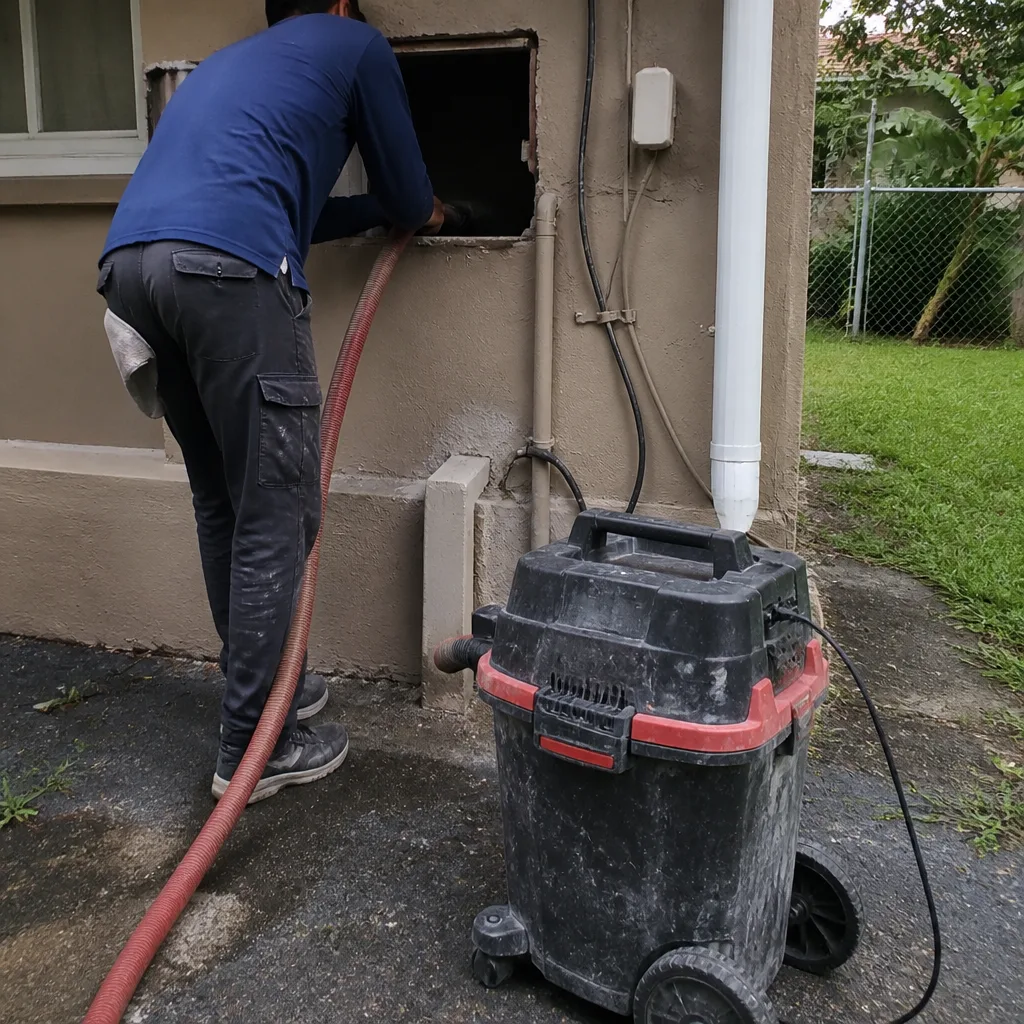 Before
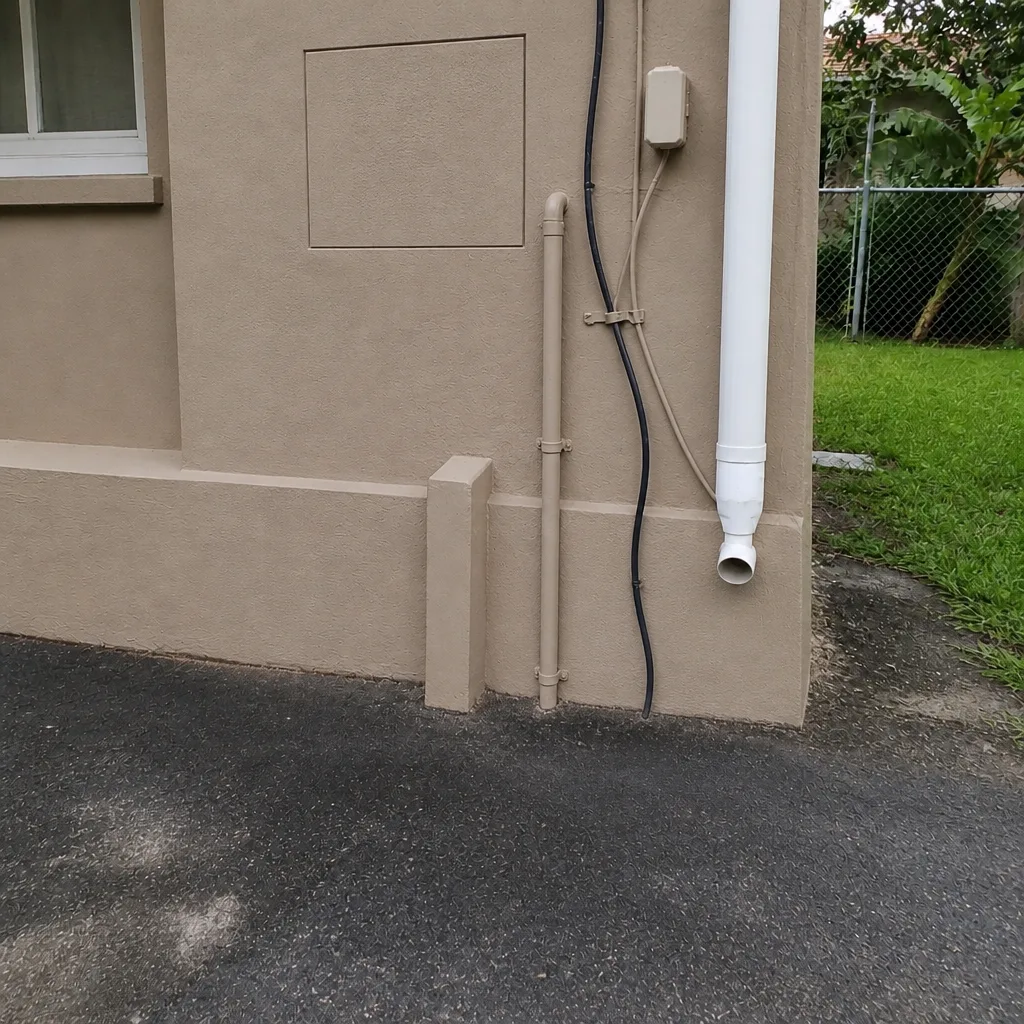 After
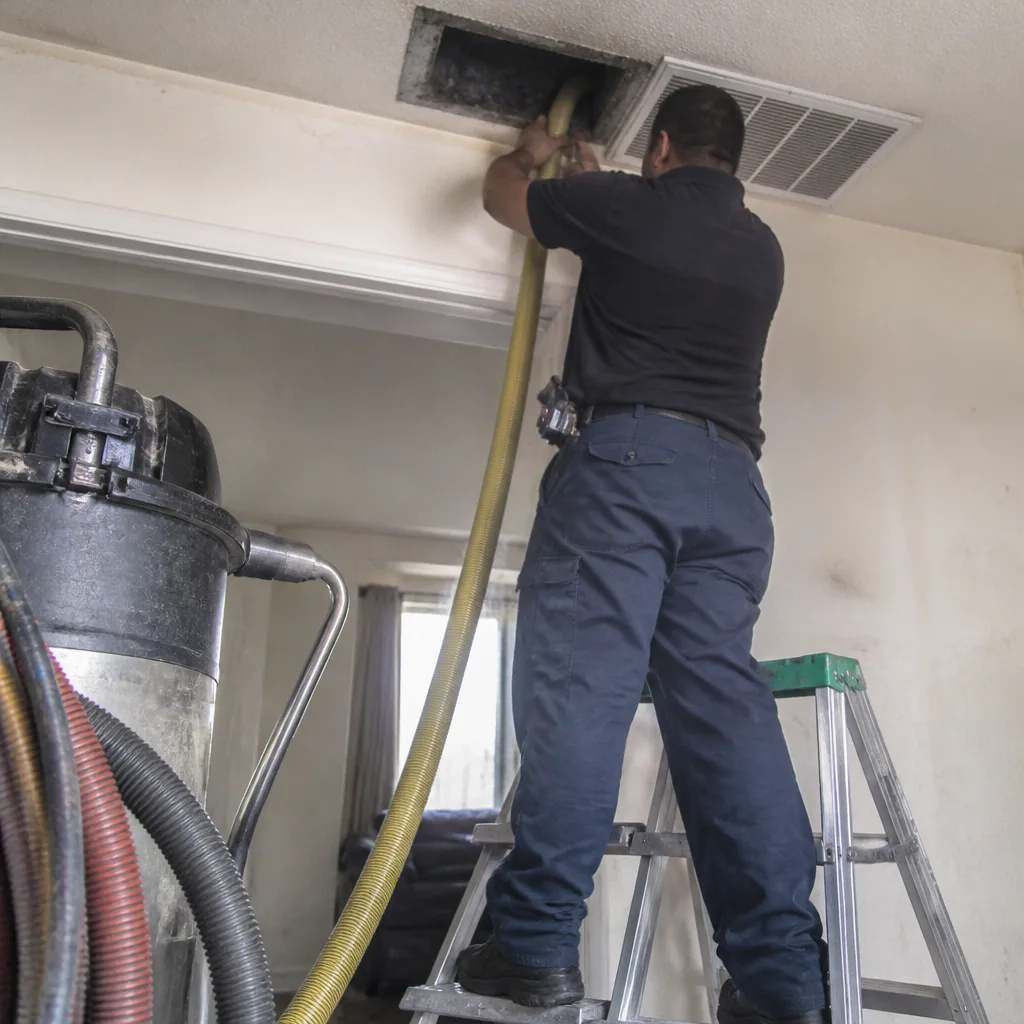 Before
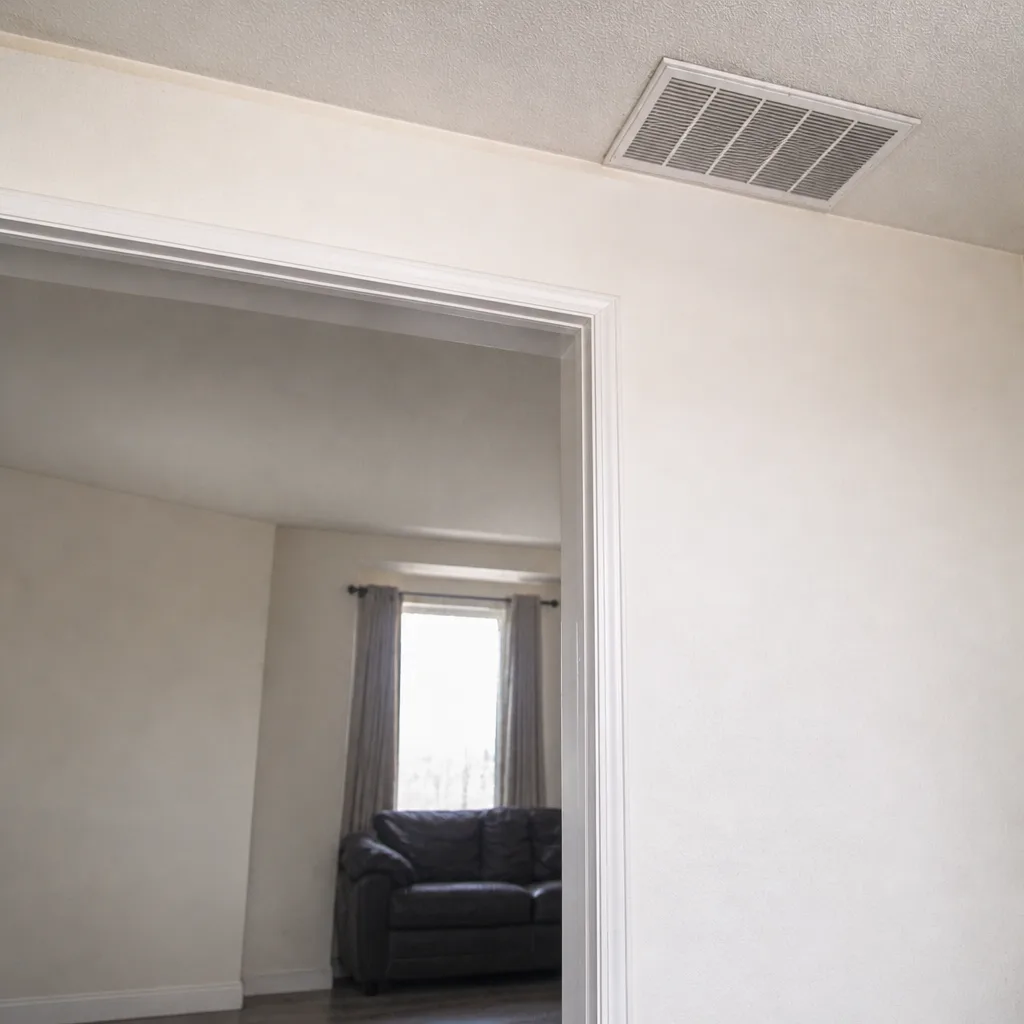 After
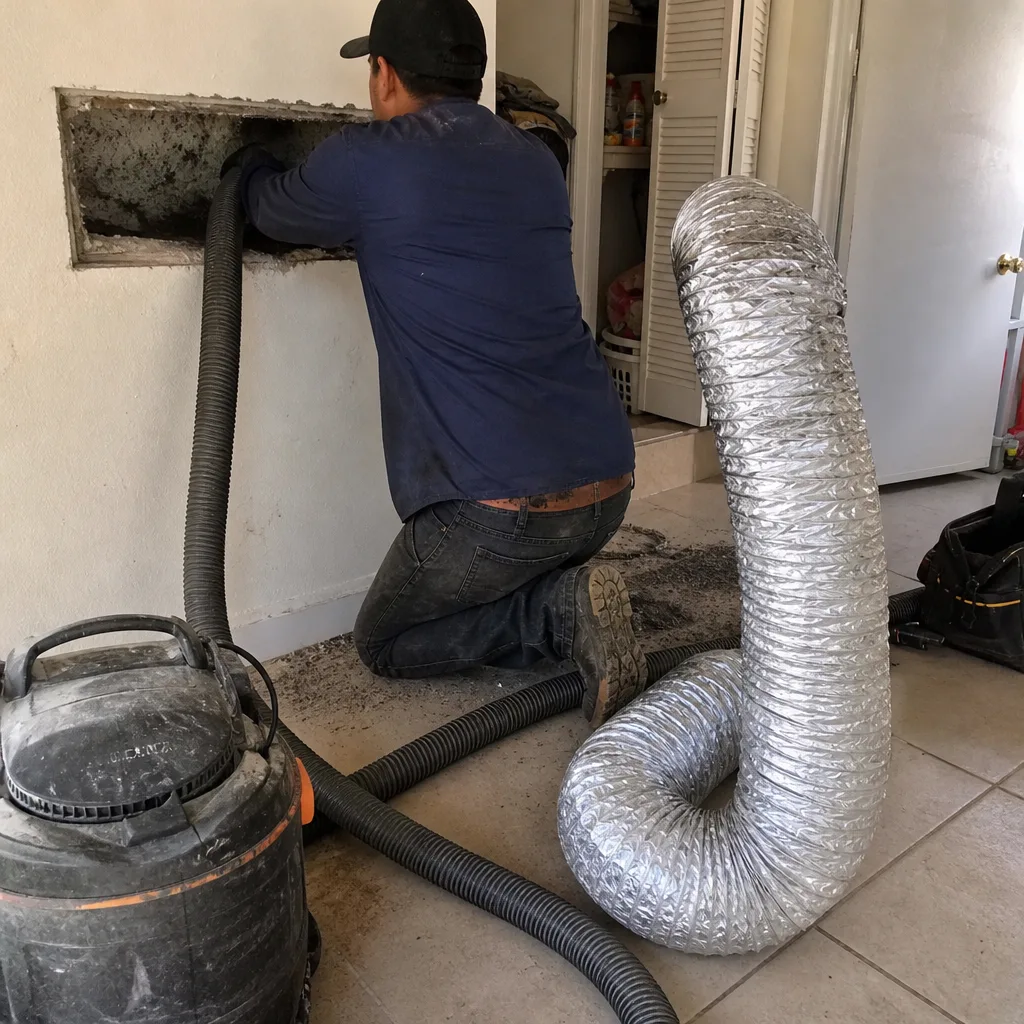 Before
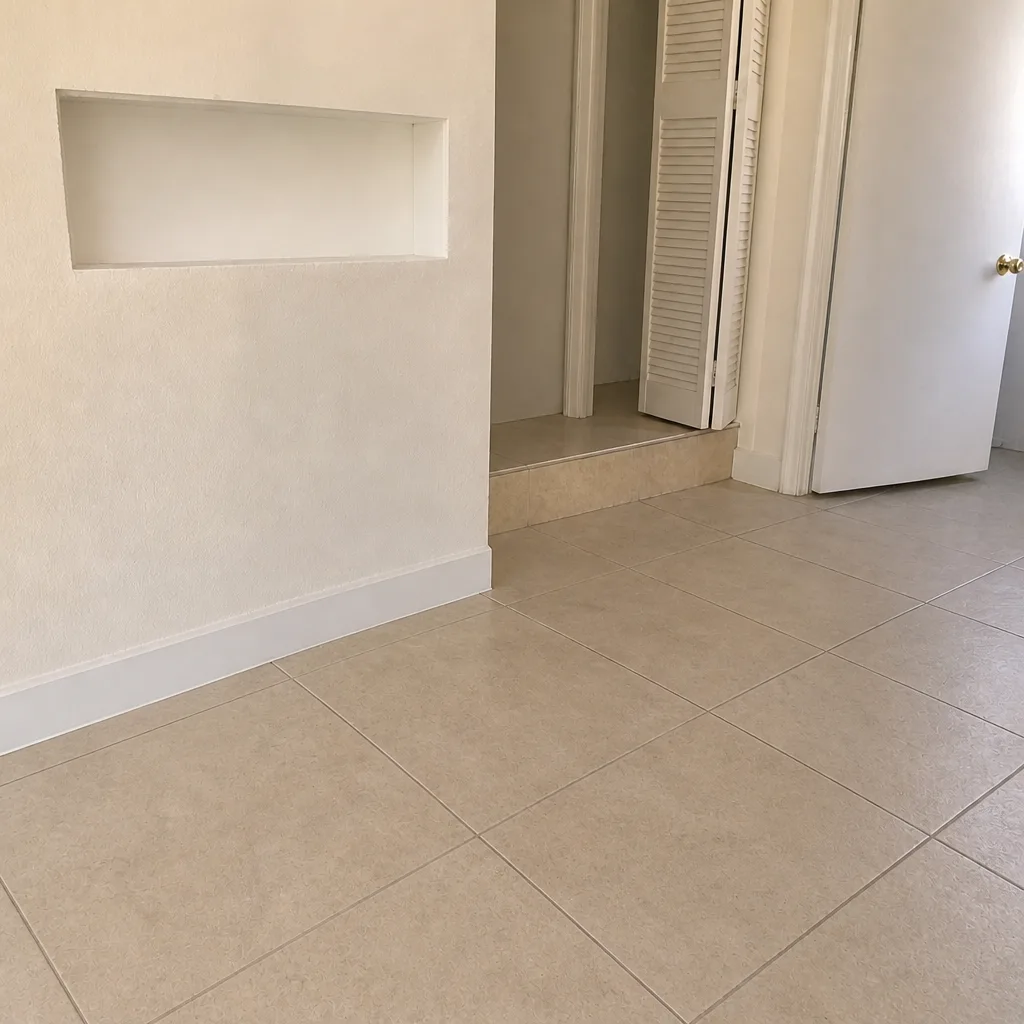 After
When to Call a Professional
Call us when you find any of the following after a storm or outage: standing water in a floor-level return, a displaced or missing register with obvious debris behind it, visible mold or a musty smell at any supply register, a loose flex connection in the attic, or doubt about what the system is doing after being off for 72 hours or more. If you’re not sure, call anyway. We answer 24/7, and fast dispatch runs from 7am to 7pm, so a call outside those hours goes into the next opening and we get to you the following Sunday-through-Friday dispatch window.
We do a free estimate for every job, and the price is set per system by a written estimate before any work starts. That includes the situation where a job turns into both cleaning and repair: if we find a gap or breach during cleaning, we fix it on the spot. Hialeah Duct Cleaning offers free estimates in Hialeah – call (888) 831-4689.
Frequently Asked Questions
Storm-caused duct damage is often covered under standard homeowners policies, but it depends on how the damage happened and the specifics of your policy. Wind-driven debris and water intrusion from a storm event are usually treated differently from long-term moisture issues or lack of maintenance. The strongest claim comes from pre-storm photos, post-storm photos, and a written professional assessment. Keep those before you have any work done.
You can handle the surface cleanup, but not the duct interior. Light vacuuming through the registers won’t remove storm debris stuck to the duct liner, and shop vacuums typically don’t have the filtration to capture fine particulate before it re-enters the room. If you’ve confirmed there’s no water and no visible debris inside the ducts, the surface cleanup is fine. If you find either, call a professional before the system runs.
Duct material that’s been wet beyond a short drying window is usually replaced rather than cleaned, following IICRC S500 standards. The exact window depends on the material and how well the space dried out, so it’s not worth guessing about. Porous duct that stayed wet typically needs replacement. Duct that was only briefly damp and dried properly can often be cleaned. An on-site assessment is the only reliable way to know which case you’re in.
Not without checking the air handler and the condensate pan first. Extended outages in Hialeah’s summer humidity leave the evaporator coil and the pan wet, and that’s where microbial growth starts. If the coil area is dry and the pan is empty, the system is usually safe to run. If you find standing water, damp insulation, or visible growth, don’t run the system until it’s inspected.
A post-storm job is heavier and needs more aggressive equipment. Routine cleaning addresses settled dust and normal buildup. A post-storm job addresses storm debris, fine particulate, and possible contamination from a system that ran before anyone checked it. We use the same Rotobrush rotary-brush system on both, but a storm job usually needs a closer inspection of connections and more passes per run, and sometimes Abatement Technologies filtration equipment for higher-contamination situations.
Often yes, and most homeowners skip it. A storm can dislodge a dryer vent connection or push debris into the outdoor termination, both of which reduce airflow and increase fire risk. A clogged dryer vent is a fire hazard, and clearing it completely after a storm is a good safety step. We include dryer vent inspection in storm-season assessments when it’s accessible.
The Bottom Line
Preparing for hurricane season in Hialeah means preparing the duct system too, not just the shutters. Before the storm: photograph the air handler, seal registers, and shut the HVAC off. After the storm: inspect before you run. Check registers, floor-level returns, and the air handler cabinet for debris and water. If the ducts held standing water, they usually need replacement under IICRC S500, not just a clean. What ties it all together is equipment. Mechanical agitation to break contamination loose, HEPA extraction so it doesn’t redistribute, and an assessment that tells you honestly whether you need cleaning, repair, or replacement. If you’d rather have an expert walk the system with you, that’s what the free estimate is for.
Call (888) 831-4689 for a free estimate on Hialeah Duct Cleaning services. We answer 24/7. Fast dispatch from 7am to 7pm, Sunday through Friday.
Written by the team at Hialeah Duct Cleaning.