
Last updated November 15, 2026
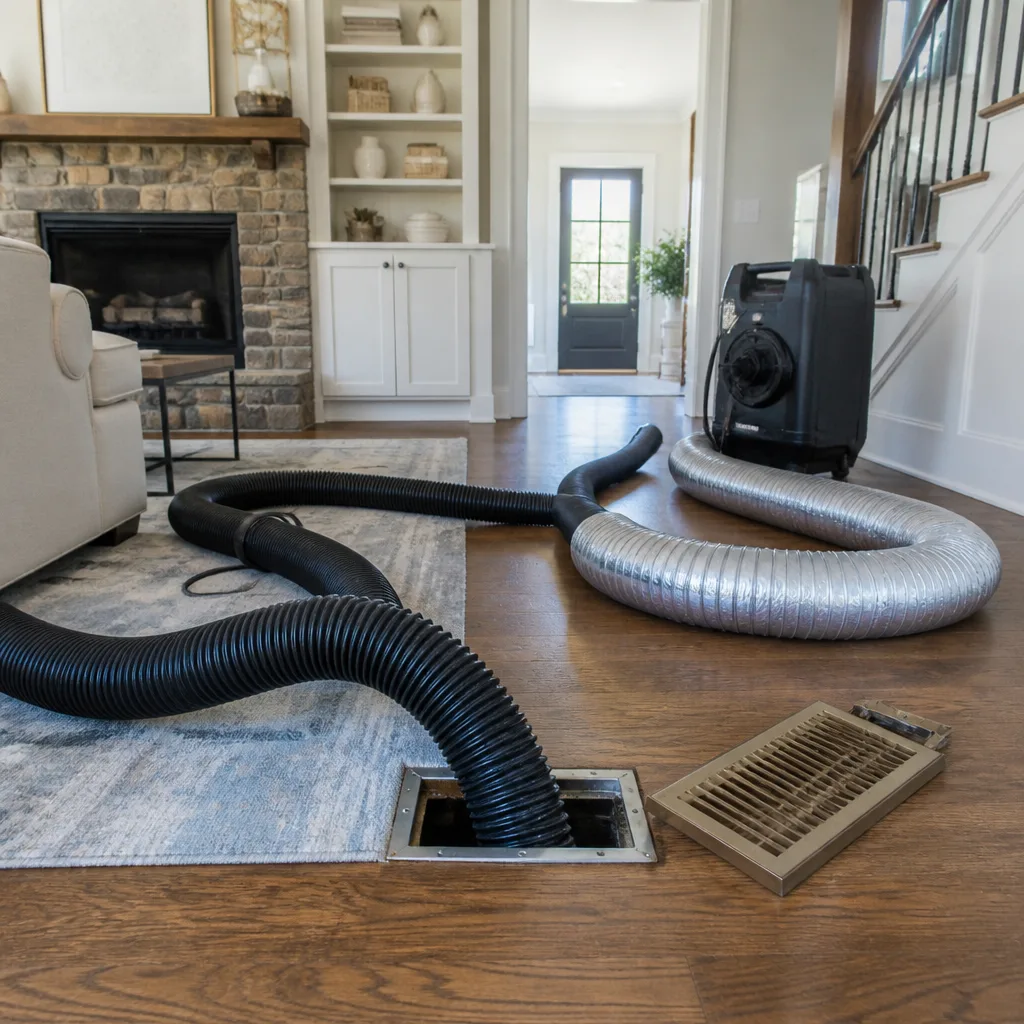 Whole-home duct cleaning
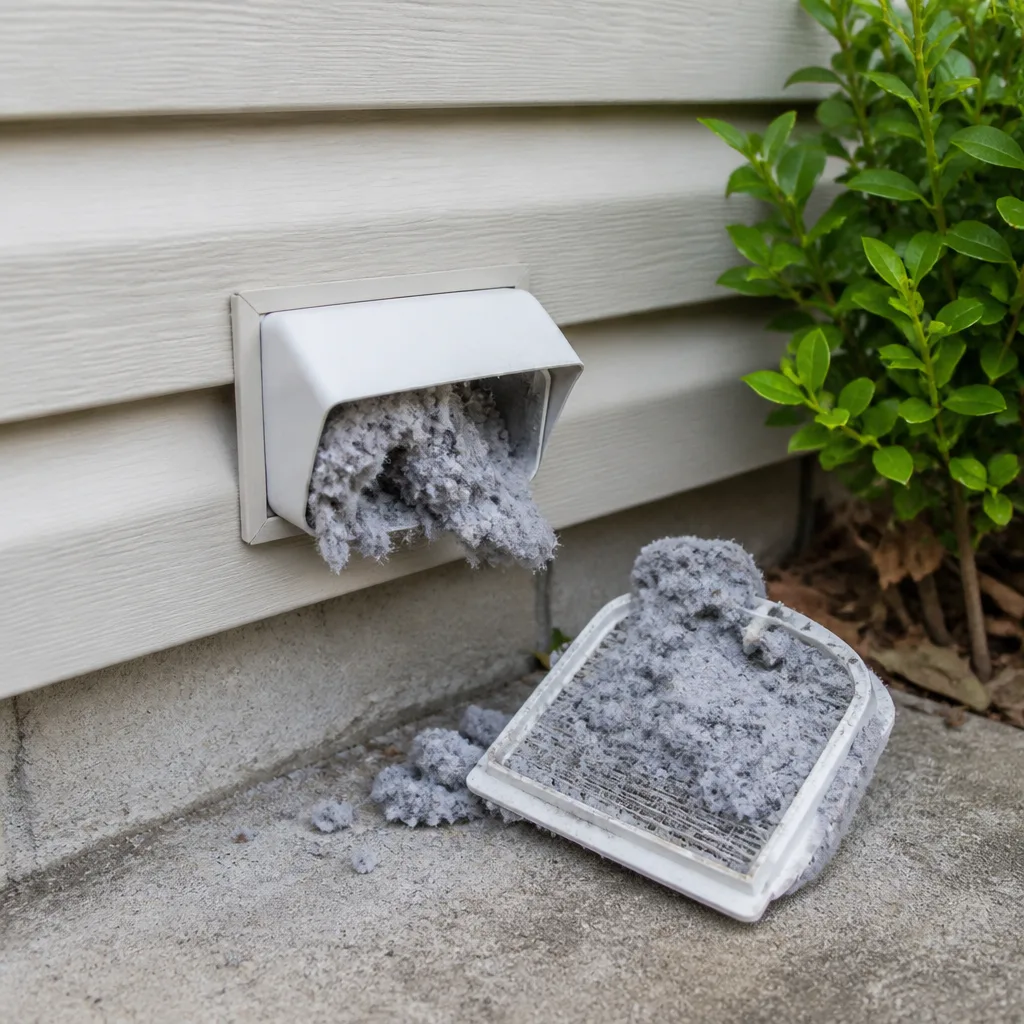 Dryer vent cleaning
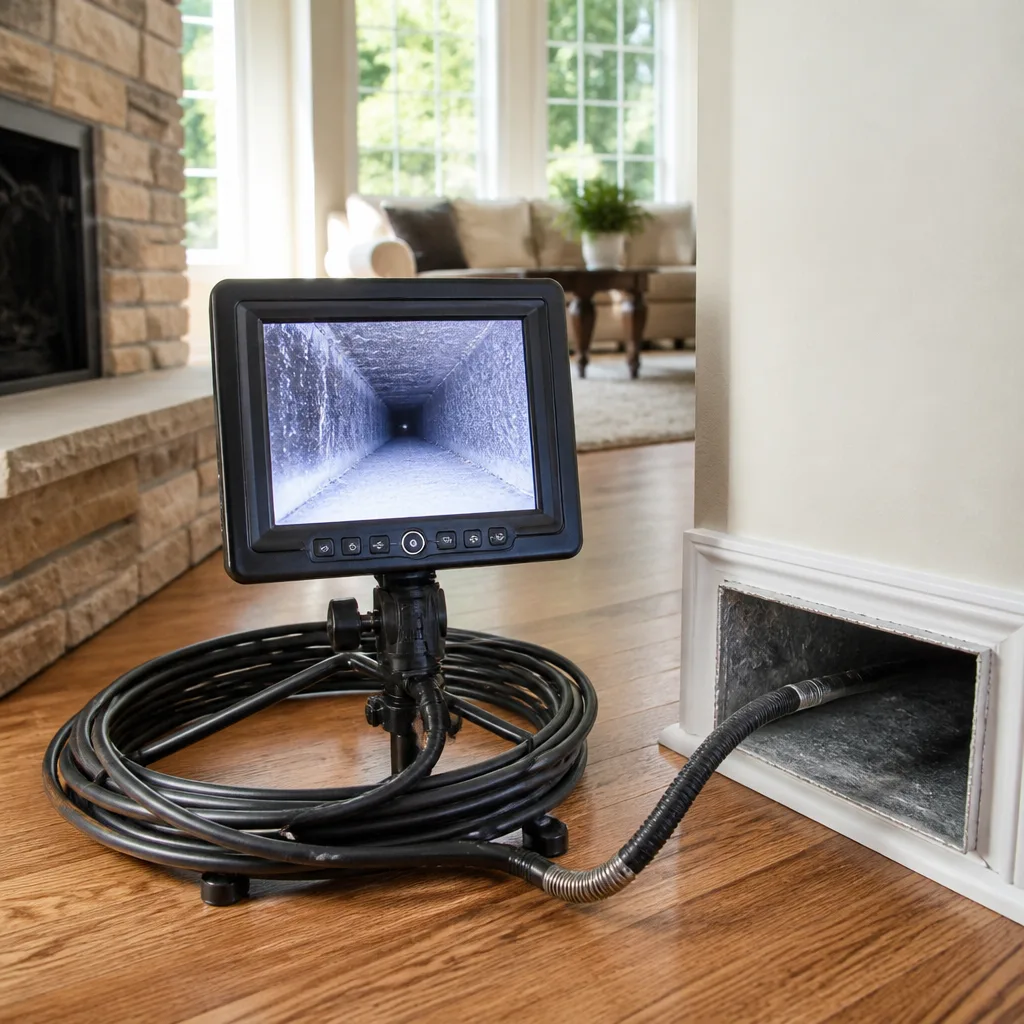 Camera inspection
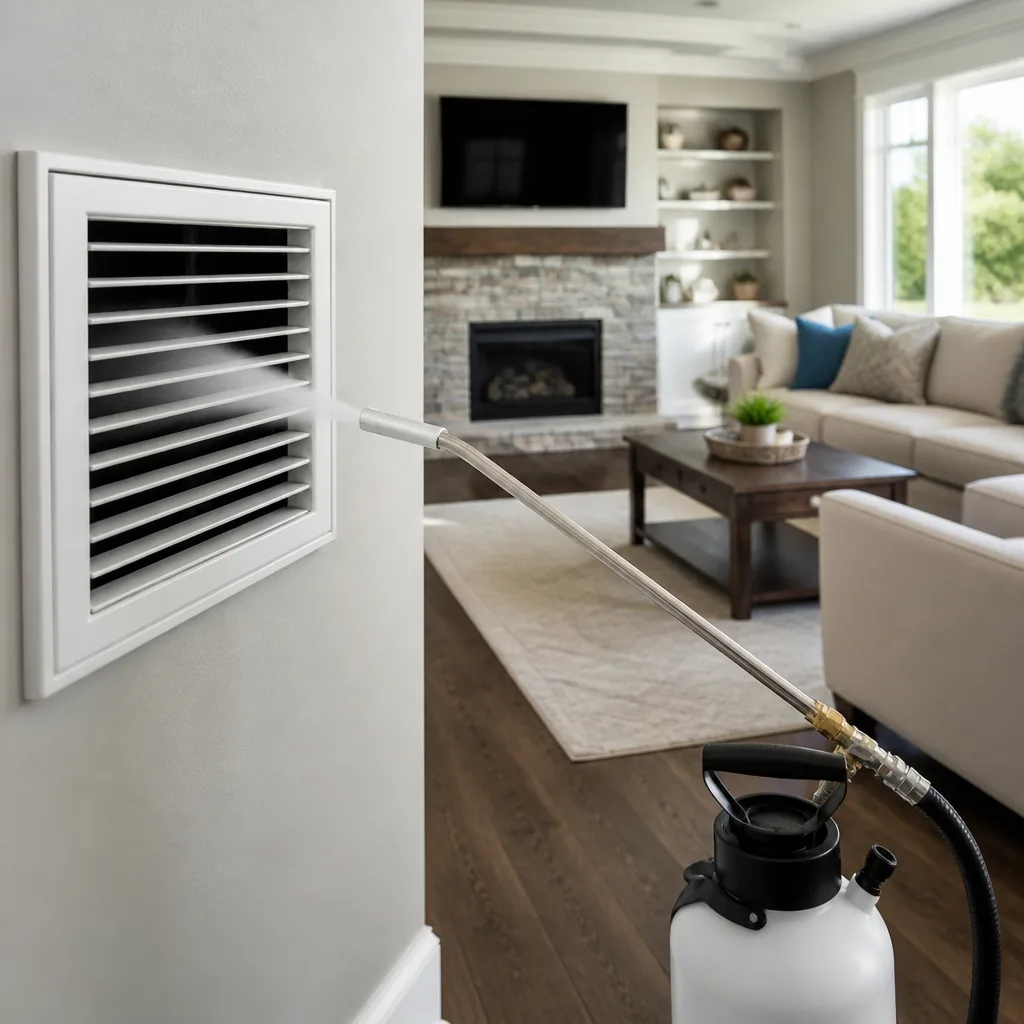 Sanitizing & deodorizing
Whole-system duct and dryer vent check with before-and-after photos - you see exactly what came out of your vents
That "$99 whole-house special" is a bait ad - the real number appears once they are in your hallway, or the "clean" is a shop-vac at the register. We photograph the inside of your ducts before and after instead.
DIY vs Professional Air Duct Cleaning: The Hialeah Homeowner’s Decision Guide
A shop vac and a dryer vent brush will clean the first 18 inches of your supply ducts. The contamination that actually affects your air quality sits 6, 10, and 20 feet further in, in the main trunk lines, the return plenum, and the air handler housing that no hardware store kit can reach. That gap between what consumer tools touch and where the debris lives is the whole debate, and it has almost nothing to do with price. In this guide we’ll map exactly what DIY equipment can and cannot access in a typical Hialeah home, explain the negative-pressure problem that makes careless DIY work backfire, and give you a four-condition test for deciding which path is right for your house.
Quick Answer
DIY air duct cleaning is reasonable as maintenance between professional cleans, and it’s genuinely bad as a substitute for one. Consumer tools reach the register and roughly the first 18 inches of each branch, but they cannot reach the trunk lines, plenums, or air handler housing where contamination accumulates, and they don’t create the negative pressure that captures dislodged debris. If your last professional cleaning was under two years ago, there’s been no water intrusion, no renovation, and no pest problem, register-level DIY is fine. If any of those four conditions applies, you need professional equipment.
Styles & brands we work with
- Whole-home duct cleaning
- Dryer vent cleaning
- Camera inspection
- Sanitizing & deodorizing
Table of Contents
- What Consumer Tools Can and Cannot Reach
- The Negative Pressure Problem
- Where DIY Maintenance Legitimately Adds Value
- When DIY Is Worse Than Doing Nothing
- The Four-Condition Decision Framework
- What Makes Hialeah Duct Systems Different
- How to Judge Whether a Professional Job Was Done Right
- Common Mistakes to Avoid
What Consumer Tools Can and Cannot Reach
Start with geometry, because it settles most of the argument. A standard residential supply branch in a Hialeah home runs from the air handler, through a trunk line, and out to a register in a room. That branch is typically 8 to 20 feet long, sometimes longer in homes with a long central hallway layout. The register is the last 6 to 12 inches of that run.
A vacuum hose pushed into a register gets you that last stretch. A rotating brush on a flexible rod gets you a little deeper, maybe 3 to 6 feet on a straight shot. What it does not get you is any of the following:
- The trunk lines. These are the large-diameter mains, often rectangular, that feed every branch. They collect the most debris because they carry the most air volume and sit closest to the air handler. You can’t reach them from a register.
- The return plenum. The return side pulls air back to the system, and it’s often the dirtiest section because it’s unfiltered downstream of the rooms. On many homes it’s a sheet-metal box you can’t see into, let alone clean from outside.
- The air handler housing and coil face. Dust, lint, and biological growth accumulate on the evaporator coil and in the cabinet around the blower. Cleaning this requires opening the unit, which is a job for someone trained to do it safely.
- Turns and offsets. Flexible duct that bends around a corner or offsets over a beam can’t be traversed with a rigid consumer rod at all. Debris piles up on the outside of every bend.
- Flexible duct interior liner. The plastic liner inside flex duct traps debris in its ridges. Scrubbing it from one end with a short brush does nothing for the rest of the run.
That’s the reach half of the equation. The risk half is what happens to all the debris you do dislodge.
The Negative Pressure Problem
Here’s the part most DIY instructions leave out. When you agitate dust inside a duct with a brush or a shop vac wand, you don’t destroy it. You make it airborne. Without containment, that cloud comes back out through the register into the room, settles on furniture, gets pulled back into the return, and partially re-coats the ducts you just tried to clean.
Professional duct cleaning solves this with negative pressure. Before any agitation starts, a high-capacity vacuum is connected to the system and sealed to it, pulling the entire duct network into a slight vacuum. Then the technician agitates from the far ends toward the vacuum. Every particle loosened goes one direction: into the capture unit, not into your living room.
We use air duct cleaning equipment built around this principle. A Nikro HEPA-rated negative-air vacuum holds the system under containment while a Rotobrush rotary-brush system mechanically scrubs the duct walls from end to end. The brush does the loosening; the vacuum does the capturing. Neither works properly without the other.
For homes with elevated contamination, mold spores, or fine particulate from renovation, we bring in Abatement Technologies air filtration units to run additional air scrubbing alongside the duct work. That’s the difference between cleaning a system and cleaning a room around a system. A shop vac can’t do either one.
Where DIY Maintenance Legitimately Adds Value
We’re not going to tell you to never touch your own ducts. There’s real value in homeowner maintenance, and it’s worth being specific about what it actually accomplishes.
- Register and grille cleaning. Pop the supply and return grilles off, wash them in the sink or hose them outside, and dry them before reinstalling. This is a 20-minute job twice a year and it visibly reduces the dust that blows into the room. It doesn’t clean the duct, but it does remove the dust sitting on the last surface before the air reaches you.
- Filter replacement on schedule. This is the single highest-value thing a homeowner can do. A clogged filter raises static pressure, stresses the blower, and lets more dust bypass into the coil. Check it monthly during heavy cooling season in Hialeah and replace per the manufacturer’s recommendation for your filter’s MERV rating.
- Visual inspection. Flashlight, phone camera, and a look inside the registers. Look for visible dust matting, dark staining, moisture, or debris. Take photos with a date. That record is useful when you do call a professional, and it tells you when a problem is developing.
- Return grille vacuuming. A vacuum with a brush attachment over the return grille face pulls off the surface layer before it gets pulled deeper into the system.
- Dryer vent maintenance. This one deserves its own treatment below, because it’s the one “DIY” task with a real safety outcome.
What none of that does is remove accumulated debris from the duct runs themselves. Register cleaning is maintenance. Duct cleaning is a different service. Keeping them separate in your mind will save you from thinking a job got done when it didn’t.
On the dryer vent specifically
A clogged dryer vent cleaning is a fire hazard, and it’s the one maintenance task where the stakes are measured in something other than air quality. Lint accumulates in the vent run, and every load of laundry packs it tighter. The full run matters, including the segment behind the dryer, the transition duct, and the exterior termination. A homeowner can pull the dryer out and clean the first few feet. What they usually can’t do is clear a long horizontal run or a vent with multiple elbows, or confirm the exterior flap opens freely. If your dryer takes longer than one cycle to dry a load, or the exterior vent flap doesn’t move when the dryer runs, that’s a signal to get the full run cleared.
When DIY Is Worse Than Doing Nothing
There’s a category of situation where the shop vac shouldn’t come out at all. Not because DIY is inefficient, but because agitation makes the underlying problem worse.
- Suspected mold. If you can see dark spotting inside a register or smell a musty odor when the system runs, brushing that surface releases spores into the airstream. Professional remediation of the duct surface, with HEPA containment and air scrubbing, is the only appropriate response. This isn’t a duct cleaning problem, it’s a contamination problem, and the tools are different.
- Post-renovation debris. Drywall dust, construction adhesive, sawdust, and fiberglass fragments settle into ductwork during a remodel. Agitating that mixture without containment spreads fine particulate through the entire house for days. The right sequence is negative pressure and filtration first, then cleaning.
- Vermin intrusion. Rodents and insects leave droppings, nesting material, and contaminated insulation inside ducts and plenums. A shop vac can’t safely handle that material, and the cleanup involves protective equipment and disposal protocols. This is not a homeowner job.
- Damaged duct liner. If the internal liner of flexible duct is torn or separated, brushing it can dislodge fragments of the liner itself into the airstream. The duct needs to be inspected and repaired, not cleaned. Our Hialeah Duct Cleaning team handles duct repair alongside cleaning for exactly this reason: when we find a breach during a cleaning, the fix and the clean happen in one visit.
Each of these situations has a common feature: the debris isn’t just sitting there, it’s biologically or chemically problematic. The tooling requirement goes up dramatically, not slightly.
The Four-Condition Decision Framework
Here’s the simplest way to decide. Run through four questions. If all four answers are “no,” DIY maintenance between professional cleans is reasonable. If any answer is “yes,” call a professional.
- Has it been more than two years since the last professional cleaning? Duct systems accumulate debris continuously. Two years of normal use in a Hialeah home is enough to build a layer that register-level work can’t address. Beyond two years, budget for a professional clean.
- Has there been water intrusion, a roof leak, or high humidity event? Water plus dust equals mold growth. Even a single event that got moisture into the system changes the category of the problem. Get it inspected.
- Has there been renovation, remodeling, or new construction in the home? Construction dust is finer and more pervasive than household dust. It penetrates duct systems deeply and requires containment to remove safely.
- Have you seen signs of pests, or noticed new allergy symptoms that track with the HVAC running? Both point to a contamination level above routine. Professional assessment is the right next step.
If none of those four conditions applies, DIY register cleaning and filter discipline are genuinely useful. If one or more applies, the question isn’t whether to DIY, it’s when to schedule. For the record, the professional service is generally scheduled rather than urgent: this is a job you plan, not a job you rush. What you’re buying is thoroughness, not speed.
What Makes Hialeah Duct Systems Different
Duct cleaning isn’t universal. The housing stock and the climate in this area shape what your system actually looks like and where the debris settles.
Hialeah has a lot of mid-century and later ranch-style homes, many with flexible duct in the attic. Attic duct runs in a hot, humid climate are a fundamentally different environment from duct runs in a conditioned basement. During the cooling season, ducts running through an unconditioned attic see significant temperature differentials, which produces condensation opportunities. Combine that with the humidity of a south Florida summer and you’ve got a system where moisture management matters as much as dust removal.
This changes the priorities:
- Condensation drops are a real signal. Water staining on the outside of flexible duct, or dripping at a fitting, can indicate a compromised vapor barrier or a disconnected run. That’s a professional repair call, not a cleaning one.
- Humidity control and filtration go together. The whole-home products from Honeywell and Aprilaire that homeowners ask about work best when the ducts delivering that air are clean. A high-MERV filter upstream of a dirty coil is only solving half the problem.
- Air handler cabinets in attic installations. Warm attic air plus a cooler air handler cabinet produces condensation on the cabinet and coil. That’s exactly where mold likes to start. This is why post-cleaning inspection of the coil face matters so much in south Florida.
- Pollen and airborne particulate load. This isn’t a coastal distinction, it’s a general truth about subtropical growing seasons. The airborne load during spring and early summer puts more strain on filters and ducts than the calendar year elsewhere.
If you’re in Hialeah and haven’t had a system inspected since you moved in, that’s the first piece of information to gather. Some homes in this area have never had the ducts opened at all, and the first inspection frequently finds things worth knowing about.
How to Judge Whether a Professional Job Was Done Right
If you’re going to pay for professional cleaning, you deserve to know whether it happened. The industry has a bait-and-switch reputation for good reason: low advertised prices that turn into large invoices once the technician is on site.
The answer here is straightforward. We set one flat price per system, agreed before any work begins. No per-vent pricing, no surprise add-ons. And we provide before-and-after photos of your own ducts so you can see what changed.
Here are the questions to ask any duct cleaning company, including us:
- What equipment will be used? If the answer is a shop vac, that’s not professional cleaning. You want to hear brand names: Rotobrush rotary-brush systems, Nikro HEPA vacuums, Abatement Technologies filtration units, Guardsman components for repair work. Equipment names are evidence.
- Is negative pressure created before agitation? The answer should be yes, always.
- What’s the price, and is it per system or per vent? One flat price per system is the honest structure.
- Will I get before-and-after photos? Photos of your duct, not stock photos.
- What happens if you find a repair issue? The right answer is that the repair is addressed in the same visit, not rescheduled. We handle air duct repair alongside cleaning specifically so you don’t need a second vendor when a problem turns up.
If a company can’t answer these questions directly, that’s the answer.
Common Mistakes to Avoid
- Buying a vent kit and calling it duct cleaning. The kit cleans the last foot of the branch. The claim that it “cleans the ducts” is inaccurate, and you shouldn’t trust a professional who uses that phrasing either.
- Agitating ducts with a shop vac and no containment. This is the classic mistake: the debris ends up in your living room air instead of the ducts. Always coordinate agitation with a negative-pressure vacuum, or don’t agitate at all.
- Skipping filter changes during heavy cooling season. South Florida’s cooling season runs most of the year. A filter that would last three months in a mild climate gets loaded faster here. Check monthly.
- Using a high-MERV filter without checking whether the system supports it. Higher filtration isn’t automatically better. A filter that’s too restrictive raises static pressure, and that can reduce airflow and stress the blower. If you want better filtration, look at a properly sized system or a dedicated filter cabinet, and ask a professional to check the pressure drop.
- Ignoring the dryer vent until the dryer complains. Reduced performance and a warm exterior flap are warning signs. The risk here isn’t air quality, it’s fire safety. Get the full run cleared.
- Assuming a coupon price will hold. The classic bait-and-switch is a low advertised number that expands once the technician is on site. Ask for one flat price in writing before work begins.
- Letting flexible duct be scrubbed without inspection. Flexible duct liner can be damaged by an aggressive brush if it’s already compromised. A professional inspects before agitating. DIY can’t inspect or repair; you just don’t know what you did.
See the difference
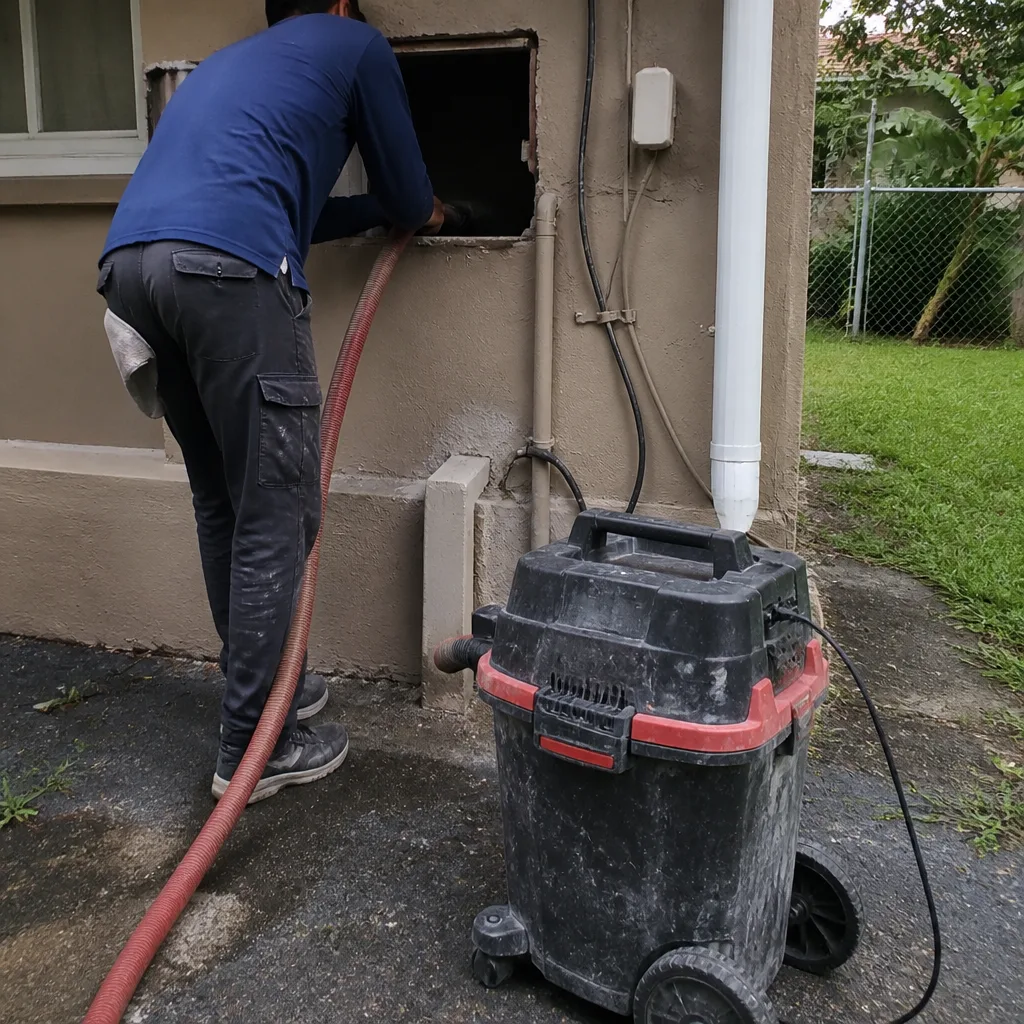 Before
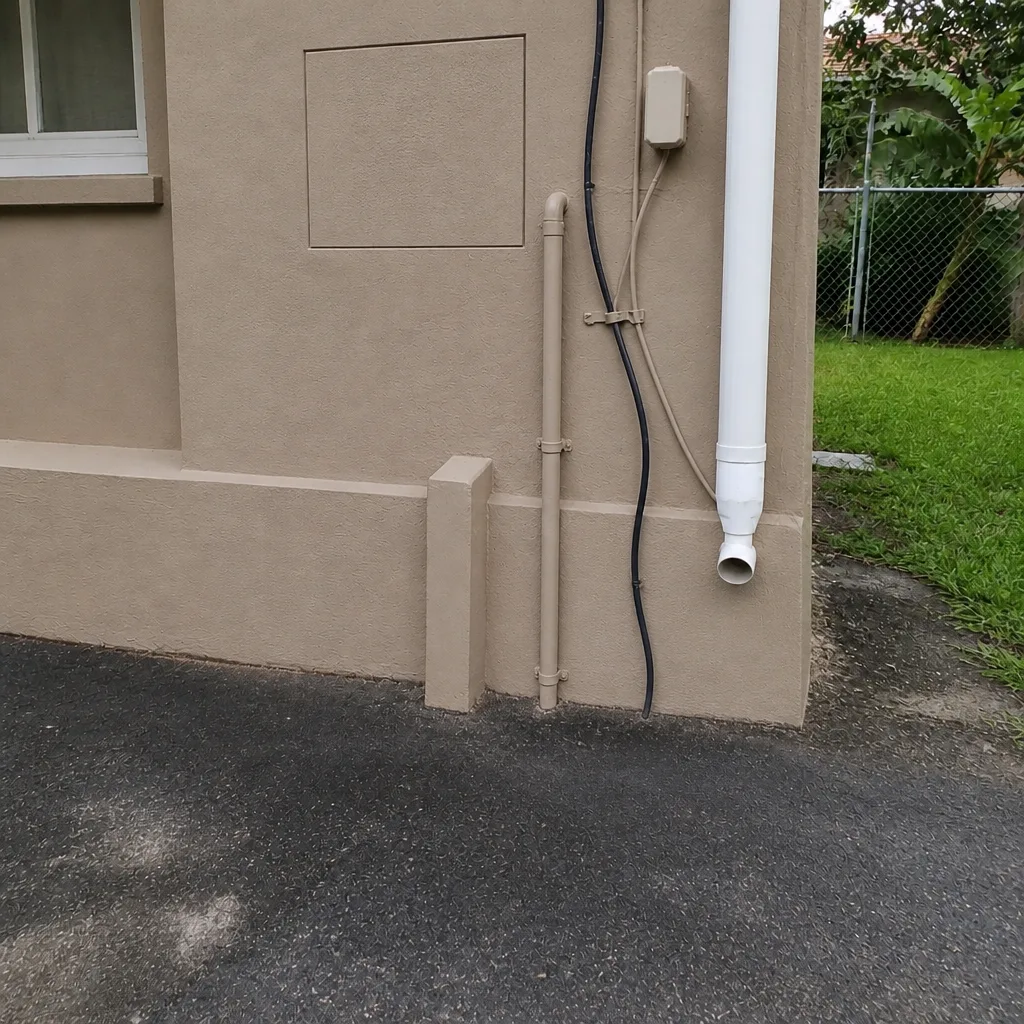 After
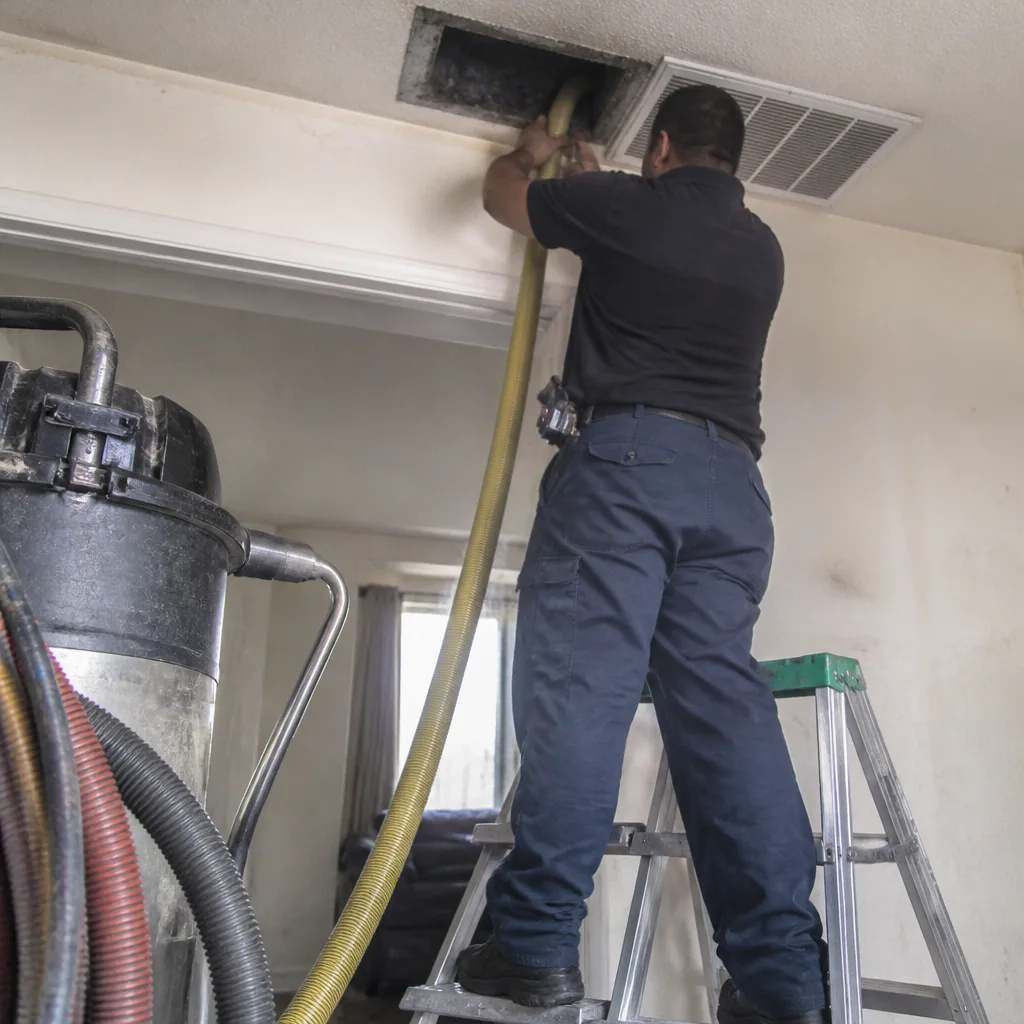 Before
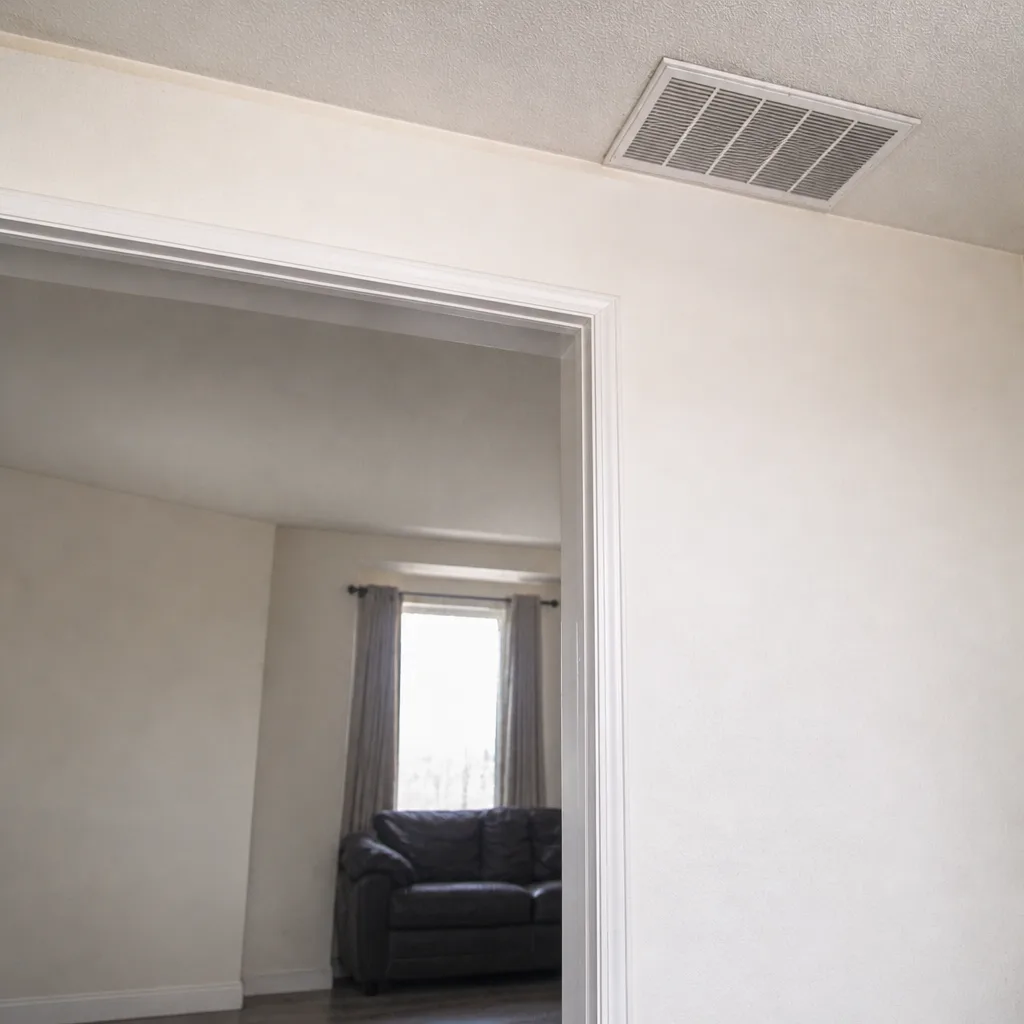 After
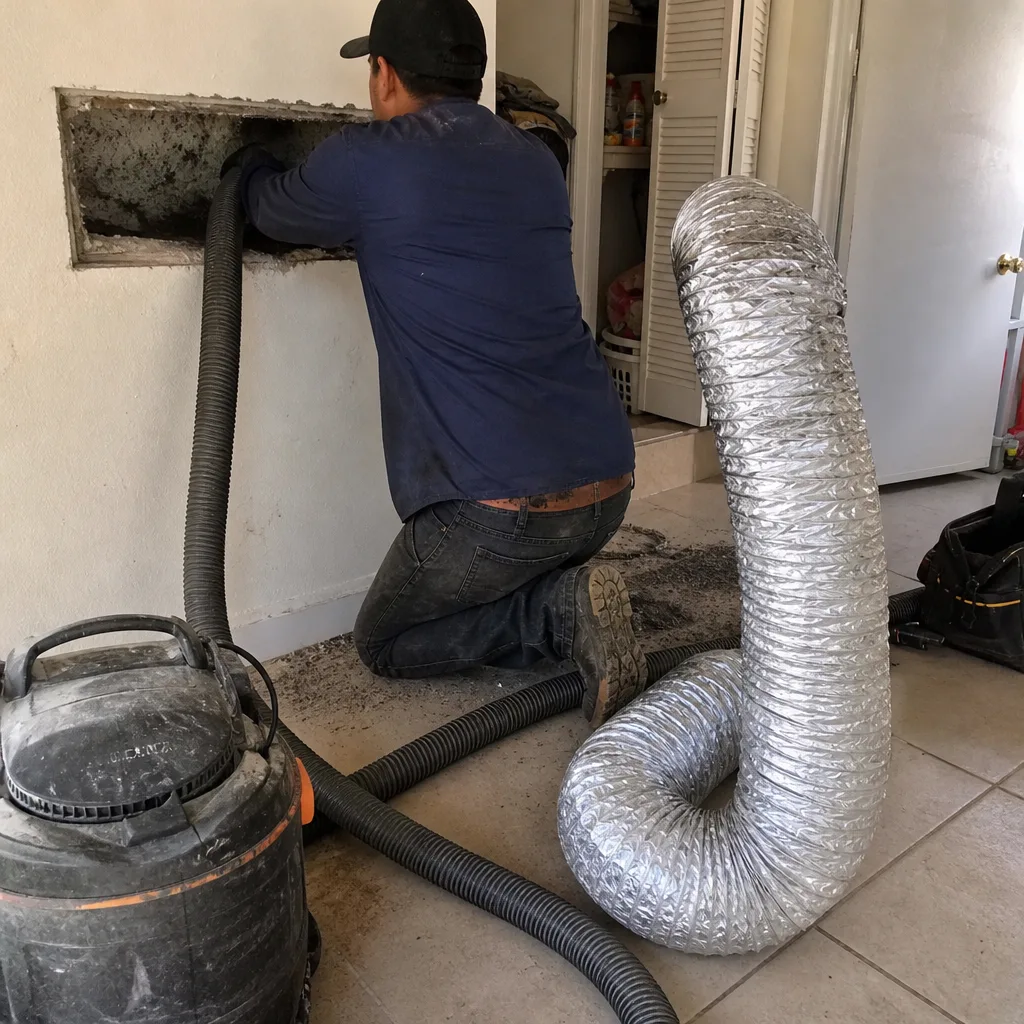 Before
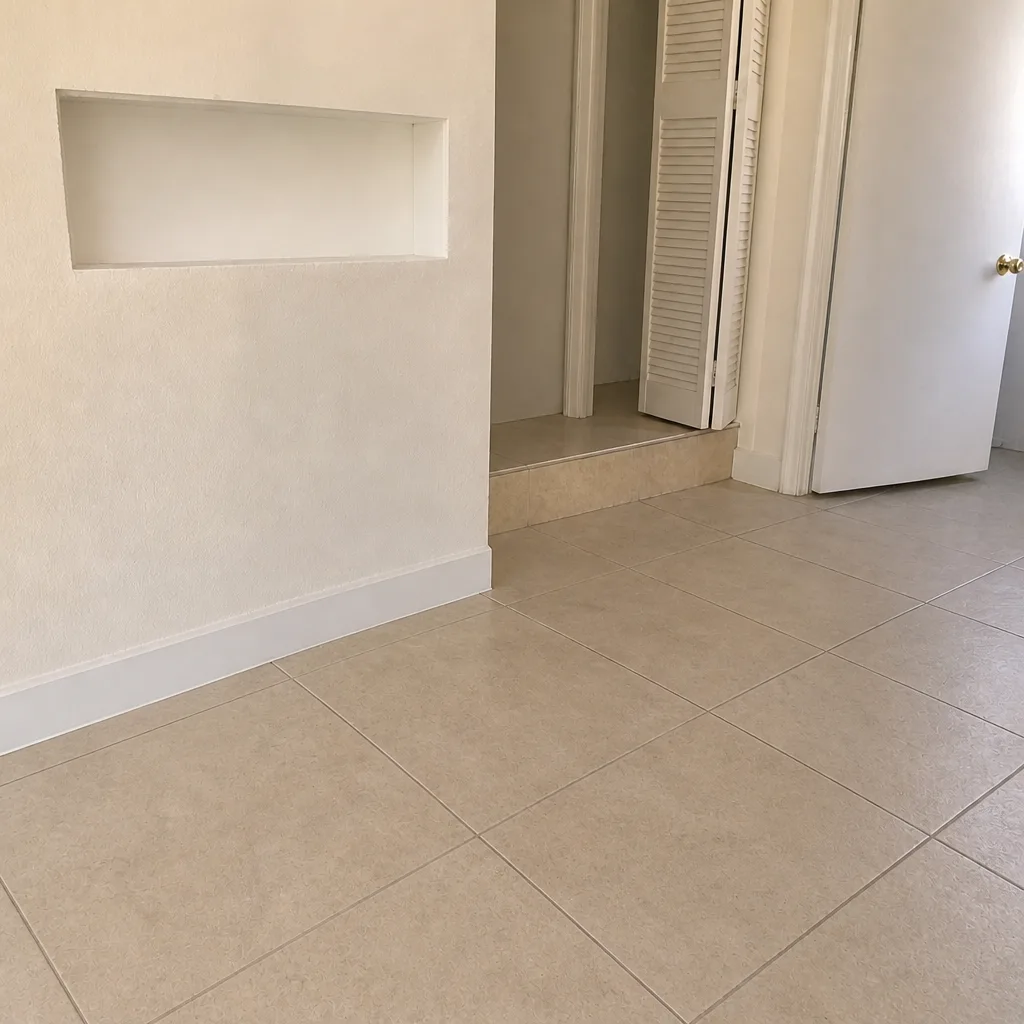 After
When to Call a Professional
Call a professional if any of these describe your situation: it’s been more than two years since the last full cleaning; there’s been water intrusion, a roof leak, or a renovation; you’ve seen signs of vermin; you’ve noticed mold spotting or a musty odor; allergy symptoms get worse when the system is running; a flexible duct run is visibly disconnected or dripping condensation; or your dryer takes longer than one cycle to dry a load. In any of those cases, the tools you need aren’t the ones at the hardware store. Hialeah Duct Cleaning offers free estimates in Hialeah, and we use contractor-grade gear from Rotobrush, Nikro, Abatement Technologies, and Guardsman because that’s what the job actually requires. Call (888) 831-4689 to schedule. We answer 24/7. Fast dispatch from 7am to 7pm, Sunday through Friday.
Frequently Asked Questions
Whole-system prices in the Hialeah market typically fall in a broad range, driven by the number of branches, system size, and contamination level. Rather than quote a number over the phone, we give a written estimate after inspecting the system. One flat price per system, agreed before any work begins: that’s the structure to expect. Call (888) 831-4689 for a free estimate.
Cheap quotes usually reflect a lower scope: a shop-vac pass at the registers, no negative pressure, no access to trunk lines or plenums. It looks like duct cleaning and covers perhaps a fifth of the actual system. The other possibility is a teaser price that expands on site. Ask what equipment will be used and how the full system gets under containment, and you’ll separate the two categories quickly. Call (888) 831-4689 if you want to compare a written estimate against a quote you already have.
Ask for before-and-after photos of your ducts. Any company doing real work can show you the difference, and any company that can’t probably didn’t. We document both ends of the job for every system we clean. Call (888) 831-4689 to schedule a free estimate.
Most homes benefit from a professional cleaning every two to three years, but the answer is situation-specific. If you’ve had a renovation, water intrusion, pest problem, or if someone in the house has respiratory sensitivities, the interval shortens considerably. If your last cleaning was recent and nothing has changed, DIY register maintenance is plenty. When in doubt, a free inspection answers it. Call (888) 831-4689.
Yes, if it’s done without containment. Agitating dust inside a duct with a shop vac and no negative-pressure capture pushes the debris into the living space. It settles on surfaces, gets pulled back into the return, and re-coats the ducts. The result is worse than before, and it takes days to settle out. This is why professional equipment pairs a rotary brush with a HEPA negative-air vacuum. Call (888) 831-4689 if you’ve already agitated a system and want it properly cleaned.
Good filter discipline is essential, but it doesn’t clean the duct walls. A filter catches what passes through it; it doesn’t remove what’s already settled in the trunk lines and plenums. Diligence on filters extends the interval between professional cleans, and it doesn’t replace them. If your last clean was three or more years ago, a professional visit is worth scheduling regardless of filter habits. Call (888) 831-4689 for a free estimate.
The Bottom Line
DIY duct maintenance and professional duct cleaning are different products, and the decision is about matching tool to job. Register cleaning, filter changes, visual inspections, and light dryer vent upkeep are genuinely useful and won’t hurt anything. Trunk lines, return plenums, air handler housings, condensation problems, mold, pests, and post-renovation debris are outside the reach of consumer tools and can be made worse by amateur handling. The four-condition test is your filter: more than two years since a professional clean, water intrusion, renovation, or pest/allergy symptoms means professional equipment is the right call. If none apply, register-level DIY is reasonable and we’re happy to give you a free inspection so you can make that call with real information. Call (888) 831-4689. We answer 24/7. Fast dispatch from 7am to 7pm, Sunday through Friday.
Written by the team at Hialeah Duct Cleaning.